




'Govt claiming 90pct scam victims are criminals an oversimplification'
The government’s claim that 90 percent of Malaysian human trafficking victims tied to fraud syndicates are complicit needs to be reviewed, says political analyst Bridget Welsh.
She said this is because the narrative oversimplifies the issue and overlooks the harsh realities within scam compounds.
Welsh, pointing to the authorities’ limited understanding of the conditions victims endure...
The government’s claim that 90 percent of Malaysian human trafficking victims tied to fraud syndicates are complicit needs to be reviewed, says political analyst Bridget Welsh.
She said this is because the narrative oversimplifies the issue and overlooks the harsh realities within scam compounds.
Welsh, pointing to the authorities’ limited understanding of the conditions victims endure, called for a reassessment of these cases through a human rights lens, arguing that many individuals in scam compounds are deceived or coerced into criminal activities.
“Victims face a grim choice. Either try to obtain money from their families, which may not even succeed, or become complicit in the scams themselves, leaving them trapped in a cycle of exploitation,” she said.
Malaysia’s figures were revealed in July when Deputy Foreign Minister Mohamad Alamin told Parliament that the police found that victims often held high-ranking positions within their companies, making them complicit in the fraud syndicates and only claimed to be deceived when they were abused or barred from leaving.

Welsh spoke to reporters on Monday as the Malaysian expert who contributed to a report titled “Transnational crime in Southeast Asia: A growing threat to global peace and security”.
“We really don't know how many are victims and how many can be identified as criminals, so there is a (need for) clearer identification process that complies with protections for individuals,” said Welsh.
The report published in May by the United States Institute of Peace (Usip), reflects the urgent need to address the widespread impact of scams and put it on the global agenda.
PLAY THE GAME: Can you escape online scams?
Are scammer victims?
Usip country director, Burma Asia Center, Jason Tower said that in Malaysia, shifting the mindset of viewing individuals involved in these scams as criminals to a human rights approach in victim identification and protection was challenging.
This was the same within Asean countries.
“It’s very difficult for people brought across borders, like from Myanmar or Cambodia to Thailand, to be officially recognised as victims of human trafficking, even if they show clear signs of torture or manage to escape,” Tower explained.
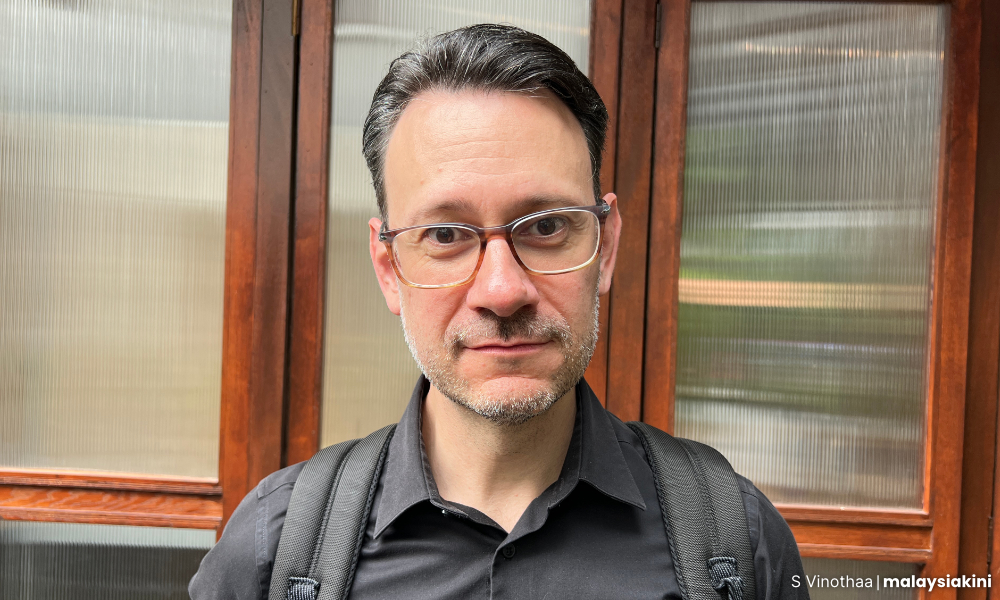
“Trafficking is no longer just about exploiting vulnerable individuals from rural areas.
“Instead, it now targets educated individuals who have jobs, and who consciously decide to participate in certain activities, only to be forced later into labour or criminal activities.
“However, victims are tricked into becoming part of the trafficking network and this shift in the modus operandi has caused confusion,” said Asean CSR Network advisory board member Rafendi Djamin who is consulting with the study group that worked on the Usip 2024 report.
The former Indonesian Representative for the Asean Intergovernmental Commission on Human Rights (AICHR) pointed out that few people recognised trafficking as a serious issue in the region, likely due to the complex and covert, crossborder nature of the new modus operandi.
However, Asean may be able to intervene as Malaysia takes its place as chair of the bloc next year.
Rafendi said AICHR, chaired by Malaysia’s country representative, Edmund Bon, was organising a technical team to draw up guidelines for victim identification in trafficking victims, especially in online scams.
This technical team is engaging law enforcement officials to discuss the implementation of non-punishment principles, which aims to ensure that trafficking victims are not criminalised for activities they were forced into, like online scams.
The team is working alongside the Senior Officials Meeting on Transnational Crime (SOMTC) to improve law enforcement strategies and victim identification across Asean.
READ MORE: 'I scammed so I could live': South Asians enslaved in scam compounds
Low-level recruits bear brunt of legal action
The global nature of trafficking is evident in the way vulnerable workers across regions - whether Chinese labourers sent to scam syndicates or migrants arriving in Malaysia - are deceived by false job promises, exploited upon arrival, and left with limited legal recourse.
The report describes recruitment methods similar to how labour migrants are recruited into Malaysia.
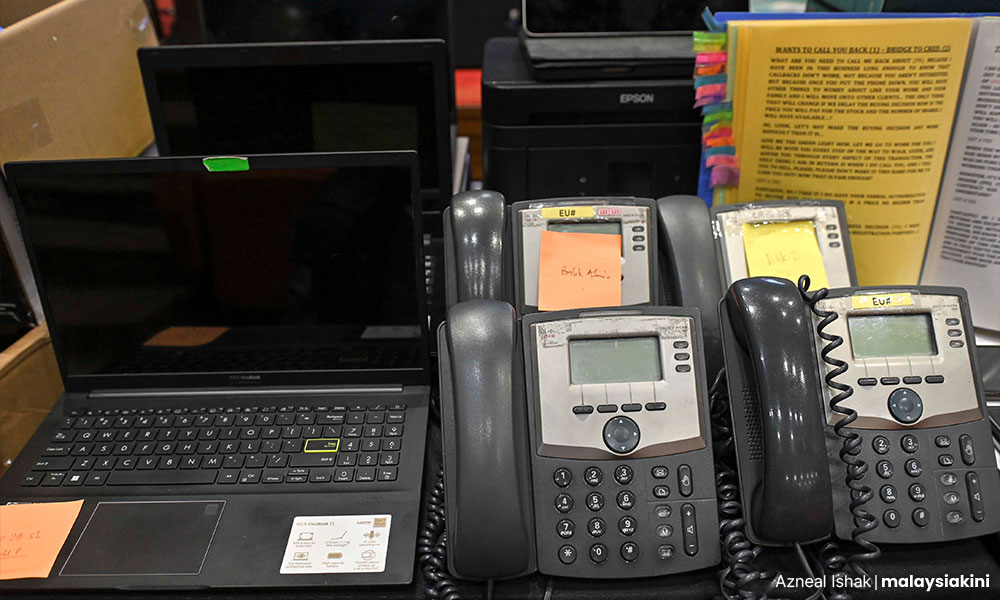
In both scenarios, agencies lure individuals with the promise of legitimate work, only to trap them in exploitative or illegal situations.
This pattern of deception and exploitation highlights the systemic nature of labour trafficking, which transcends borders and affects vulnerable populations worldwide, often leaving them with little protection or support.
Last October, 43 Malaysians trafficked into Peru and forced to participate in a so-called “Macau Scam” were rescued only after two women from the group escaped to get help.
So far, only four individuals in this case have been charged with trafficking two Malaysian women in Peru but the details of their involvement have not been released.
More recently, solely owing to leaks from an NGO in Myanmar, a former deputy minister in the Prime Minister’s Department Mashitah Ibrahim has come under investigation for her alleged role in connection with human trafficking activities in Myanmar.
She denied the allegation, made a police report and took legal action against the NGO.
Following investigations, police cleared her and her husband of allegations of human trafficking and said the couple were in Myanmar for a real estate deal.
/file/publisher-c1a3f893382d2b2f8a9aa22a654d9c97/2019/11/86cee0545075b55997819405e2543a2d.jpg)
/file/publisher-c1a3f893382d2b2f8a9aa22a654d9c97/2023/09/2dedf58ddc2260becaefebf33fe5d73a.jpg)
/file/publisher-c1a3f893382d2b2f8a9aa22a654d9c97/2024/08/3463bd223aee95541e149bbc320586d6.jpg)
/file/publisher-c1a3f893382d2b2f8a9aa22a654d9c97/2020/01/ab98507586896da22b4aa49ff8bb61df.jpg)
/file/publisher-c1a3f893382d2b2f8a9aa22a654d9c97/2023/09/a5b1898ae5242c491b0c339a3aeb74c7.jpg)


Report this comment
Are you sure you want to delete this comment?
This action cannot be undone.