


/file/publisher-c1a3f893382d2b2f8a9aa22a654d9c97/2024/09/e354c5f1d4c4472f73e40f6ce64f03f6.jpg)

Halal cert should never have become an issue: Azmin
The halal certification issue should never have become a big deal, Bersatu supreme council member Azmin Ali said today.
Referring back to his days as the international trade and industry minister, he said he saw significant demand from non-Muslims for halal certification.
The halal certification issue should never have become a big deal, Bersatu supreme council member Azmin Ali said today.
Referring back to his days as the international trade and industry minister, he said he saw significant demand from non-Muslims for halal certification.
“We received many applications from non-Muslims because, with this halal certificate, they can access bigger markets.
“At the end of the day, it is about economics. You can penetrate bigger markets, not only in Malaysia but also regionally and globally,” he told Malaysiakini.
He explained that halal certification covers a wide variety of products and services, not just those within the food and beverage (F&B) industry.
Additionally, Azmin said he had seen growing demand for halal products from non-Muslim countries such as Japan and Korea as well.
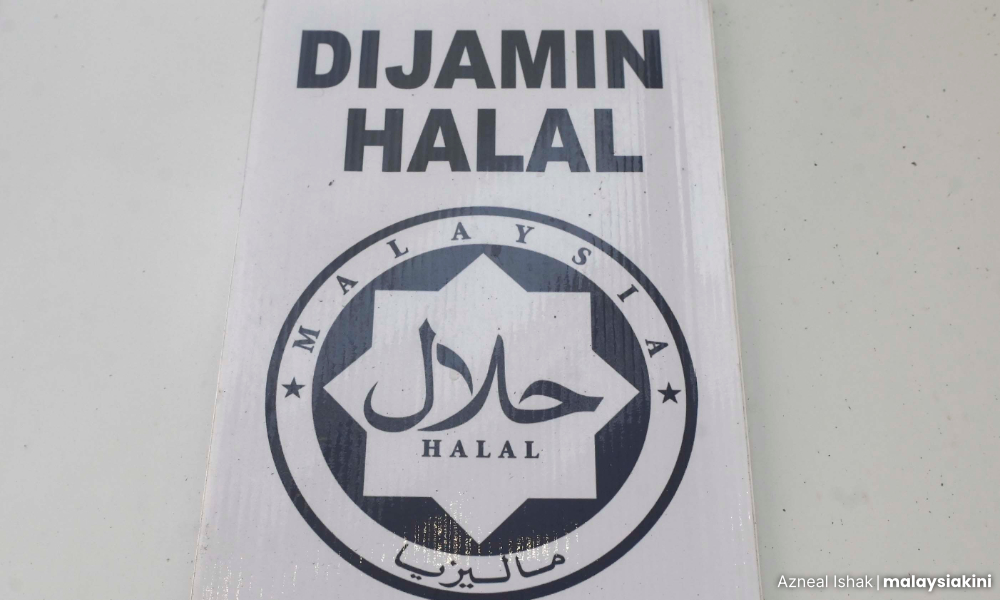
Earlier this month, Minister in the Prime Minister’s Department (Religious Affairs) Mohd Na’im Mokhtar revealed that the Islamic Development Department (Jakim) is mulling a proposal to make halal certification mandatory for restaurants and food companies that do not serve pork or alcohol.
This resulted in lawmakers trading barbs over the issue, notably DAP’s Seputeh MP Teresa Kok, who is currently being investigated by the police for her criticism of the proposal, saying it would impede many businesses, including Muslim-owned eateries.
The DAP vice-chairperson’s remarks sparked fiery reactions, particularly from Umno Youth chief Dr Muhamad Akmal Saleh and Bersatu Youth chief Wan Ahmad Fayhsal Wan Kamal, who said Kok crossed the line by interfering in Muslim affairs.
‘Could have been more mature’
Commenting on Kok’s stance on the issue, Azmin said that she and DAP should have been more mature considering the halal certification’s economic importance.

“I would like to advise DAP not to create this tension or uneasiness among the community.
“This is a multiracial society,” he said.
Registration for the halal certification is also much higher for non-Muslim companies than for Muslim companies, he added.
In July, Deputy Prime Minister Ahmad Zahid Hamidi revealed that only 3,619 bumiputera companies, or 39.6 percent of the total, are certified as halal while 5,720 non-bumiputera companies have the certification.
/file/publisher-c1a3f893382d2b2f8a9aa22a654d9c97/2024/07/043865fd276b46bfe9da5f340ecd40c4.jpg)
/file/publisher-c1a3f893382d2b2f8a9aa22a654d9c97/2024/09/c5c5515e94e399093532d6677c949a89.jpg)
/file/publisher-c1a3f893382d2b2f8a9aa22a654d9c97/2024/09/3b4708435d5687f62b316667c1fb24f5.jpg)
/file/publisher-c1a3f893382d2b2f8a9aa22a654d9c97/2024/05/944f42807082577a6927b21694f3ea88.jpg)
/file/publisher-c1a3f893382d2b2f8a9aa22a654d9c97/2023/03/f580b33de540a67ab593d62d8c1f1a1d.jpg)
/file/publisher-c1a3f893382d2b2f8a9aa22a654d9c97/2024/09/ffc63af36f046bcac84463af1e2f46fd.jpg)


Are you sure you want to delete this comment?
This action cannot be undone.