


/file/publisher-c1a3f893382d2b2f8a9aa22a654d9c97/2022/08/9a99b737331ae21d0c3e271be1cca1b4.jpg)

World Bank: More M'sian degree grads working in jobs that don't need it
More than a quarter of degree holders in Malaysia are doing jobs which do not require such a qualification, while high-skilled jobs are harder to come by for graduates, the World Bank said.
It said that 26.9 percent of degree holders in 2022 were underemployed, a big jump from just 8.6 percent in 2010.
“This is significant as degree holders...
More than a quarter of degree holders in Malaysia are doing jobs which do not require such a qualification, while high-skilled jobs are harder to come by for graduates, the World Bank said.
It said that 26.9 percent of degree holders in 2022 were underemployed, a big jump from just 8.6 percent in 2010.
“This is significant as degree holders represented 48.6 percent of the tertiary educated workforce in 2022,” the World Bank revealed in its Malaysia Economic Monitor report published earlier this week.
A similar trend of skills-related underemployment was observed among diploma holders, although this has improved among STPM graduates, it said.
Unsurprisingly, this trend is mostly driven by an insufficient number of high-skilled jobs available, it added.
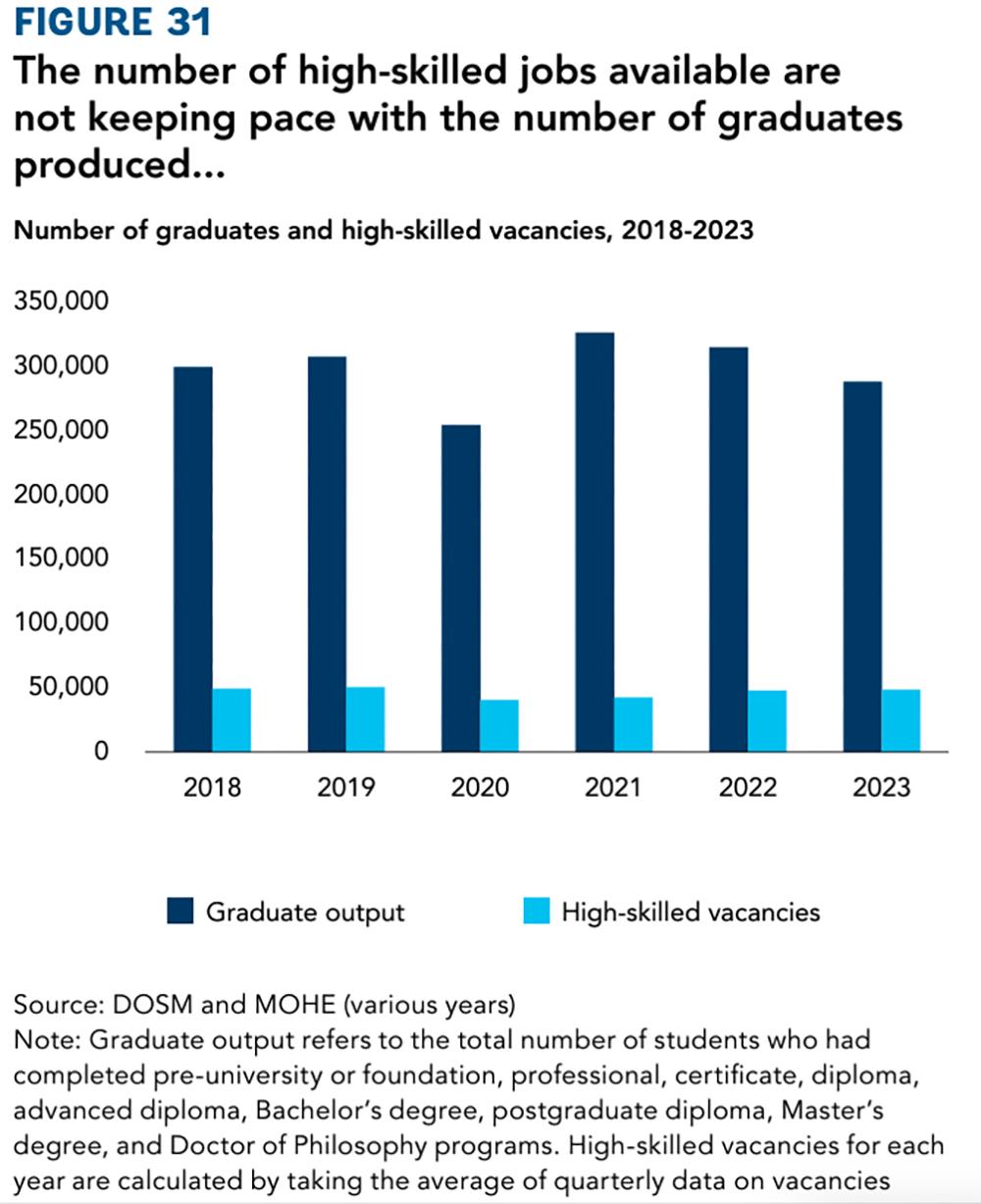
From 2018 to 2023, less than 50,000 high-skilled jobs were available, while between 200,000 to 350,000 competed for those jobs in the same period each year, the World Bank found.
In 2023, there was about one high-skilled vacancy for every six graduates who completed tertiary education.
This includes pre-university or foundation courses to postgraduate doctorates.
Kelantan has highest rate of underemployment
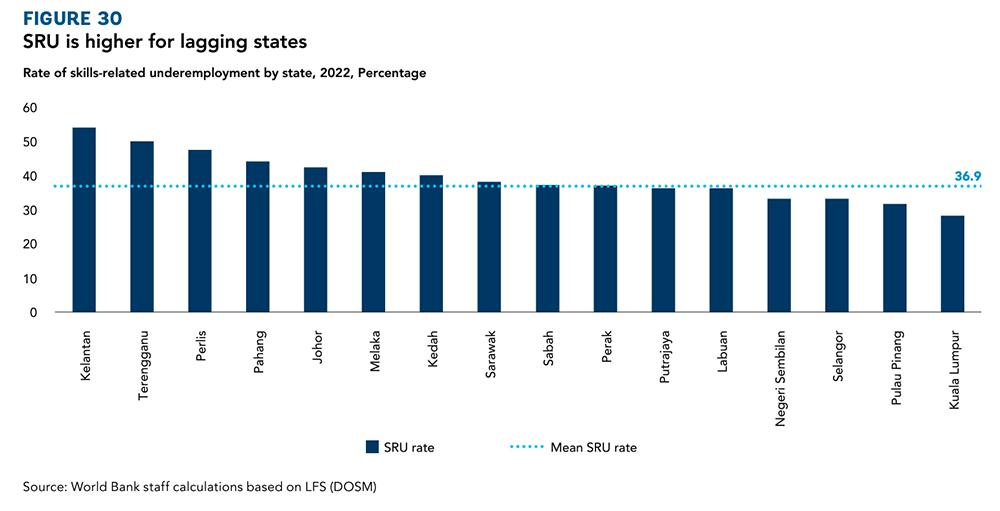
Kelantan has the highest rate of skill-related underemployment with just over 50 percent of its skilled workers working in positions which they are overqualified for. This exceeds the national average of 36.9 percent.
Kelantan is followed by Terengganu, Perlis, Pahang and Johor, indicating a lack of opportunities for graduates in these states.
Conversely, Kuala Lumpur, Penang and Selangor have the lowest rates of skill-related underemployment, indicating more high-skilled jobs there.
At 29.6 percent of all jobs, Malaysia has more workers in high-skilled positions compared to neighbours Thailand and Indonesia, but it is far lagging behind Singapore where the rate is 60 percent.
“Some key strategies that could address these challenges include aligning educational curricula with industry needs, strengthening Malaysia’s competitiveness to attract quality investments and promote high-skill job creation, and providing lifelong skills that will help weather the challenging nature of work,” the World Bank said in the report.
The World Bank report provides a wider context for Malaysia’s Statistics Department’s data which shows that the rate of graduate unemployment had dropped from 4.1 percent in 2021 to 3.7 percent, or about 187,800 people in 2022.
It implies that even though graduates are finding jobs, they are employed in positions which do not require the level of skills or qualifications which they possess.
DOSM is expected to publish the data on graduates for 2023 next month.
/file/publisher-c1a3f893382d2b2f8a9aa22a654d9c97/2021/01/28e3a7819cb08fd32673c653399ab96a.jpg)
/file/publisher-c1a3f893382d2b2f8a9aa22a654d9c97/2024/09/49be4308c0e18e34478015d755793c20.jpg)
/file/publisher-c1a3f893382d2b2f8a9aa22a654d9c97/2024/08/f293b8f9d7b731fdacb68752cfef0fb4.jpg)
/file/publisher-c1a3f893382d2b2f8a9aa22a654d9c97/2024/07/8002aa8d74eb0ca3089ca811bff8f933.jpg)
/file/publisher-c1a3f893382d2b2f8a9aa22a654d9c97/2022/10/1636d5fb4b361cea5196b6b0bfc28a9b.jpg)
/file/publisher-c1a3f893382d2b2f8a9aa22a654d9c97/2022/04/2ab0dc193e7ec53fdde9279db54164df.jpg)


Are you sure you want to delete this comment?
This action cannot be undone.