


/file/publisher-c1a3f893382d2b2f8a9aa22a654d9c97/2024/10/cd6f8c12084c4589774a408d5d422c00.jpg)

Graduate underemployment not unique to M'sia, says deputy minister
During the question-and-answer session at the Dewan Rakyat today, she said underemployment is also prevalent in South Korea, Australia, and the United States.
“According to data from the Labour Force Survey by the Department of Statistics Malaysia...
PARLIAMENT | Deputy Economy Minister Hanifah Hajar Taib said graduate underemployment is not unique to Malaysia, noting that it is also a concern in high-income countries.
During the question-and-answer session at the Dewan Rakyat today, she said underemployment is also prevalent in South Korea, Australia, and the United States.
“According to data from the Labour Force Survey by the Department of Statistics Malaysia, the rate of skills-related underemployment was 37 percent in the second quarter of 2024,” she said.
Hanifah was responding to Mohd Shahar Abdullah (BN-Paya Besar), who asked the government to clarify the prospects of graduates with lower scores in securing quality employment.
Shahar highlighted that underemployment - where individuals work in roles that do not match their qualifications - has risen sharply to 37.4 percent, compared to 29.9 percent last year.
“How does the economy minister address the issues of competency and coordination I mentioned, particularly concerning job creation, supply, and filling roles?
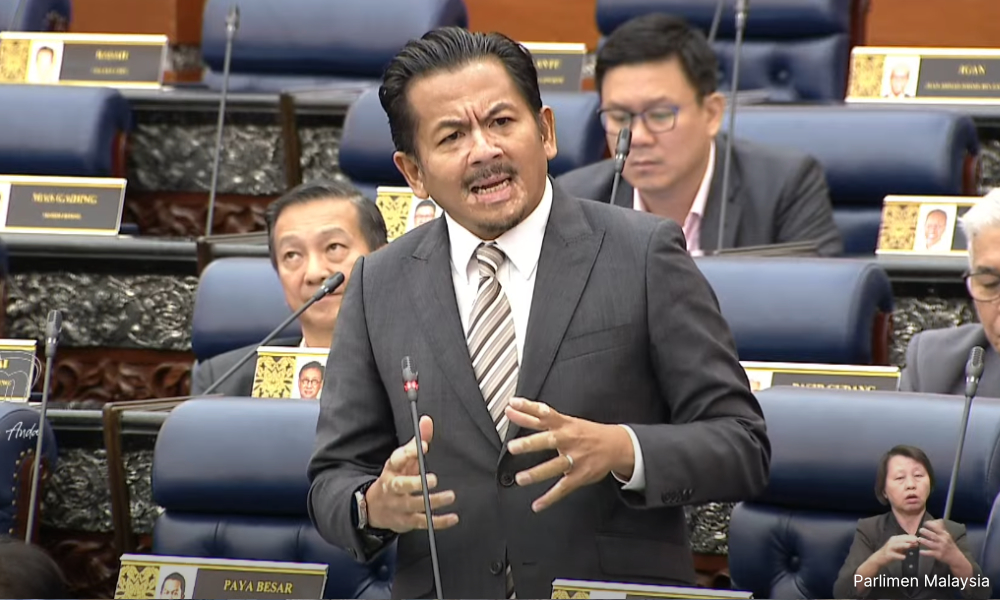
“Are only graduates with CGPAs of 3.5 and above being considered for high-value sectors? What happens to those with lower CGPAs? How is the government addressing this?” he asked.
Elaborating, Hanifah defined skills-related underemployment as those with tertiary education working in medium- or low-skilled jobs.
Tertiary education includes qualifications above the SPM level, she said.
She highlighted that underemployment rates decline as higher education levels are achieved.
“For example, the underemployment rate for those with Sijil Tinggi Pelajaran Malaysia (STPM) qualifications is 58 percent, while for degree holders, it falls to 26.9 percent,” she shared.
Hanifah emphasised that the government is enhancing investment and stimulating industry growth through various strategies and initiatives to create more jobs.
Shahar’s question followed the release of the World Bank’s Malaysia Economic Monitor report on Oct 11.
The report highlighted that over a quarter of degree holders in Malaysia are employed in positions that do not require a degree, and high-skilled jobs are becoming increasingly scarce for graduates.
The report also revealed that 26.9 percent of degree holders were underemployed in 2022, a sharp rise from 8.6 percent in 2010.
/file/publisher-c1a3f893382d2b2f8a9aa22a654d9c97/2022/08/9a99b737331ae21d0c3e271be1cca1b4.jpg)
/file/publisher-c1a3f893382d2b2f8a9aa22a654d9c97/2022/04/e979277b74601a6d97eaa5a5de76d26b.jpg)
/file/publisher-c1a3f893382d2b2f8a9aa22a654d9c97/2021/10/c6fae04e8835aea4cb38ed4549651937.jpg)


Are you sure you want to delete this comment?
This action cannot be undone.