


/file/publisher-c1a3f893382d2b2f8a9aa22a654d9c97/2024/10/18096797c499de75201e3a79309e665c.jpg)

Salmon, avocado to cost more under expanded SST scheme
In delivering his Budget 2025 speech today, Finance Minister Anwar Ibrahim promised that the new SST scheme will be more progressive and will not burden ordinary people.
However, the price of...
BUDGET 2025 | The government is looking to boost its revenue through an expanded Sales and Services Tax (SST) scheme beginning May 1 next year.
In delivering his Budget 2025 speech today, Finance Minister Anwar Ibrahim promised that the new SST scheme will be more progressive and will not burden ordinary people.
However, the price of some goods and services will be higher.
“Sales tax will not be imposed on basic food items used by the rakyat.
“Sales taxes will be imposed on items that are not basic necessities such as premium imported goods like salmon and avocado – that many of the MPs on this side and on that side have been eating. Its price will be more expensive when we implement it.
“The scope of the services tax will be expanded to include commercial services between businesses, such as fee-based financial services,” he told the Dewan Rakyat today.
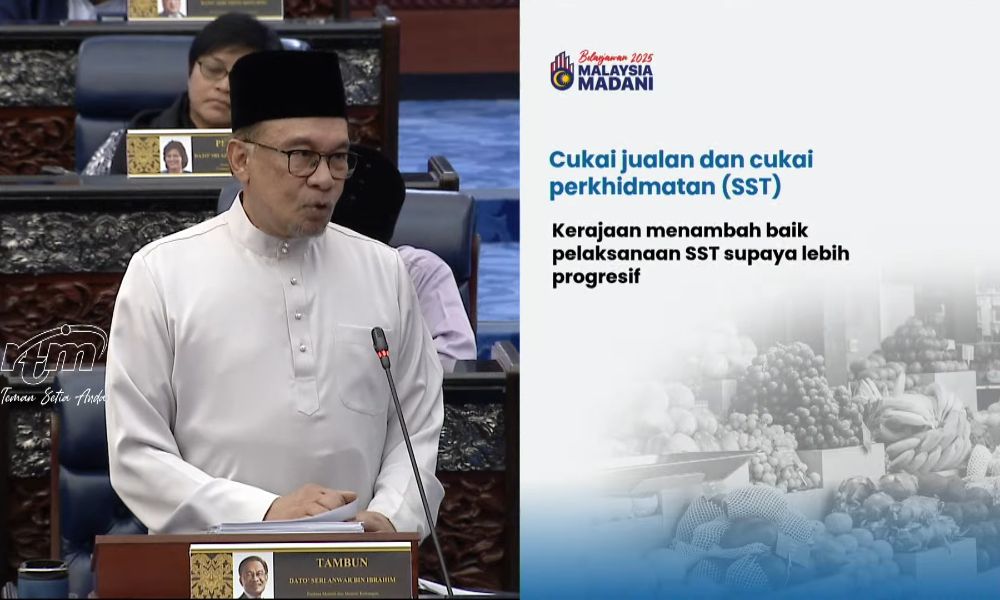
Anwar said the government will engage with all stakeholders and related industries before finalising the scope of the expansion and the tax rate to be imposed.
He cited the government’s small revenue base and hefty subsidy bill to justify expanding the SST scheme.
The Malaysian government’s tax revenue is only 12.6 percent of GDP in 2023, compared to 16.1 percent in Thailand, 14.1 percent in the Philippines, and 13.7 percent in Singapore.
Meanwhile, the government spent RM80 billion last year on subsidies, incentives, and other assistance.
Last month, Anwar dismissed talk of reinstating the Goods and Services Tax (GST) to replace the SST. He later explained that while the GST is more transparent and efficient, it would also be a burden on the poor.
Dividend tax
Apart from expanding the SST, Anwar also proposed a dividend tax starting with the 2025 assessment year.
This will be imposed on individual shareholders receiving dividends of more than RM100,000, at a rate of two percent.
Dividends from government funds such as the Employees Provident Fund and Amanah Saham Nasional Berhad, and dividends from abroad, will be exempted.
“This initiative is so that the income tax collected does not depend solely on contributions of wage earners, but also include contributions of company owners and individuals who own shares in the millions of ringgit,” he said.
/file/publisher-c1a3f893382d2b2f8a9aa22a654d9c97/2020/10/c18473232beefad46a426bd9888dd5c5.jpg)
/file/publisher-c1a3f893382d2b2f8a9aa22a654d9c97/2024/10/38720bebe6ac4717881befccfd5236f5.jpg)
/file/publisher-c1a3f893382d2b2f8a9aa22a654d9c97/2024/09/8306ed7b4507434b664c26e3ac7be07a.jpg)


Report this comment
Are you sure you want to delete this comment?
This action cannot be undone.