


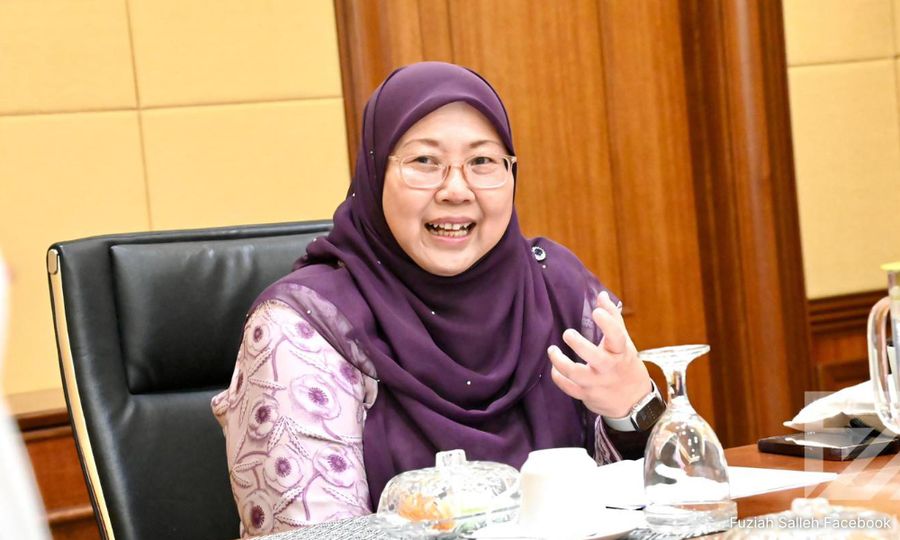

PKR central leadership seeks changes in party election system
INTERVIEW | PKR central leadership council will seek its special congress today to introduce constitutional amendments that will change how the party conducts its election.
Secretary-general Fuziah Salleh said they want to do away with the “one member one vote” system for electing the top six positions, namely the president, deputy president and four vice-presidents.
Instead, she said, the council will propose that PKR...
Summary:
PKR central leadership is seeking major changes to how the party does its election.
Among key changes being proposed include to revert to the delegates system for choosing top party leaders.
A special congress will be held in Shah Alam today where party delegates will debate a motion to introduce amendments to the PKR constitution before voting.
INTERVIEW | PKR central leadership council will seek its special congress today to introduce constitutional amendments that will change how the party conducts its election.
Secretary-general Fuziah Salleh said they want to do away with the “one member one vote” system for electing the top six positions, namely the president, deputy president and four vice-presidents.
Instead, she said, the council will propose that PKR reverts to the delegates system and gives the power to vote to some 30,000 party delegates from 222 divisions nationwide.
"We had in-depth discussions about how the party should elect the top six positions because it was found that grassroots members might not know about the leaders they want to choose at the central level.
"For example, when they choose vice-presidents, the ordinary members may know some of the leaders by name or have seen them from afar and know them from their oratory skills.
"However, they might not have the full idea of the real capabilities of each leader in terms of their service delivery, whether they are committed to doing work on the ground and such.
"So, it is unfair if every party member gets to vote (to decide top leaders)," Fuziah said on Friday.
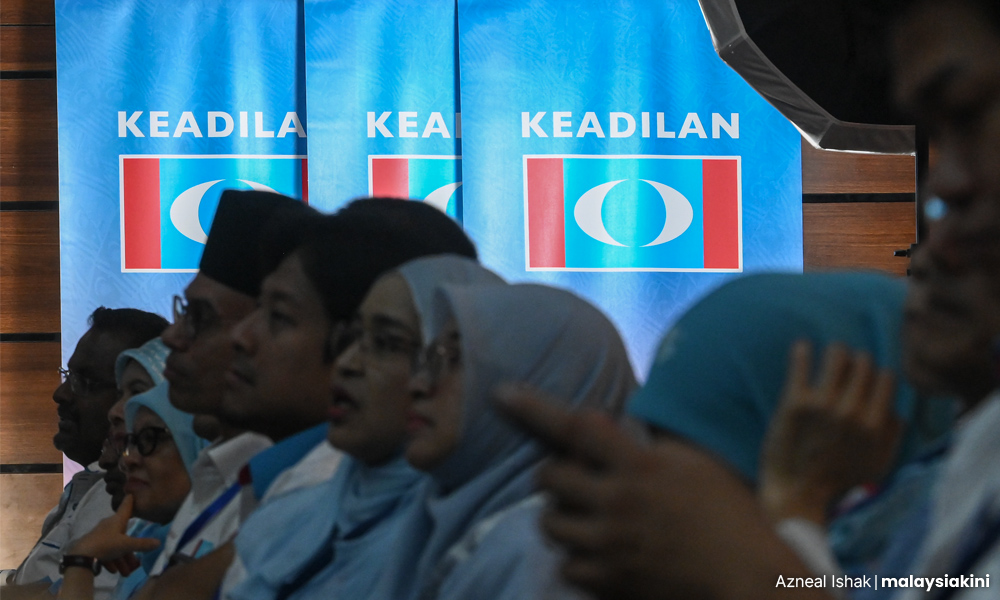
The newly minted secretary-general gave the interview to explain what PKR aims to achieve at its special congress, which will be held in Shah Alam this morning.
She said it was for the same reason PKR had continued the delegates system for electing 20 party members to its central leadership council.
However, the plan to revert to the delegates system will not affect division elections, where each member will still have the power to choose who can lead them at the division level.
For the record, PKR introduced the “one member one vote” system in 2010, where all party members have the power to choose their leaders at their respective divisions and for the top six central leaders.
When asked if the plan might be perceived as regressive, Fuziah refuted the notion.
She said the party has learned from their experience in the past party polls, which showed how the “one member one vote” practice was open to abuse.
"The system may also be perceived as regressive because if they do not know the leaders, there is the possibility that they will rely on 'cai' (list of choices) and such.
"This will be unfair because they choose not based on their conviction on the leadership. In the end, candidates with the most 'cai’ get elected."
Party delegates
Fuziah said the central leadership council is also seeking to improve its election system by increasing the number of party delegates eligible to vote for the central leadership positions.
Under its current practice, only 12 delegates get to represent each of the 222 PKR divisions at the party's annual general meetings.
The motion that the council will propose later today seeks to increase the number of delegates with voting power to 116 per divison.
The figure includes 46 elected division and wings' committee members, who can attend the annual congress physically, plus 70 delegates who will cast their votes online.

Divisions with more than 3,000 members will be eligible for 10 extra delegates per 1,000 members, to a maximum of 156.
According to Fuziah, they are also introducing quotas to ensure every gender and ethnicity is fairly represented at the divisions delegate level.
Based on her explanation, it was understood that the quota system would impose a mandatory 30 percent women representation.
Each division must also be fairly represented according to the ethnicity composition at their locality as per the Election Commission's demographic data.
All motions have since been approved by the PKR special congress today.


Report this comment
Are you sure you want to delete this comment?
This action cannot be undone.