


/file/publisher-c1a3f893382d2b2f8a9aa22a654d9c97/2024/12/1557787ecceeb9db15de384da4bacb5f.jpg)

MOH says Kg Kelaik water supply safe, but samples not from 'rusty red' river
Editor's note: This article has been updated with better context.
The Health Ministry said samples from water sources used by the Kampung Kelaik were free from heavy metal contamination.
However, the samples are likely not from the polluted rivers downstream from iron ore mines.
According to its statement yesterday, the water samples provided by the Orang Asli Development Department (Jakoa) were from a...
Editor's note: This article has been updated with better context.
Summary
The Health Ministry says samples provided by Jakoa from a tandak (mini reservoir) comply with standards of arsenic, chromium, ferum and aluminium.
The Jakoa tandak is not located downstream from the iron ore mines, suspected to be the cause of river pollution.
Villagers say the tandak is often clogged, leaving the ‘rusty red’ rivers as their only source of water.
The Health Ministry said samples from water sources used by the Kampung Kelaik were free from heavy metal contamination.
However, the samples are likely not from the polluted rivers downstream from iron ore mines.
According to its statement yesterday, the water samples provided by the Orang Asli Development Department (Jakoa) were from a tandak (reservoir).
When contacted, a villager said Jakoa maintained only one mini reservoir in Sungai Keng Hung on Bukit Jabil that supplied water to about 36 houses.
“Water going to the rest of the 30 houses comes from (another reservoir supplied by) Sungai Cendewang also on Bukit Jabil and Sungai Hug on a different hill, maintained by the villagers,” said Amino Angah.
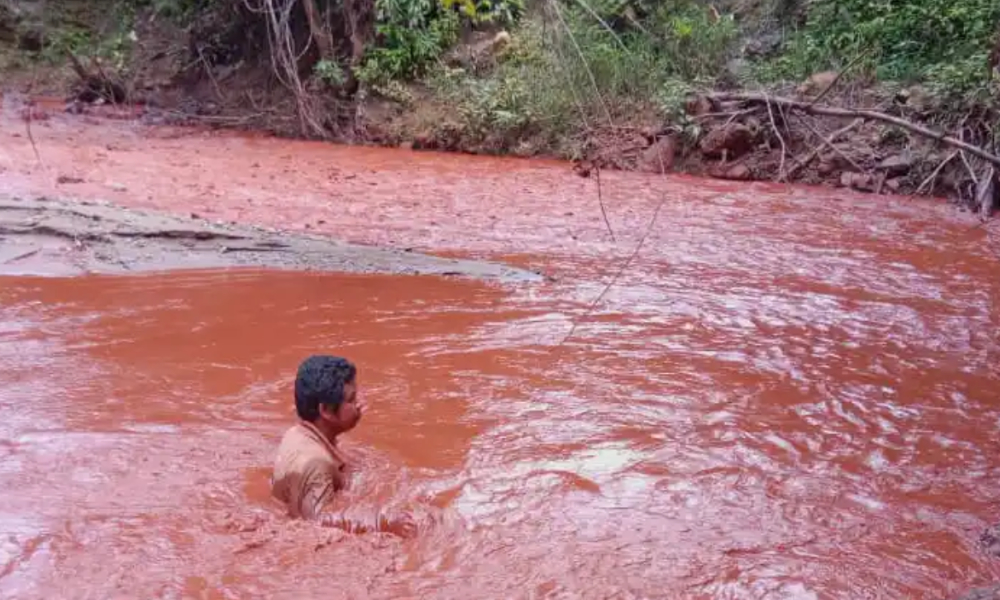
However, the streams that provided Kampung Kelaik with these alternative sources of water are too small to sustain fish populations.
When Malaysiakini visited earlier this year, the small tandak was filled with sand and debris and villagers said the pipes would be clogged after a downpour, leaving them with no water supply for days, except the nearby rusty red rivers of Sungai Cenderoh and Sungai Kelaik.
They also use the rusty red rivers for bathing and washing and catch fish or frogs there.
The rivers near Kampung Kelaik had turned a rusty red since iron ore mining began in 2009, while recent testing by Malaysiakini showed exceedingly high levels of chromium - a carcinogen - in one villager’s blood.
READ MORE: Heavy metals found in Kelantan Orang Asli blood, community fear poisoned by mining
The Health Ministry further said the water from the Jakoa tandak complied with standards of aluminium, arsenic, ferum and chromium.
It also said it took samples from several other locations which were water sources for the Kampung Kelaik Temiar community but did not state the results for the other locations.
It also did not state where the other locations were.
IMR to probe potential heavy metals poisoning
The high levels of chromium in the blood of one villager are estimated to raise his risk of developing cancer in his lifetime by 64,000 times more than normal, according to Vivien How, a chemical health expert consulted who reviewed the results told Malaysiakini.
Besides this finding, multiple villagers were also found to have skin lesions while a medical doctor who treated them said they also complained of breathing difficulty after exiting the rivers. Among the symptoms of chromium poisoning are respiratory issues and contact dermatitis.
The doctor, who declined to be named, and How advised the villagers to avoid contact with the river.
However, the ministry said its health checks on the 200 Kampung Kelaik villagers on Sept 23 found no “acute cases caused by heavy metal poisoning at this time”.
The regular health checks the Health Ministry conducted do not include testing blood samples for heavy metals.
Nevertheless, it said the ministry, via the Institute of Medical Research, said it is conducting further investigations into potential heavy metal poisoning among the villagers.
“The ministry will continue to monitor the health of the Kampung Kelaik villagers. The ministry would also like to advise the villagers to seek medical assistance at the nearest health facility if they face any issues, including skin issues,” said the ministry.
“The ministry will continue to cooperate with Jakoa, the Environment Department (DOE), the Chemicals Department and the Minerals and Geosciences Department to monitor the situation, to ensure the health and safety of the Orang Asli of Kampung Kelaik.”
Stop work order
Earlier, Natural Resources and Environmental Sustainability Minister Nik Nazmi Nik Ahmad said stop work orders have been issued to the two mines, pending investigations into possible mining-related river contamination.

The ministry also found one of the mines - Aqua Orion Sdn Bhd - did not have the necessary approvals, including a valid environmental assessment impact (EIA) report, despite having operated since 2015.
The ministry said it is also writing to the Kelantan Land and Mines, to advise it not to renew the mine’s license if they do not submit a valid EIA.
Aqua Orion’s license expires next year, while the other mine, operated by Redstar Capital Sdn Bhd, has a license to operate until 2030.
Redstar Capital, which was found not to be operating during the DOE inspection this week, told Malaysiakini it complies with all regulations and does not dump effluents into the river.
/file/publisher-c1a3f893382d2b2f8a9aa22a654d9c97/2024/12/aa51bdd14470e6b3b268504756304a27.jpg)
/file/publisher-c1a3f893382d2b2f8a9aa22a654d9c97/2024/12/e76631b61c0ff5dc39e7e74fe9de35ed.jpg)
/file/publisher-c1a3f893382d2b2f8a9aa22a654d9c97/2024/12/948fe37a3e49c13306639bb769c65a8e.jpg)
/file/publisher-c1a3f893382d2b2f8a9aa22a654d9c97/2024/08/395894dfbe4831819042f7451b83c63a.jpg)


Are you sure you want to delete this comment?
This action cannot be undone.