


/file/publisher-c1a3f893382d2b2f8a9aa22a654d9c97/2024/12/6a66731a6ae462cef994f1451db66191.jpg)

Losing close friend to suicide leads man to set up grief centre
After a close friend committed suicide in 2021, 33-year-old Mohamad Nazwan Mohamad Taufik decided to set up a foundation which runs a grief centre to reach out to those in need.
Recalling the tragedy, Nazwan (above) said it happened during the Covid-19 lockdown when the friend, whom he only referred to as Dee, had her first child.
“She was one of the strongest people I know. Working as a female lead in a male-centric environment. After giving birth, she had difficulties adapting to her new life as a mother.
“To put it simply, it was due to postpartum depression...
Summary
Mohamad Nazwan Mohamad Taufik says he set up the Dee Hati Centre For Grief, Bereavement And Trauma after losing someone dear to him to mental health issues.
It is a community-based outfit run by peers and non-mental health professionals, highlighting the need for the community to help those suffering from mental health issues.
He also highlights the importance of both prevention and postvention efforts in dealing with mental health issues.
After a close friend committed suicide in 2021, 33-year-old Mohamad Nazwan Mohamad Taufik decided to honour her passing by setting up a foundation which runs a grief centre to reach out to those in need.
Recalling the tragedy, Nazwan (above) said it happened during the Covid-19 lockdown when the friend, whom he only referred to as Dee, had her first child.
“She was one of the strongest people I know, working as a female lead in a male-centric environment. After giving birth, she had difficulties adapting to her new life as a mother.
“To put it simply, it was due to postpartum depression. We last heard from her on Aug 1, 2021. In the days after her passing, we were deeply affected by the event.
“We couldn’t stay in the same house and had to stay somewhere else for a while,” he told Malaysiakini.

Nazwan, who works in the construction industry, added that he would visit Dee’s family, and it was during the visits that a psychiatrist helped them channel their grief through something that would help keep them grounded.
Thus was born the idea of Yayasan Dee Hati, which runs the Dee Hati Centre For Grief, Bereavement And Trauma in Taman Budaya, Kuching, Sarawak.
“We felt that the best way we could honour her passing is through the creation of Yayasan Dee Hati so we could help others who may be going through any sort of grief that is afflicting them,” he added.
Yayasan Dee Hati was officially incorporated on Aug 1, 2022, exactly a year after Dee’s passing, with the centre opening its doors in February the following year.
Apart from him, others who helped establish the centre were his wife Nur Iwana Abdul Taib (a psychiatrist), Faizul Zuraimi and Sabrina Zuraimi.
Community-based
Elaborating about Dee Hati, Nazwan, who serves as a general manager there, said the centre is a community-based outfit run by peers and non-mental health professionals, stressing the responsibility of caring for those with mental health issues lies on everyone.
“The centre provides free grief peer support to any individuals who have suffered from loss.
“We also help provide the bereaved a safe space for them to grieve safely and healthily without being judged regardless of their backgrounds,” he mentioned.

Nazwan added that his team have their own standard operating procedures to assist those in need and when certain cases go beyond their scope, they would engage Iwana’s expertise to manage them.
Touching on suicide cases among adolescents, Nazwan pointed out the importance of creating safe spaces where teens feel comfortable discussing their struggles without fear of judgment.
“Open conversations about mental health - both at home and in schools - are crucial.
“Simple questions like, ‘How are you really feeling?’ can make a big difference.
“Schools should also normalise these discussions, provide mental health education and ensure trained counsellors are available so teens know where to turn for help,” he added.
Recognise warning signs
Nazwan also stressed the importance of recognising warning signs. This includes changes such as sudden withdrawal, behaviour changes, or expressions of hopelessness.
“Educating teenagers to spot these signs in their peers is also vital,” he noted.
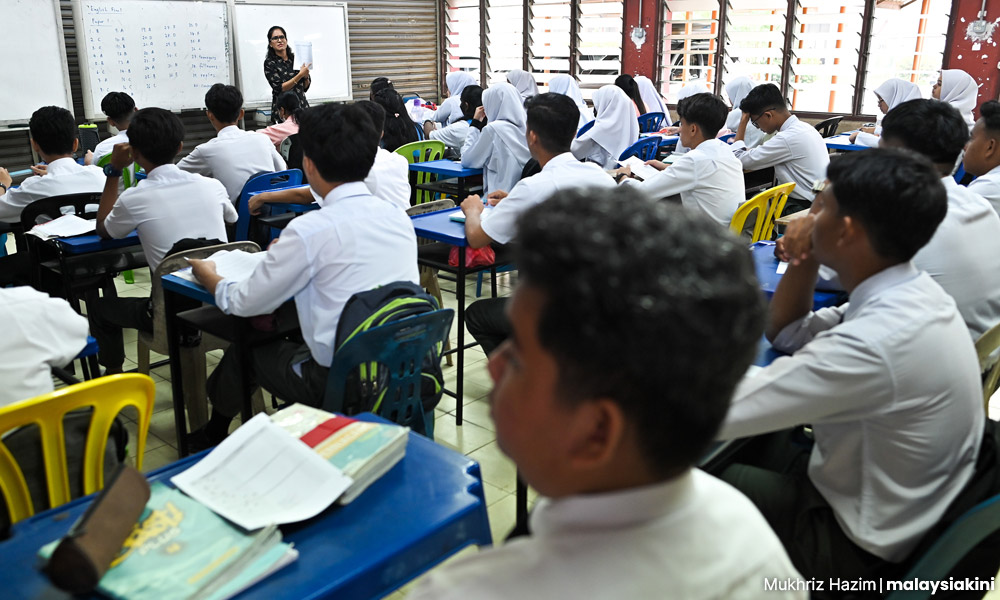
Nazwan also highlighted the importance of guiding adolescents on responsible social media use, which could help reduce stress and feelings of inadequacy.
“Setting boundaries and promoting digital well-being can ease some of these pressures.”
Reducing the stigma around mental health, he added, is another key step to address mental health issues among adolescents.
Nazwan said that, unfortunately, many teens avoid seeking help because they fear being judged.
As such, he mooted the idea of community campaigns and peer-led programmes to raise awareness of mental health issues.
“Schools can create inclusive environments and stand firmly against bullying to ensure all students feel valued.
“When adults model healthy coping strategies and advocate for mental health support, they show teenagers that seeking help is a sign of strength and they are not alone.”
Prevention, postvention
When it comes to addressing suicides among teenagers, Nazwan said it stressed the importance of both prevention and postvention support.
Elaborating on postvention support, he said the critical care provided after a suicide is meant to support those affected and prevent further tragedies.

“When a community, school, or family loses a young person to suicide, the impact on peers and siblings, can be profound, often leaving them at risk of emotional struggles and suicidal thoughts themselves.
“By focusing on postvention, we can help these young individuals process their grief, reduce feelings of isolation, and ultimately, create a safer environment for other teenagers,” Nazwan said.
For parents and society at large, he said it meant creating spaces where open conversations about personal loss are encouraged and helping teenagers understand that they are not alone in their feelings.
“Schools can play a pivotal role by offering counselling services and grief support groups specifically tailored to students who have experienced loss.
“At home, parents can model healthy grieving, openly expressing their emotions and demonstrating that seeking help is a sign of strength, not weakness,” he concluded.
/file/publisher-c1a3f893382d2b2f8a9aa22a654d9c97/2021/07/2bb63963204b55d2b4b7786ca791b443.jpg)
/file/publisher-c1a3f893382d2b2f8a9aa22a654d9c97/2024/07/335db34e26334e1c13e7b97011d8503d.jpg)
/file/publisher-c1a3f893382d2b2f8a9aa22a654d9c97/2024/10/8d7925566402e089e30ade634353e575.jpg)
/file/publisher-c1a3f893382d2b2f8a9aa22a654d9c97/2021/06/6966be602205d8bffff5d66152fad3a9.jpg)
/file/publisher-c1a3f893382d2b2f8a9aa22a654d9c97/2022/06/0928d1c964d0b614db755c13ab6f2cbc.jpg)
/file/1162/ee4e8016e0823d995c288e2bd152e9b1.jpeg)


Are you sure you want to delete this comment?
This action cannot be undone.