


/file/publisher-c1a3f893382d2b2f8a9aa22a654d9c97/2021/06/6966be602205d8bffff5d66152fad3a9.jpg)

MCMC: No opt-out for mobile data collection pilot project
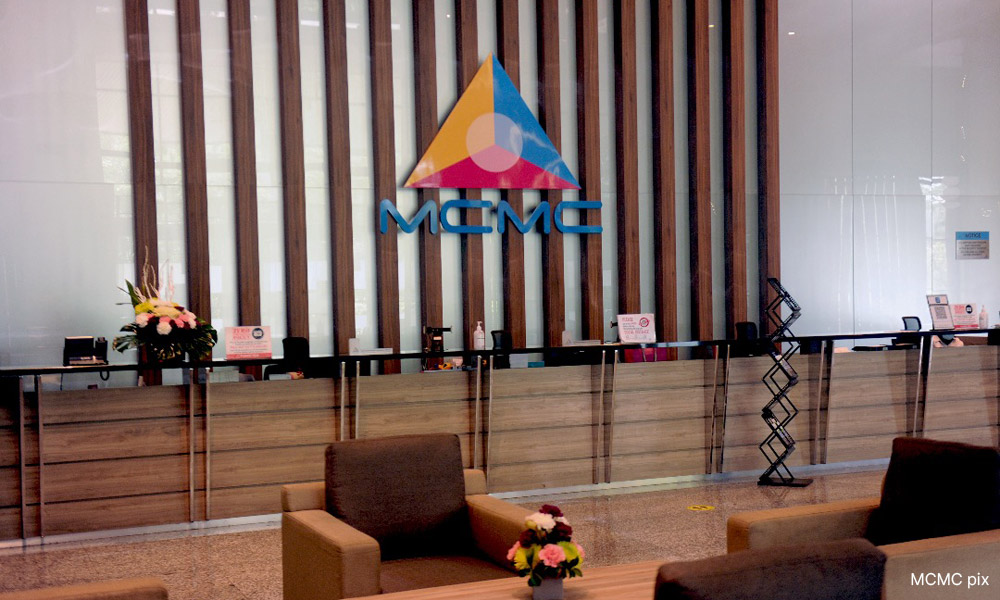
MCMC today clarified that there is no option for mobile users to opt out of an ongoing pilot project involving the collection of anonymised mobile phone data for official statistical purposes.
Speaking at a media briefing in Cyberjaya, MCMC deputy managing director Zurkarnain Yasin stressed that the data collection exercise was mandated by a cabinet decision made on April 19, 2023.
Summary
The MCMC clarifies there is no opt-out for a mobile data collection pilot project for official statistics, mandated by a cabinet decision.
The data collected is anonymised and used for national development and official statistics, and no personally identifiable information is collected.
The Statistics Department will use the data after the pilot concludes next year, with public consultations planned post-pilot.
MCMC has clarified that there is no option for mobile users to opt out of an ongoing pilot project involving the collection of anonymised mobile phone data for official statistical purposes.
Speaking at a media briefing in Cyberjaya today, MCMC deputy managing director Zurkarnain Yasin stressed that the data collection exercise was mandated by a cabinet decision made on April 19, 2023.
“What we are doing is for national development. This is also a part of the regulatory requirements that we have asked operators to comply with,” he said.
The initiative follows an approval paper titled “Projek Data Raya Nasional: Mobile Phone Data”, presented to the cabinet by the Statistics Department under the purview of the economy minister.
MCMC member Derek John Fernandez said the Communications and Multimedia Act 1998 allows for the sharing of anonymised mobile phone data to support infrastructure improvement.
“When we do it, we benchmark to international standards and practices.
“Again, I refer you to the United Nations sustainability reports and other experts on this matter,” he said, reassuring that no personally identifiable data is being collected under MCMC’s directive for telecommunication companies to submit mobile users’ call and internet usage logs for the first quarter of this year.
Asked whether mobile users concerned about the data sharing could opt out, Zurkarnain replied: “For that question, the short answer is no.”
According to MCMC, anonymised mobile phone data is also not classified as personal data under the Personal Data Protection Act 2010, as it cannot be used to identify or trace individuals, either directly or indirectly.
Big data sources
The MCMC also pointed out that the UN has recognised mobile phone data as one of the big data sources used in producing official statistics, which in Malaysia is compiled by the Statistics Department.
Unlike traditional survey or census methods, the analysis of anonymised call detail records for voice calls and internet protocol detail records for online calls from telco transmission towers provides insights on service quality, service levels, and user distribution down to sub-district or district levels.
“The device’s location (from transmission towers) does not reveal the owner’s exact location.
“We do not want that (personal) information, we don’t need that information, it’s irrelevant to what we are doing,” Fernandez stressed.
He also assured that no third party would be involved in handling the data.
Telcos have been advised to either process the data within their own secure systems and submit anonymised and aggregated outputs to MCMC or submit anonymised data for processing.
Bound by law
National Big Data Analytics Centre director-general Jamaliah Jaafar, who was also present, emphasised that the Statistics Department is bound by its own governing Act, which prohibits it from sharing any data beyond the aggregated statistics it publishes.
“For now, we are still waiting to receive the data (from MCMC).
“At this stage, we at the Statistics Department are preparing the infrastructure for the pilot project, which will run until next year,” she said.
Responding to concerns over the lack of public consultation on the project, Jamaliah explained that initial engagement was carried out with industry stakeholders to assess readiness, while broader public consultations are planned after the pilot project concludes next year.
Zurkarnain added that the early stages of the project focused on addressing data security concerns and ensuring the collected data would serve its intended purpose.
“Once we have built the confidence internally, then we can go to the public,” he said.
Previously, MCMC explained that for the tourism sector, the data is being used to generate indicators such as the number of visitors and domestic tourism trips, while in the information and communications technology sector, the data will help produce more granular statistics.
Separately, U Mobile Sdn Bhd, CelcomDigi Bhd, Maxis Bhd, and Telekom Malaysia Bhd have all issued statements echoing the government’s clarification that no personal information will be submitted.
While U Mobile and Telekom Malaysia expressed support for the MCMC initiative, all four companies assured that any data provided would comply with national regulations.
/file/publisher-c1a3f893382d2b2f8a9aa22a654d9c97/2025/05/d0dac9cdb89a6f6beb66c1475b758c73.jpg)
/file/publisher-c1a3f893382d2b2f8a9aa22a654d9c97/2025/06/ac833f48dbeb473627078a7791d9b50f.jpg)
/file/publisher-c1a3f893382d2b2f8a9aa22a654d9c97/2021/03/d26efc7bdeda884931039d8312086278.jpg)


Report this comment
Are you sure you want to delete this comment?
This action cannot be undone.