


/file/publisher-c1a3f893382d2b2f8a9aa22a654d9c97/2024/09/8af3e956389accca4eb5c78319d7e1d1.jpg)

Protecting bribe givers sends wrong message, former exco says
Despite many quarters urging the authorities to provide protection to the whistleblower of the Sabah corruption scandal, one former DAP Selangor state executive council member thinks otherwise.
Teng Chang Khim said protecting the whistleblower in the scandal would be legally and morally wrong, and tantamount to protecting an accomplice in a corrupt act.
Summary
Former Selangor state executive councillor Teng Chang Khim disagrees with calls for the authorities to give the whistleblower in the Sabah corruption scandal protection.
He says it is tantamount to giving protection to an accomplice in a corrupt act.
Despite many quarters urging the authorities to protect the whistleblower of the Sabah corruption scandal, one former DAP Selangor state executive council member thinks otherwise.
Teng Chang Khim argued that protecting the whistleblower in the scandal would be legally and morally wrong, and tantamount to protecting an accomplice in a corrupt act.
“It will send a wrong message that encourages more people to give bribes, whereby he can obtain whatever benefits he wants by bribing.
“In the event he fails to get what he wants, he can lodge a report with the authorities against the bribe taker, while he gets away with whistleblower protection.
“It is tantamount to giving legal immunity to the accomplice right from day one he offers a bribe,” he said on Facebook today.
‘Shocked’
Yesterday, the whistleblower’s lawyer, Mahajoth Singh, said it was “shocking and disappointing” to learn that MACC is set to charge the whistleblower on June 30.
This comes after MACC chief commissioner Azam Baki said two Sabah assemblypersons and a civilian would be charged soon in connection with the scandal.
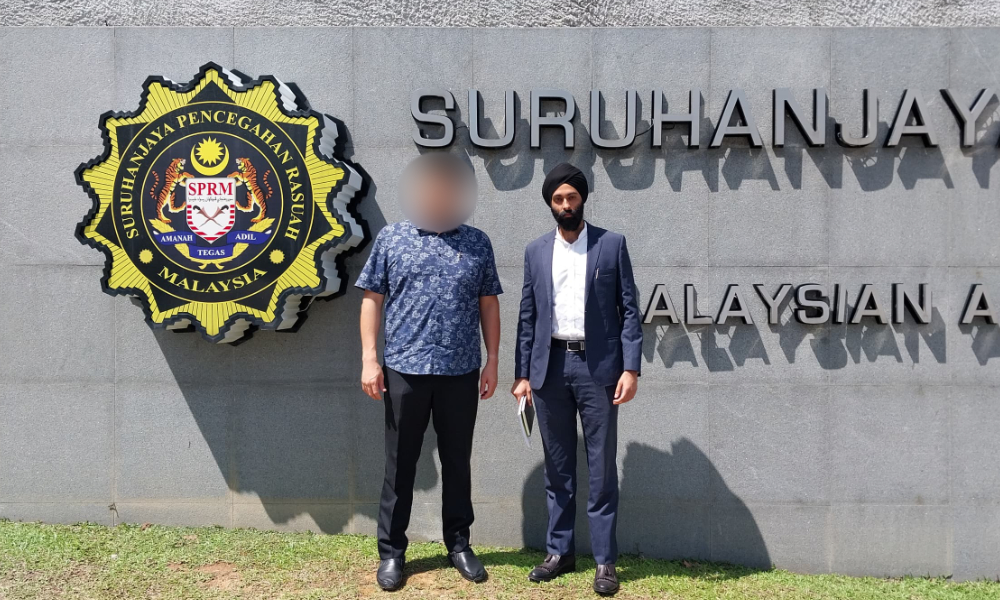
“At this juncture, I must make clear that without my client, the entire Sabah corruption scandal would not have even been investigated by MACC.
“My client’s disclosures, at serious personal risk, have greatly benefited the public interest.
“It is shocking and disappointing that my client is to be ‘rewarded’ with being charged with a criminal offence,” Mahajoth added.
Not eligible for protection
The whistleblower, known only as Albert, is understood to have submitted to the MACC extensive and unedited video recordings, with over 300 pages of corroborating evidence, call logs, WhatsApp message records, and other digital documentation supporting his allegations.
He had also sought protection after implicating many Sabah assemblypersons in the graft scandal, but was rejected.
Azam said that under the Whistleblower Protection Act 2010, a person involved in the offence they’re exposing is not eligible for whistleblower protection.
/file/publisher-c1a3f893382d2b2f8a9aa22a654d9c97/2024/12/53da8a84232d5acfa97c4aaeb8bef4f0.jpg)
/file/publisher-c1a3f893382d2b2f8a9aa22a654d9c97/2023/02/7c5ea83952999bc5b28648483620956e.jpg)
/file/publisher-c1a3f893382d2b2f8a9aa22a654d9c97/2025/03/2c5dfce826a7a9197301769c70ee8fbc.jpg)
/file/publisher-c1a3f893382d2b2f8a9aa22a654d9c97/2024/07/e1cafc0269da8518b0e1a0343224e649.jpg)
/file/publisher-c1a3f893382d2b2f8a9aa22a654d9c97/2025/06/4c44a8159da4b0d35755b55a607c86c8.jpg)
/file/publisher-c1a3f893382d2b2f8a9aa22a654d9c97/2025/05/20f7f51920736fb40931a5523f1182e9.jpg)


Report this comment
Are you sure you want to delete this comment?
This action cannot be undone.