


/file/publisher-c1a3f893382d2b2f8a9aa22a654d9c97/2024/05/041f927d343569950d6d16972b4c6018.jpg)

Many misunderstand whistleblower procedures - Azam
He said laws in this country are unlike those of the United States of America and protection is not automatically given.
“Firstly, a person cannot...
MACC chief commissioner Azam Baki said the public often misunderstands legal procedures related to whistleblowing in Malaysia.
He said laws in this country are unlike those of the United States of America and protection is not automatically given.
“Firstly, a person cannot expose information of an offence to the public and then request protection for providing information,” he said.
Azam explained that this is because the whistleblower may have already exposed their identity but their information had yet to be verified.
So it would be unreasonable to expect enforcement authorities to provide protection before any official reports have been lodged in such a case, he said.
READ MORE: KINIGUIDE | Whistleblower Protection Act 2010: What does it cover?
“Secondly, a person involved in the offence they are exposing is not eligible to request whistleblower protection,” he said, adding that this is stated under Section 11(1) of the Whistleblower Protection Act 2010.
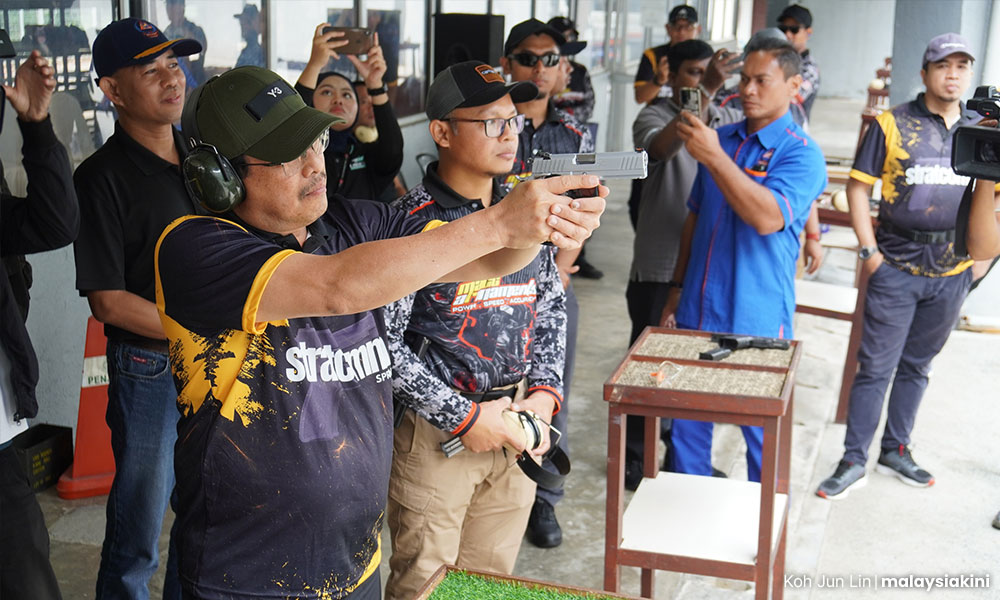
He was speaking during an event at the Malaysia Prisons College shooting range in Kajang, Selangor.
Although he did not name any specific cases, Malaysiakini recently reported on a whistleblower involved in the filming of assemblypersons discussing “bribes”.
Last week, Azam told Malaysiakini that the whistleblower must file an official complaint with his commission to enable the process of protection under the Whistleblower Protection Act.
It would be premature to guarantee protection before that is done, he said.
Meanwhile, Azam said today that he had instructed MACC officers to meet with the whistleblower’s lawyers to discuss the matter confidentially.
He also said the whistleblower must fulfil several conditions stipulated in the Whistleblower Protection Act before he can be given protection.
He added that Section 25 of the MACC Act penalises an individual for not reporting information. Those found guilty of this are subject to a fine of not more than RM100,000 and/or a prison sentence of up to 10 years.
“So the failure to report requests for or procurement of bribes can also be punished and (those guilty can be) imprisoned,” he said.
In a press conference after the event, Azam said he had only seen the videos related to the case that were circulating on social media.
As the head of an investigative body, he said he could not rely on social media content.
Aside from that, he had only listened to a 17-second audio clip.
“So I cannot really comment on who the state assemblypersons are (involved in the alleged bribery) and so on,” he said.
Whistleblower saga
Last Saturday (Nov 9), Malaysiakini reported that it had sighted eight videos, each featuring a different assemblyperson, discussing ”bribes” to support a project in their state.
The news portal was also shown documents related to the project as well as online banking details concerning the alleged bribes.
However, a source said while the whistleblower was willing to spill the beans, he wanted protection under the Whistleblower Protection Act.
The whistleblower has since admitted that he was the bribe-giver.
He has also sent a letter to Prime Minister Anwar Ibrahim to request that he be granted protection but this has since been rejected by the country’s top executive, who urged the authorities to also investigate the bribe-giver.
After that, the whistleblower penned an open letter to Yang di-Pertuan Agong Sultan Ibrahim Sultan Iskandar, asking the monarch to review the evidence he possessed and decide if he should be accorded protection.
While continuing his effort to get legal protection, the whistleblower received a death threat, which prompted him to lodge a police report.
/file/publisher-c1a3f893382d2b2f8a9aa22a654d9c97/2023/10/fb175fa214a3c6889ea683e9bd918a2f.jpg)
/file/publisher-c1a3f893382d2b2f8a9aa22a654d9c97/2024/10/87c97fe824ac39639e18b802042eeba0.jpg)
/file/publisher-c1a3f893382d2b2f8a9aa22a654d9c97/2024/09/6fceb59a2b8017ff526645f60253af12.jpg)
/file/publisher-c1a3f893382d2b2f8a9aa22a654d9c97/2024/10/c9d111551076dcc26f11e2f959687eeb.jpg)


Report this comment
Are you sure you want to delete this comment?
This action cannot be undone.