


/file/publisher-c1a3f893382d2b2f8a9aa22a654d9c97/2019/11/ae272057d31745954e2574d8cb5adb3b.jpg)

PPPA bans increasingly target LGBTQ+ media, local publications: Report
A report has found that the Printing Presses and Publications Act 1984 (PPPA) has been increasingly wielded against LGBTQ+ media and local publications in recent years.
According to Justice For Sisters (JFS) co-founder Thilaga Sulathireh, LGBTQ+ media accounted for 42 percent of all banned media between 2020 to May 2025.
Summary
A report by Justice For Sisters reveals that 42 percent of publications banned under the PPPA from 2020 to May 2025 were related to LGBTQ+ content, with bans on local publications and books rising sharply in 2024 and early 2025.
Activists argue the PPPA normalises public complaints against sexual minorities and topics of sexuality, leading to increased discrimination, censorship, and self-censorship among marginalised communities.
Amnesty International Malaysia’s Kiran Kaur warns that proposed amendments to expand the Home Ministry’s powers under the PPPA contradict the purpose of the newly formed Malaysian Media Council.
A report has found that the Printing Presses and Publications Act 1984 (PPPA) has been increasingly wielded against LGBTQ+ media and local publications in recent years.
According to Justice For Sisters (JFS) co-founder Thilaga Sulathireh, LGBTQ+ media accounted for 42 percent of all banned media between 2020 to May 2025.
She also noted that the increased use of the PPPA to ban local publications.
For example, five local publications were banned in 2024 while five others were banned in the first five months of this year, Thilaga said.
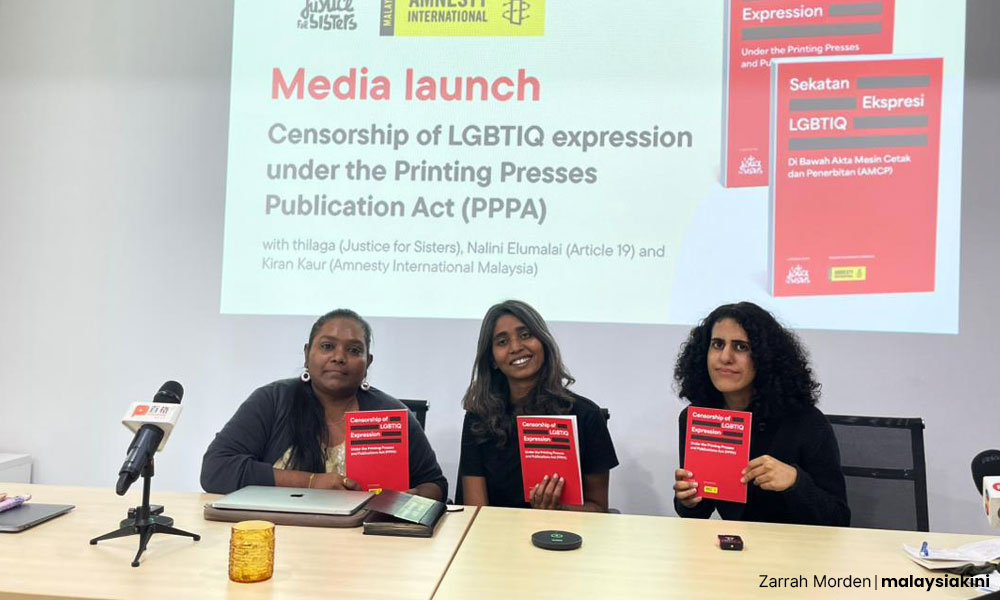
“In 2024, six books were banned. Now, within the first five months (of 2025), it’s already 12 books.
“So it is two times higher than the overall (number of) banned books in 2024,” she said at the launch of JFS’ “Censorship of LGBTIQ Expression Under the PPPA” report at the Amnesty International Malaysia office in Petaling Jaya, Selangor.
In May, the Home Ministry banned seven books under the PPPA over concerns of their impact on public morality and order, including the famous romance-comedy novel “Love, Theoretically” by bestselling author Ali Hazelwood.
The ministry said it decided to ban the books to control or prevent threats before they become harmful to the public.
In February, the Home Ministry announced that it had banned three other books over public morality concerns.
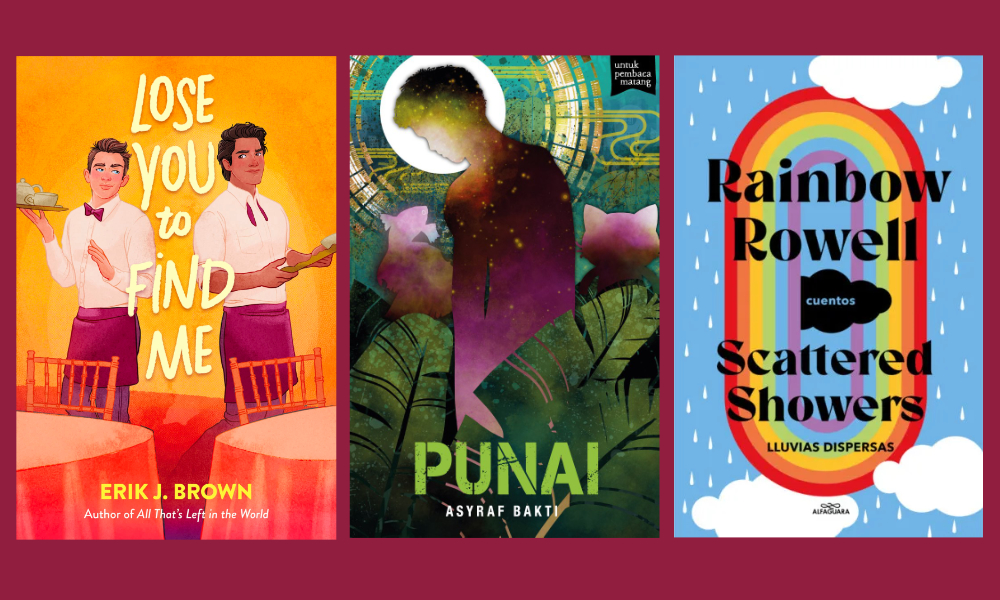
Book bans over issues of public morality are in line with Section 7(1) of the PPPA, which prohibits the printing, importation, reproduction, publication, sale, distribution or possession of materials that could compromise public morality in Malaysia.
‘Bans normalise LGBTQ+ discrimination’
Commenting further, Thilaga said such book bans normalise discrimination against sexual minorities, while silencing them.
“It (the PPPA) increases discrimination against LGBTQ+ people and marginalised groups because the PPPA allows impunity by encouraging members of the public to make complaints against undesirable publications.
“We have seen this in the past, with many different book launches and book events, where later there are campaigns to get them reported and things like that,” she explained.

However, she noted that such bans not only target publications that centre on the LGBTQ+ experience, but also those that touch on sex and sexuality.
She added that the weaponisation of the PPPA and the concept of morality of the majority are rooted in discrimination.
These situations cause those within affected communities to self-isolate, she said.
‘Censoring diversity’
Meanwhile, Article 19 senior programme officer Nalini Elumalai said that the construct of majoritarian morality limits diversity, labelling it as “censorship over diversity”.
Aside from affecting the constitutional freedom of expression, she said it also curbs the formation of an inclusive society.
This is because society has more polarised opinions, she explained.
“In the larger picture, it undermines democracy and prevents meaningful conversation and also critical thinking among Malaysians, which are essential for us to build a society that is informed and inclusive,” she added.
Meanwhile, Amnesty International Malaysia also launched a petition to call for the repeal of repressive laws.
At the same event, Amnesty International Malaysia’s freedom of expression campaigner Kiran Kaur expressed worries that proposed amendments to the PPPA would contradict the recently formed Malaysian Media Council (MMC).
“The increased regulation directly contradicts the purpose of the MMC, which is to self-regulate the media industry, but in a more independent and transparent manner.
“With the amendments that propose to increase the purview of the Home Ministry, increase regulation... that defeats the purpose of the MMC,” she said.
She warned that this would lead to systemic inefficiency.
Yesterday, the MMC appointed its founding board members.
This follows the passing of the MMC Act 2025 earlier this year, which came after decades of lobbying from civil society organisations and the news industry.
/file/publisher-c1a3f893382d2b2f8a9aa22a654d9c97/2025/07/8bb2a8c20256eb3850adbc1938643ab4.jpg)
/file/publisher-c1a3f893382d2b2f8a9aa22a654d9c97/2020/07/59b54da36eb5e23dd7917eaeed7780a7.jpg)
/file/publisher-c1a3f893382d2b2f8a9aa22a654d9c97/2024/09/f08fc6aaf9e972335c471a4902ef0dec.jpg)
/file/publisher-c1a3f893382d2b2f8a9aa22a654d9c97/2020/10/2bda679309c88e264ef963588bbe46d2.jpg)
/file/publisher-c1a3f893382d2b2f8a9aa22a654d9c97/2025/06/100576f12567e54e98295cee372f5fec.jpg)
/file/publisher-c1a3f893382d2b2f8a9aa22a654d9c97/2025/06/ed14a5e557c63a4d4629f47507fc3131.jpg)


Report this comment
Are you sure you want to delete this comment?
This action cannot be undone.