


/file/publisher-c1a3f893382d2b2f8a9aa22a654d9c97/2025/07/337c91471a5d10901dd91b3059eb1cba.jpg)

Remembering Bosnian genocide through M'sian lens, 30 years on
It was one of the bloodiest episodes of the Bosnian War, which lasted from 1992 until 1995 and left more than 100,000 dead, with over two million people displaced.
Behzo and his family were among those displaced.
Now aged 60, he arrived in Malaysia in 1993 as a refugee with his family of six. He has been here for more than three decades, and his family have all become permanent residents.
Behzo, who declined to publicise his full identity, recalled that...
Summary
On the 30th anniversary of the Srebrenica genocide, Bosnians in Malaysia and a Malaysian veteran reflect on our country’s involvement during the Bosnian War.
Malaysia sent hundreds of troops throughout the 1990s in both combat and non-combat roles to help rebuild the country after the war.
It was seen as a form of Muslim solidarity and is still remembered by Bosnians today.
July 11 marked 30 years since the Srebrenica massacre, which claimed the lives of more than 8,000 Bosnian Muslims in only two weeks.
It was one of the bloodiest episodes of the Bosnian War, which lasted from 1992 until 1995 and left more than 100,000 dead, with over two million people displaced.
One survivor, Behzo, and his family were among those displaced.
Now aged 60, he arrived in Malaysia in 1993 as a refugee with his family of six. He has been here for more than three decades, and his family have all become permanent residents.
Behzo, who declined to publicise his full identity, recalled that he was 27 years old when he was rounded up by the Bosnian Serb militia and sent to three different concentration camps.
He explained that his village in Kozarac was one of the first to be ethnically cleansed, and that mass killings and displacement had already begun a few years before the genocide in Srebrenica.
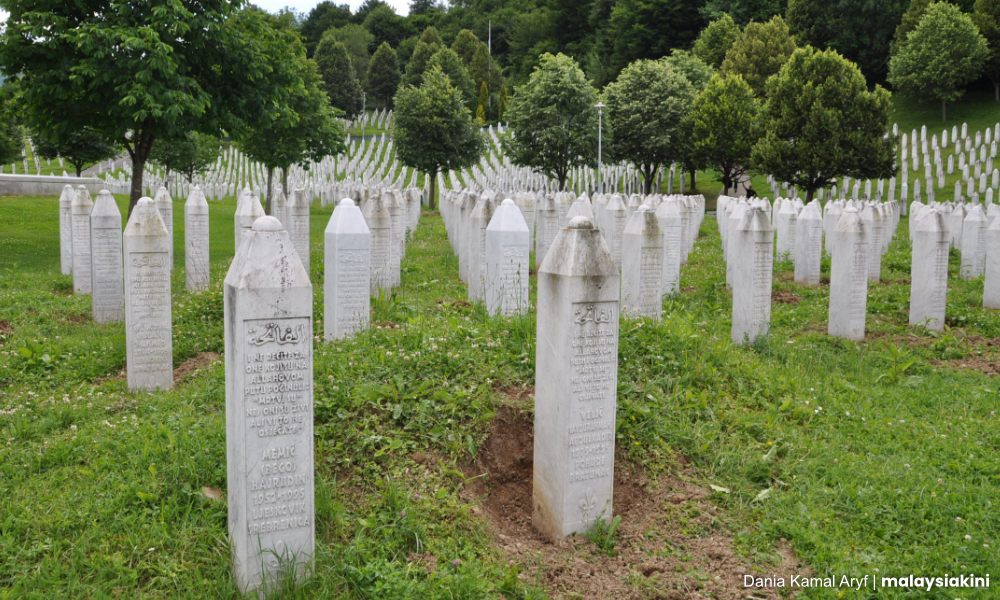
“Bosnian Muslims were being genocided everywhere, not just in Srebrenica. In the town of Prijedor, for example, more than 2,000 people were killed, including babies. They are still digging mass graves there until today,” he said.
Efforts are still underway in Bosnia and Herzegovina to locate mass graves throughout the country. Over the years, more than 94 mass graves have been exhumed, where Serb forces deliberately relocated victims’ remains to conceal evidence of mass killings.
Almost 2,000 missing persons from the genocide have yet to be found and identified.
In 1992, Bosnia was among several states that voted to secede from the Federal Socialist Republic of Yugoslavia, which eventually disintegrated into seven independent nations over the next decade. The Yugoslav wars of the 1990s then became the deadliest armed conflict in Europe since World War II.
Malaysia began to send troops in 1993, after then-prime minister Dr Mahathir Mohamad became increasingly vocal in raising local and international awareness on the plight of Bosnian Muslims.
Retired Malaysian armed forces veteran Tairobi Abdul Razak was one of the earlier military officials sent to Bosnia. In 1993, many of the armed forces officials barely knew much about the ongoing war, and initially did not expect to be deployed.
Tairobi recalled that he was only given a week’s notice before deployment. He also explained that Malaysia’s involvement in Bosnia was very different to previous military interventions.
Malaysia usually chooses to remain a neutral peacekeeper in foreign conflicts, but in the case of Bosnia, our country eventually sent hundreds of people throughout those few years, he said.

Many of those deployed were in non-combat roles, and on average, their terms lasted for a year before returning home and being replaced by a newer cohort of military officials.
Horrors of war
While many from Malaysia’s armed forces were designated to serve as part of the Malaysian battalion (Malbatt), Tairobi was instead sent to work directly with the United Nations Protection Force (Unprofor), as head of the UN Military Observer, from late 1993 till early 1995.
“When I first arrived in Sarajevo, the UN van that came to pick me up was immediately shot by Serb forces, before we even left the airport. It was my first time experiencing violence like that. It shocked me at first, but eventually, I got used to it.
“While Malbatt officials were housed in their respective accommodations, I had to live amongst locals, because I worked directly with the UN. I remember my apartment building also being shot at, multiple times.
“Often, I also had to go through checkpoints managed by Serb forces, who attempted to restrict and control our movements. In winter, electricity was shut off, and food was scarce.
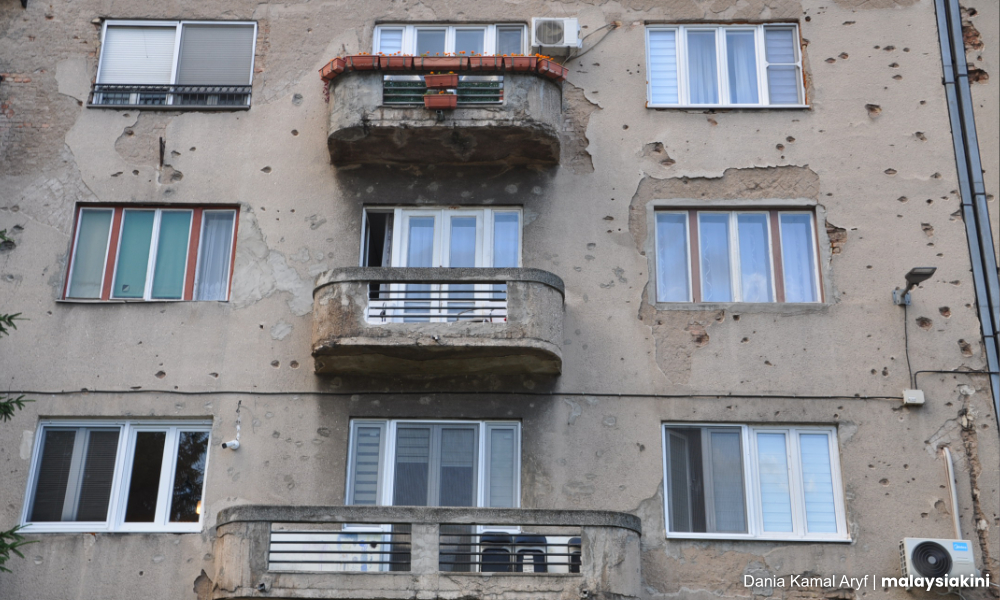
“The locals experienced much worse during the siege of Sarajevo, which lasted for several years, and mass starvation occurred.”
Tairobi also explained that his role as military observer meant he was never directly involved in combat, but was often required to facilitate negotiations, reconciliatory efforts, and prisoner exchanges between warring factions.
“In these reconciliatory efforts, I have personally witnessed the aftermath of deadly attacks, where I saw dead bodies littered everywhere.
“Yet, imagine the cruelty of the Serb forces – if they constantly attacked UN officials, how much worse was the violence they inflicted on Bosnian locals?” he asked.
When Serb officials ethnically cleansed local villages, young men like Behzo were targeted and rounded up into concentration camps, while women and children were forcibly evacuated from their homes and separated from their families. Mass rapes, torture, and starvation were still widespread, even outside the concentration camps.
“We were instructed to put up white flags by our windows, to signify that there were Bosnian Muslims in the house. We were forced to announce our presence and to wait for the Serb forces to come and kidnap us.
“You could not lie about it or hide, because they would find out, and they would try to kill you anyway,” said Behzo.
“I spent exactly 210 days in the concentration camps. It is honestly a miracle that I survived. I really am one of the lucky ones. Every morning in the camps, we would report our attendance to the Serb forces, just waiting to be killed. We were rounded up and confined in a place where we were tortured and starved daily.”
Choosing Malaysia
Shortly after being transferred to the third camp near Manjača, Behzo said they were eventually discovered and rescued by the UN and Red Cross. They were then brought to a UNHCR refugee camp in Croatia and reunited with their families.
At the refugee camp, survivors could choose from several countries which were accepting Bosnian refugees. Many chose to resettle in neighbouring European countries, and Malaysia was not the most ideal option for many Bosnians at the time.
“Nobody wanted to go to Malaysia at first,” Behzo recalled, laughing.
“Many of us have not even heard of Malaysia before, and it seemed so far away. But eventually, after weighing my options, I chose Malaysia because it was the only country at the time which allowed Bosnian refugees to bring along their extended family.
“I didn’t want my family to be separated. Alongside my wife and daughter, I also wanted to bring my brother, his wife, and their children with me, and many European countries wouldn’t allow that, back then,” he shared.
“Amongst all the Muslim countries, Malaysia also had the most welcoming policies towards Bosnian refugees at the time,” he added.
Eventually, hundreds of refugee families chose to resettle in Malaysia, especially throughout the 1990s, and they all found Malaysia to be very welcoming, he recalled.
Behzo proudly said that Malaysia is now his home, and for the past three decades, he has never regretted coming here.
“My children consider themselves Malaysian. My daughter was born in Bosnia and was very young when the war broke out. But my son, who is now 30, was born and raised here. Both my children went to local schools and sat for SPM, and they are working in KL.
“I always make sure that my children do not forget their heritage, so we speak Bosnian at home. But my children speak a mixture of Bosnian, Malay, and English among themselves.”
He also emphasised the significance of Muslim solidarity and the safety he feels as a Muslim in Malaysia.
“In Malaysia, I never feel like I have to hide my identity or my religious beliefs. Here, I have never had to worry about being discriminated against, or being seen differently for being Muslim.
“Whether Bosnian Muslims are religious or not is a different story altogether, because at the end of the day, my people were still being genocided for the sole reason of being Muslim,” said Behzo.
Global Muslim solidarity
Tairobi also expressed similar sentiments, and explained how Malaysia’s support for Bosnia during the war eventually left a significant impact in the form of global Muslim solidarity.
While Malaysia may not have provided the most arms, artillery, or financial aid, the country’s welcoming policies towards Bosnian refugees and outspokenness during the genocide are still widely remembered, he said.
Tairobi and Behzo also mentioned the significant role played by Mahathir, who is still remembered fondly by many Bosnians.
“Bosnians in Bosnia still remember Malaysia, and how Malaysia helped us during the war. Malaysia gave us that brotherhood, and the Malbatt forces, which were sent to Bosnia during the war, were also seen by Bosnians as their Muslim brothers,” said Behzo.
The International Islamic University Malaysia (IIUM) has also played a significant role as an educational and community hub for Bosnians in Malaysia.
Safija Spahić, born and raised in Kuala Lumpur to a Bosnian father, IIUM professor Omer Spahić, and Malaysian mother, proudly announced that her entire immediate family are all IIUM alumni.
“My father was studying in Egypt when the war broke out. When he realised that he could not return to Bosnia, he came to Malaysia in 1992 as a refugee, and pursued his post-graduate studies at IIUM, which was also where he met my mother,” she said.
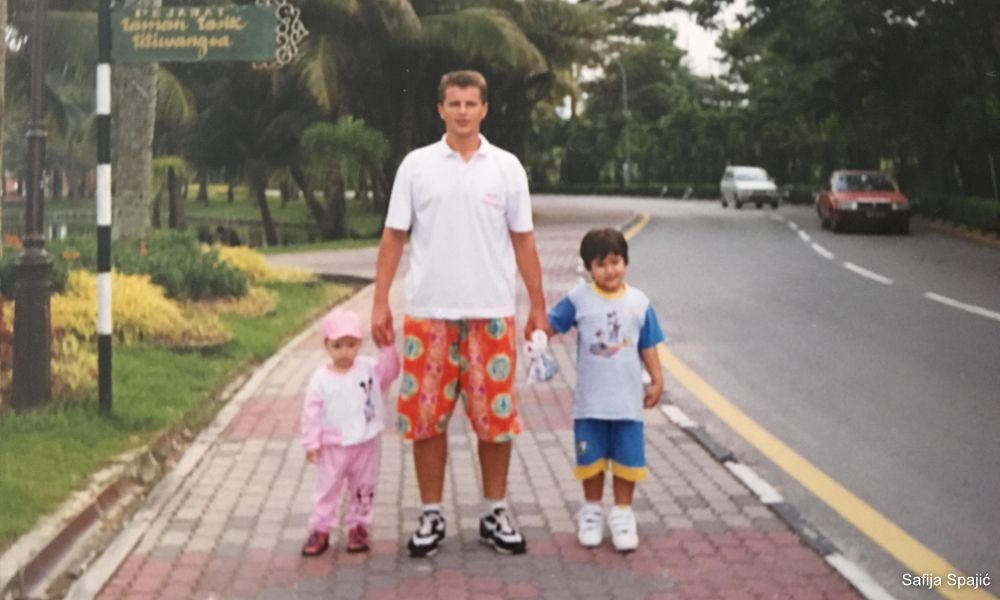
Safija also emphasised that the camaraderie among IIUM alumni remains strong, even among many who have returned to Bosnia, who still think fondly of their time in Malaysia.
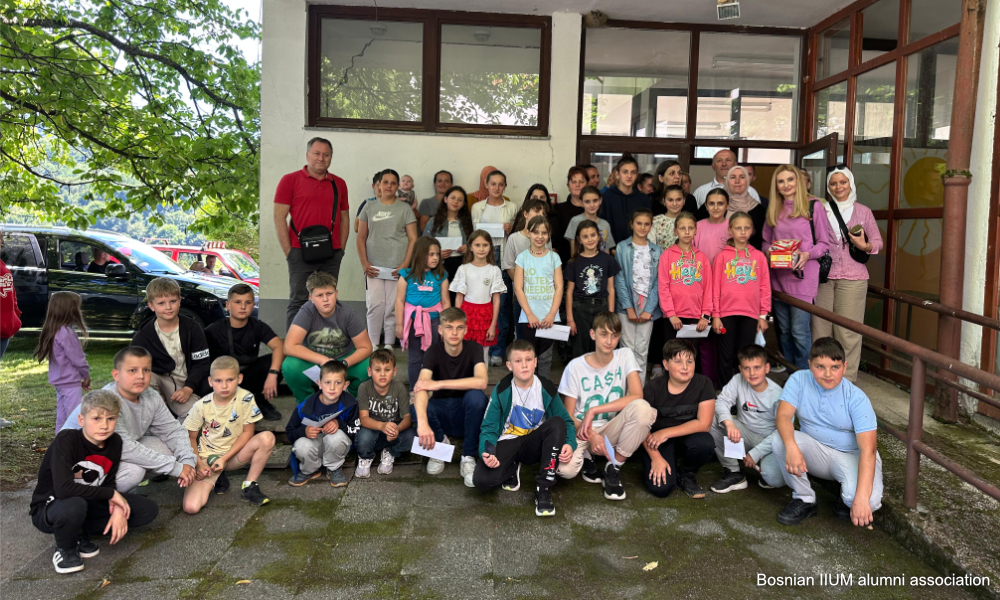
During Ramadan, for example, the alumni association organises regular iftar sessions in Sarajevo and annual qurban activities on Hari Raya Haji for the victims of Srebrenica.
This year alone, the alumni association held a qurban for more than 100 families. For the past 20 years, the alumni have also conducted fundraising efforts to support schools and provide scholarships for children in Srebrenica.
Returning to the homeland
Many years after the war ended, however, many Bosnians have returned to their home country - including Safija, who migrated earlier this year after marrying a Bosnian man.
There, many of those who returned found that although the fighting might be over, political fragmentation, ethnic tensions, and generational trauma from the war continue to leave a lasting impact.
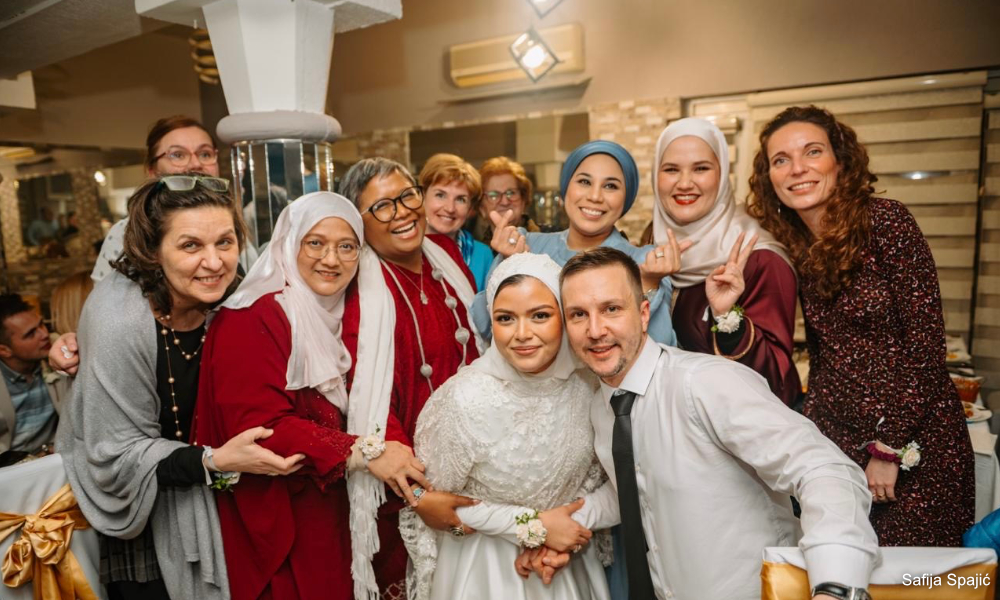
In November 1995, the war concluded with the signing of the Dayton Agreement, establishing a three-president political system with one president from each ethnic group - the Bosniaks, Serbs, and Croats - and dividing the country into two separate entities.
While most of the country falls under the administration of the Federation of Bosnia and Herzegovina, more than a million citizens also live under a separately governed, Serb-administered region, known as Republika Srpska.
Here, citizens, regardless of ethnicity, are subject to different laws and customs from the rest of the country. The Serbian flag is flown in abundance, signboards are written in Serbo-Cyrillic, and children are taught an entirely different Serbian-language syllabus in schools.

For Safija, her decision to migrate made her realise all the things she took for granted growing up Muslim in Malaysia.
“My husband’s family is originally from Foča, which is now part of Republika Srpska. Before the war, there were more than 2,000 Muslim families living there, but now, my in-laws tell me that there are only 10 Muslim families left in the village.
“As someone who wears the hijab and looks visibly Muslim, I feel very cautious about it. This was something that never once crossed my mind when I was living in Malaysia. Ethnic tensions still exist throughout the country, and Serbs are still a significant part of the population here,” said Safija.
“For example, just a few weeks ago, my husband and I stopped for petrol while driving through Republika Srpska. I wanted to use the bathroom at the petrol station, but my husband insisted that I stay in the car, because he was worried for my safety, since I was wearing the hijab.
“But whenever I step outside the house, even in a multi-ethnic and multicultural city like Sarajevo, I always wonder how many of these people might have been complicit in the genocide, and if they have family members who have participated in the mass killings of Bosnian Muslims.”
Participants in war and genocide
The extent of war crimes committed by the former Yugoslav army, especially by the dominant Serb forces, eventually led to the establishment of the International Criminal Tribunal for the former Yugoslavia (ICTY) at the International Court of Justice (ICJ). The tribunal evolved into a lengthy, drawn-out process which only concluded in 2017.
While several military officials, such as Ratko Mladić, infamously nicknamed “the Butcher of Bosnia”, had been charged and imprisoned by the ICJ, many who now reside in Republika Srpska continue to live freely without consequences and engage in genocide denial.
Safija emphasised the importance of recognising ordinary people’s complicity in the genocide, especially in relation to what is happening in Palestine today.
“Aiding and abetting was eventually declared a war crime by the UN, due to how prevalent it was in Bosnia. Ordinary citizens who did not bear arms still supported their family members participating in the onslaught against innocent civilians.
“Many ordinary citizens also helped clean up dead bodies and blood on the streets. In Sarajevo today, you will find red paint splattered all across the city, which is meant to commemorate a place where people were killed, or where a grenade had exploded.”
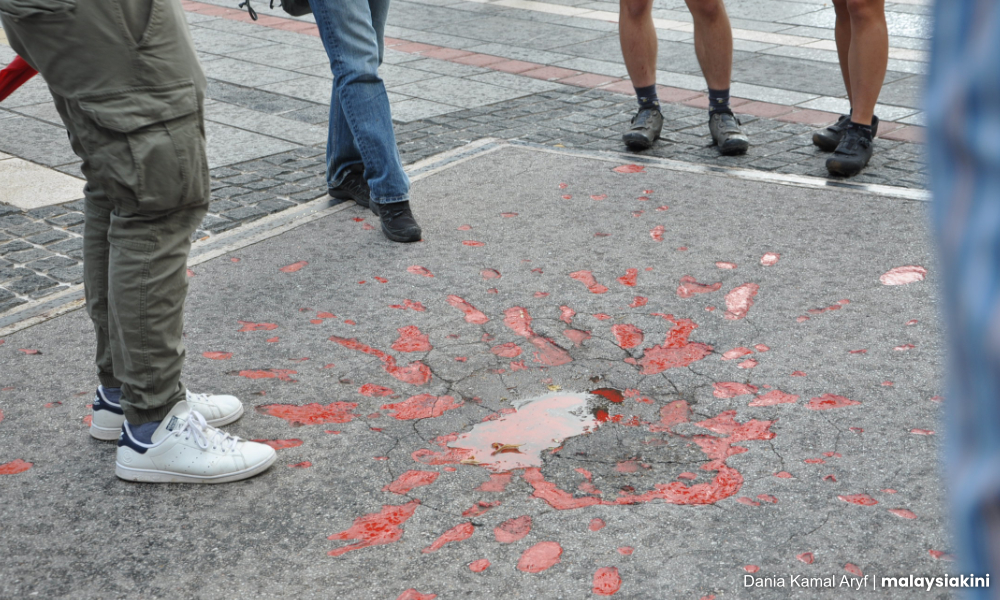
Safija said it is worth remembering how many ordinary citizens, especially in Republika Srpska, are also now living in territories that have been ethnically cleansed during the genocide.
Similar to the Israelis, she said, Serb forces violently displaced local villagers and occupied the homes and land originally owned by Bosnian Muslims.
She notes many parallels between Bosnia and Palestine, and described the ongoing genocide in Gaza as a “carbon copy, if not, so much worse”, of what happened in Bosnia.
“Srebrenica, 30 years ago, was also designated as a UN safe zone, exactly similar to Rafah in Gaza. Yet, both these places were still bombed and massacred by the occupying forces.
“Sometimes it feels like nothing has changed, even after 30 years. It feels like the world hasn’t learned anything. The same thing that happened in Bosnia is happening in Palestine today, and it has also happened in places like Rwanda, Sudan, Cambodia, and Myanmar,” she said.
Safija, who previously worked for the UNHCR in Kuala Lumpur, also argues that the UN needs to be significantly restructured.
“While the work done at a grassroots level, by people at the UNHCR, for example, is incredibly impactful and important, the fact that UN bureaucracy at a higher level has failed to prevent several other genocides is proof that the system is outdated and ineffective,” she said.
Tairobi raised identical concerns by asking, “What is the effectiveness of the UN at this point?”
“Especially with what is happening in Palestine, I think this question has become ever more relevant now than it already was in 1995,” he said.
Behzo, as a genocide survivor, also expressed that the ongoing genocide in Palestine should be everyone’s responsibility, and that all humans deserve to live with freedom and dignity.
“When I arrived in Malaysia at 28 years old, it felt like I had finally gotten my freedom back, after it had been taken away from me.
“So the most valuable thing in the world, to me, is freedom. Material things do not matter anymore, as long as we get to live with freedom and dignity.
“Back then, Bosnian Muslims were being sacrificed for someone else’s fun. The same thing that happened with Bosnian Muslims is happening in Palestine now, and the world, especially Muslim countries, should be more united to stop it from happening.”
/file/publisher-c1a3f893382d2b2f8a9aa22a654d9c97/2024/10/9e5747e96257753e3d4147612d545407.jpg)
/file/publisher-c1a3f893382d2b2f8a9aa22a654d9c97/2023/04/350a215baa98debc6005898607679e89.jpg)
/file/publisher-c1a3f893382d2b2f8a9aa22a654d9c97/2021/08/a5d8c5b646e6dc2884fa77c14765f6a1.jpg)
/file/publisher-c1a3f893382d2b2f8a9aa22a654d9c97/2023/11/dfe471d6ef50abf509a98ca8d2bce6e9.jpg)


Report this comment
Are you sure you want to delete this comment?
This action cannot be undone.