


/file/publisher-c1a3f893382d2b2f8a9aa22a654d9c97/2025/06/d0df84233743e74648966134aa684811.jpg)

MCA demands uni admission data amid foreign student concerns
Party vice-president Tan Teik Cheng said the minister’s verbal denial that international students, particularly those from China, were displacing locals was insufficient without clear, transparent figures.
“MCA has...
Summary
MCA’s VP calls on the higher education minister to publish public university admissions data, stressing that foreign student intake must not reduce opportunities for Malaysians.
Tan Teik Cheng cites complaints that high-performing students are rejected through the UPU system, while others enter via costly direct admissions, suggesting a profit motive.
He proposes publishing all admission statistics, conducting joint on-site university visits, and establishing a Royal Commission of Inquiry.
MCA called on Higher Education Minister Zambry Abdul Kadir to publish detailed admissions data for public universities, warning that the intake of foreign students must not come at the expense of local students.
Party vice-president Tan Teik Cheng said the minister’s verbal denial that international students, particularly those from China, were displacing locals was insufficient without clear, transparent figures.
“MCA has never opposed the presence of international students in Malaysia. Students from China and other nations are welcome, and we recognise their contribution to academic diversity.
“However, public universities are supported by government funds. As such, there must be a balance between attracting international students and safeguarding local students’ access to education,” he said in a statement today.
Yesterday, Zambry denied allegations that students from China limit opportunities for Malaysian students to enter public universities, saying local students have always been a priority.
This was in response to MCA president Wee Ka Siong, who raised the matter in Parliament the day before.
Wee claimed that more students from China are gaining admittance to public universities here as they can afford the fees, unlike Malaysians.
Profit motives
Commenting further, Tan (above) claimed that an increasing number of parents and students have approached MCA over the rejection of high-performing students through the Central University Admission Unit (UPU) system.
“In contrast, others have gained entry through direct admissions - often with hefty tuition fees.
“This trend suggests that profit motives may be taking priority over merit and fairness,” he said.
Tan proposed the following measures:
for Zambry to publish all relevant admission statistics,
that the minister carries out on-site visits with MCA, and
the establishment of a Royal Commission of Inquiry (RCI) to probe the impact of the direct admission system and to clarify the government’s direction for public universities.
He also urged the Higher Education Ministry to release the number of STPM students who received placements in public universities this year.
Public university funding crisis
During Wee’s speech in Parliament debating the 13th Malaysia Plan on Tuesday, he mooted the formation of an RCI to review the transparency of student admissions into public universities.
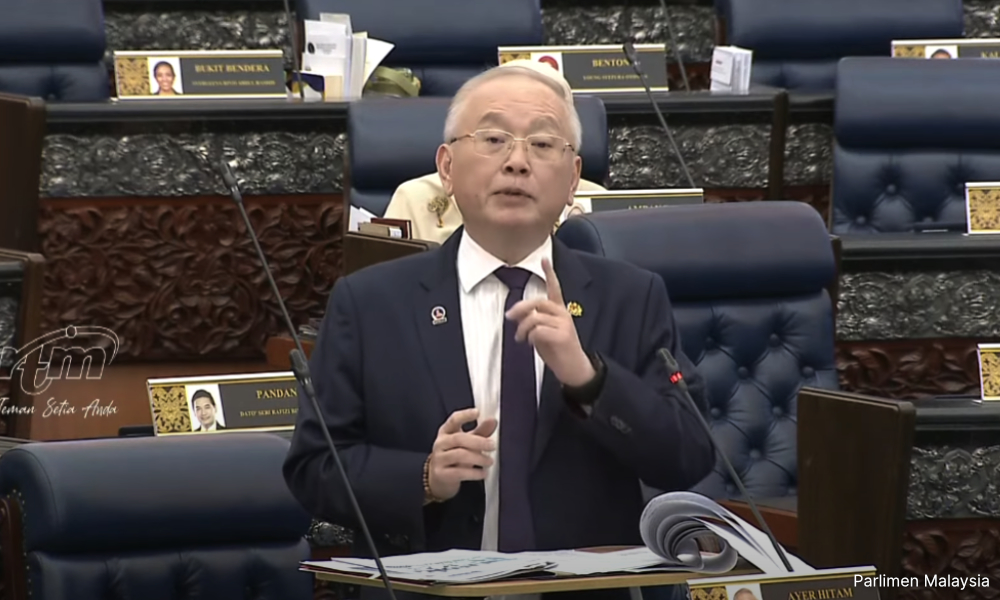
He also urged the government to reform the higher education sector, which he claimed was facing a serious funding crisis, leading to an increasing reliance on commercial fees to sustain operations.
“According to the latest data, some universities only received 61 percent of their requested allocation, forcing them to rely on student fees as the main revenue source, rather than research (R&D) or consultancy services,” he said.
Citing Universiti Malaya (UM) as an example, Wee noted the public institution raised its medical course fees under the Open Channel to RM500,000 for the 2025/2026 intake - a 67 percent increase from the previous year.
/file/1214/e65180fb9fe4c29c403c278ce685ec2e.jpeg)
/file/publisher-c1a3f893382d2b2f8a9aa22a654d9c97/2025/08/7ff0f120ca08b0e032292970e4eb06ca.jpg)
/file/1183/1e5bcde6746874056fed0c7854bd7de4.jpeg)
/file/1337/2c3d7d2d868663e6fc3c372d9122dc5b.jpeg)


Report this comment
Are you sure you want to delete this comment?
This action cannot be undone.