


/file/publisher-c1a3f893382d2b2f8a9aa22a654d9c97/2022/12/8fde8817a2e5e02d350fd76645a12789.jpg)

AGC files appeal against parts of Sabah ruling
This is regarding the 40 percent special grant as per Article 112D of the Federal Constitution.
Documents sighted by Malaysiakini showed that...
The Attorney-General’s Chambers has appealed against parts of the Kota Kinabalu High Court’s ruling dated Oct 17 that ordered the federal government to hold another review with the Sabah government.
This is regarding the 40 percent special grant as per Article 112D of the Federal Constitution.
Documents sighted by Malaysiakini showed that the notice of appeal was filed at the Court of Appeal yesterday (Nov 13).
The AGC is also appealing against the court’s findings on evidence relating to the existence of an ongoing review between the federal government and the state government.
Interpretation, application of Article 112D
Apart from appealing against the order to hold another review with Sabah, the AGC is appealing against the court’s interpretation and application of Article 112D of the Constitution, which formed the basis of the order.
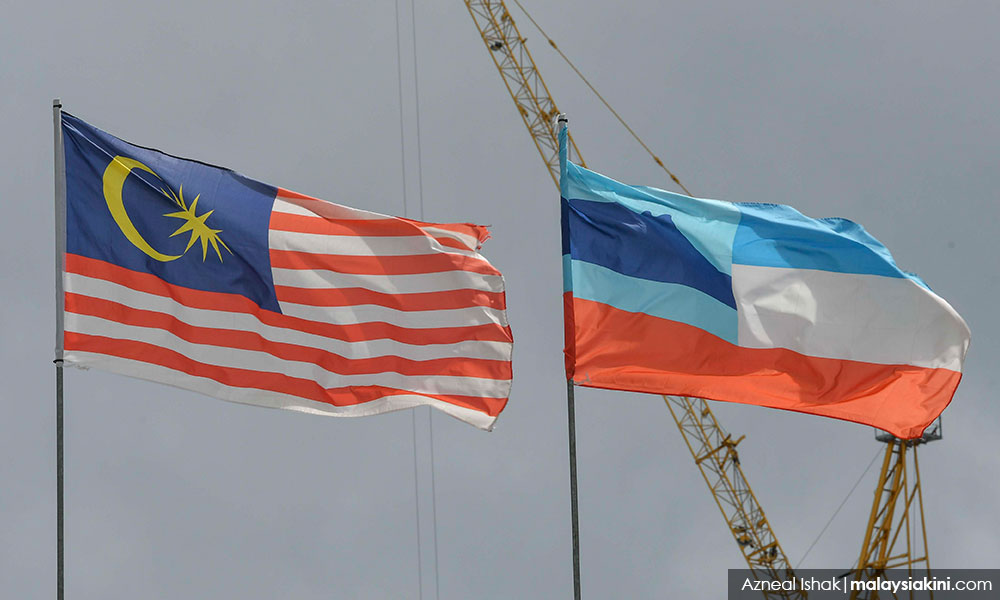
Article 112D mandates the periodic review of special grants paid by the federal government to Sabah and Sarawak.
The AGC is appealing against the court’s findings and declaration that Putrajaya and the Sabah government’s use of powers under Article 112D amounted to an abuse of power and a breach of constitutional duties.
It is also appealing against the court ruling that found no evidence of an existing ongoing review between the two parties.
An appeal is also being made against the court’s ruling that found the special grant review orders - gazetted on April 20, 2022, Nov 24, 2023, and Aug 27, 2025 - illegal, irrational, procedurally improper, or disproportionate.
“(The appellant is also appealing against) an order that the appellant pays the entitlement as constitutional damages for breach of Article 5 and 13 of the Constitution,” the documents read.
What does this mean?
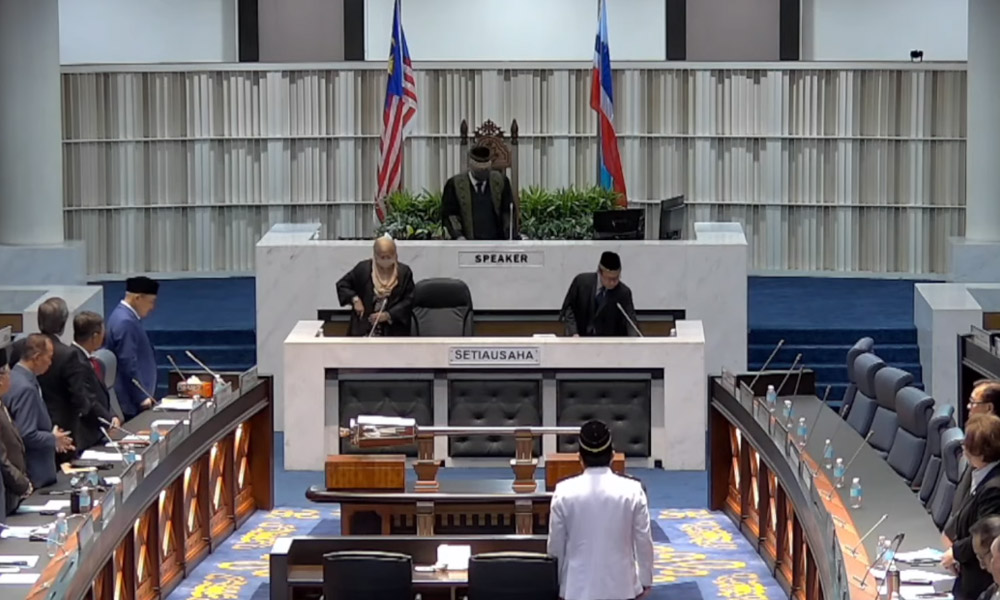
Former Sabah Law Society (SLS) president Roger Chin explained that while it is accurate that the government has not challenged the constitutional formula for the 40 percent entitlement for Sabah, the appeal is far broader than what was publicly represented.
“It seeks to overturn the findings that no lawful review took place after 1973, that the Gazette Orders issued in 2022, 2023, and 2025 were unconstitutional, and that both the federal and Sabah governments breached their constitutional duties.
“It also challenges the orders requiring constitutional damages and an accounting of the sums owed.
“Because the government did not appeal the High Court’s interpretation of the 40 percent formula under Article 112C, the formula now stands as the binding basis for all future payments.
“In practical terms, the constitutional method for calculating Sabah’s entitlement is affirmed and must be applied unless and until a lawful review under Article 112D changes it in accordance with the Constitution,” Chin explained.
He said that, however, the fact that the formula stands does not guarantee Sabah’s future entitlement, because while the formula is on paper, Sabah will have no legal route to make the federal government actually pay.
Chin said that without the High Court’s orders compelling disclosures, fresh reviews, and accountability, Sabah would have no way to require the federal government to calculate what is owed or to make any actual payment.
“The formula would remain valid in principle, but effectively inoperative.

“In effect, the Notice of Appeal strikes at the core of the High Court’s decision. Although it does not challenge the 40 percent formula itself, it challenges every operative finding that gives the formula real effect.
“If the federal government succeeds, the 40 percent entitlement will remain law in theory but will be deprived of practical force - exactly the position Sabah has faced for decades,” he added.
Chin said that these are not “defects” in the judge’s reasoning, but findings that explain why Sabah received only a fraction of its constitutional entitlement for nearly half a century.
“By appealing these findings, the federal government is effectively contesting the legal consequences of the lost years - the 48 years from 1974 to 2021, during which mandatory reviews never occurred and the 40 percent entitlement was not paid.
“Put plainly, the Notice of Appeal attempts to preserve the form of the 40 percent entitlement while removing the accountability that gives it substance. If the appeal succeeds, the formula survives, but Sabah may be denied almost five decades of arrears arising from non-compliance.
“For this reason, the position expressed on Nov 11 and the position reflected in the Notice of Appeal cannot be regarded as identical. One suggested a narrow and technical appeal. The other challenges the core findings that justify repayment, accounting, and constitutional responsibility.
“The difference is significant, and the public deserves clarity, not ambiguity,” Chin added.
Acted unlawfully
Kota Kinabalu High Court judge Celestina Stuel Galid ruled on Oct 17 that the federal government acted unlawfully and beyond its powers under the Constitution by failing to honour Sabah’s 40 percent share of federal revenue for nearly five decades.
Following this, she declared the special grant review orders jointly issued by the federal and state governments were “unlawful, ultra vires (beyond the powers), and irrational”.
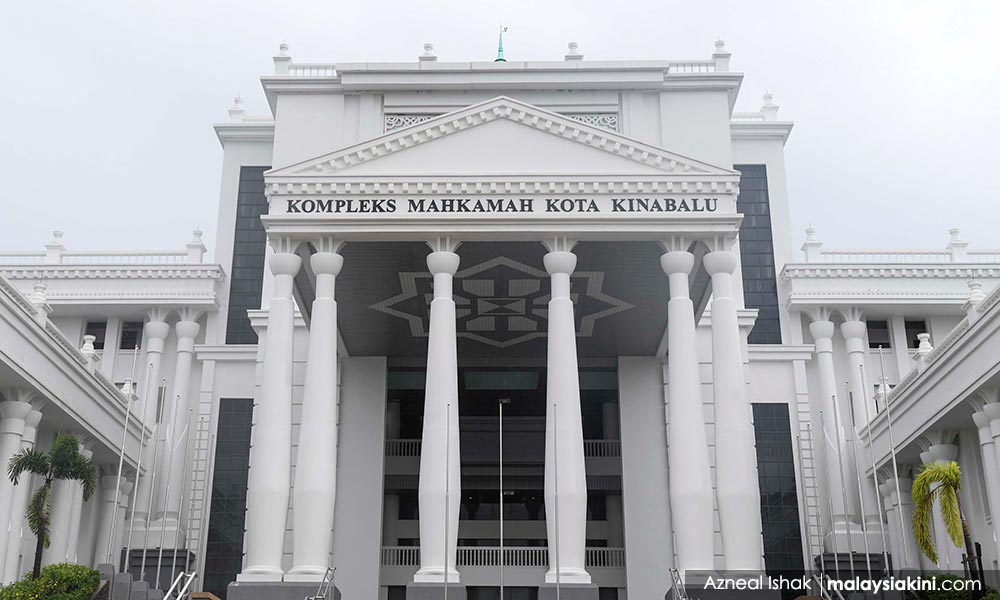
The court also issued a mandamus order directing Putrajaya to conduct a new revenue review with the Sabah government under Article 112D of the Constitution and to agree on the state’s 40 percent entitlement for each financial year from 1974 to 2021, with the review to commence within 90 days and conclude within 180 days.
The court also accepted a request from the Sabah Law Society (SLS) to recognise a Fourth Review Order, gazetted on Aug 27, 2025, noting that it carried the same effect as the previous orders and should be included for completeness in the final certiorari order.
After the decision, Ewon Benedick resigned from his position as entrepreneur and cooperatives development minister on Nov 8, following a resolution passed by an Upko division on Oct 18, which urged him to quit if an appeal is filed.
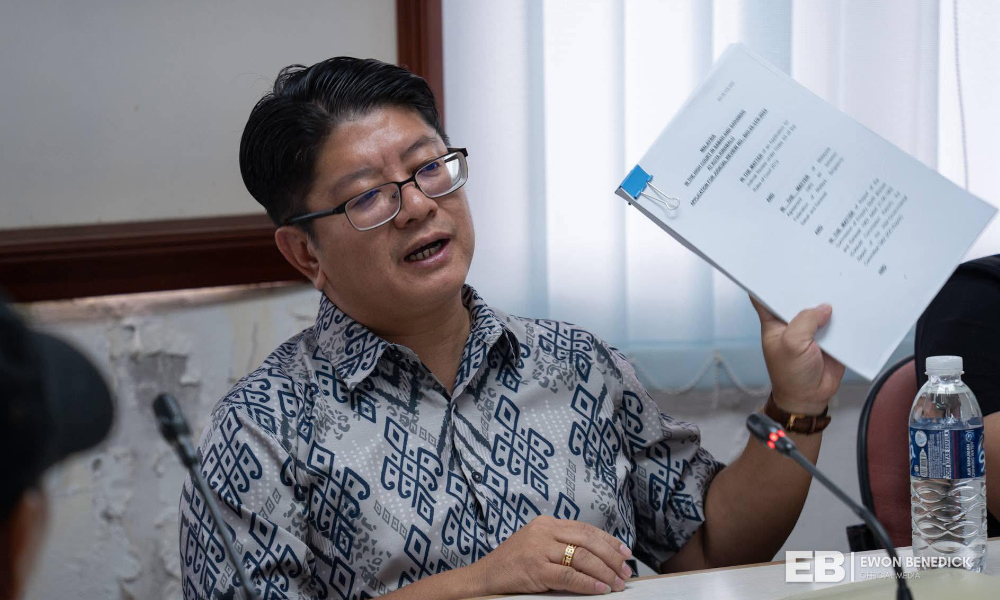
The AGC, on Nov 11, said in a statement that they will not be appealing against the 40 percent revenue entitlement, but instead, the appeal would only be against parts of the judgment.
On Nov 12, Chin opined that the federal government’s acceptance of Sabah’s 40 percent rights is a step in the right direction, despite their intention to appeal.
Prime Minister Anwar Ibrahim echoed the AGC’s statement on Nov 13, where he emphasised that he does not want the matter to become a political polemic.
/file/publisher-c1a3f893382d2b2f8a9aa22a654d9c97/2022/12/8fde8817a2e5e02d350fd76645a12789.jpg)
/file/publisher-c1a3f893382d2b2f8a9aa22a654d9c97/2024/08/4852517293e0f3de4fa77729869870db.jpg)
/file/publisher-c1a3f893382d2b2f8a9aa22a654d9c97/2025/11/1ef705745cac850e79e51da3aaa50c9e.jpg)
/file/publisher-c1a3f893382d2b2f8a9aa22a654d9c97/2025/11/4d0bb7f3eaddb21cb9c5a0e666eafd95.jpg)


Report this comment
Are you sure you want to delete this comment?
This action cannot be undone.