


/file/publisher-c1a3f893382d2b2f8a9aa22a654d9c97/2024/10/b3d8be28efbd002114776d41ac2d9a0c.jpg)

Rising racial and religious rhetoric in Parliament, report finds
Launched at the Sultan Abdul Samad building today, the Malaysia Racism Report 2025 documented its highest number of incidents to date - with 107 cases recorded across the board...
Pusat Komas’ annual racism report revealed a heightened trend of racial and religious rhetoric surfacing in Parliament last year, with opposition MPs repeatedly flagged for such remarks.
Launched at the Sultan Abdul Samad building today, the Malaysia Racism Report 2025 documented its highest number of incidents to date - with 107 cases recorded across the board.
The report grouped incidents into three broad categories - social settings, public discourse and policy, and parliamentary proceedings.
Of the 107 cases highlighted, 43 incidents or 40.2 percent, occurred in the Dewan Rakyat - narrowly trailing public discourse (45 cases), but proportionally significant due to its concentration during parliamentary sittings.

This marks the second time racism in Parliament accounted for the largest share of documented cases, since Pusat Komas started tracking parliamentary debates more closely in the previous year’s report.
In comparison, the 2024 report recorded 28 cases in Parliament.
Of the 42 cases in Parliament, most of them are related to racial majoritarianism and Article 153 of the Federal Constitution, accounting for 18 incidents or 16.8 percent of all documented cases last year.
Article 153 stipulates the special position of Malays, and natives of Sabah and Sarawak, particularly in areas of public service, education, and business and trade licences and permits.
Xenophobic rhetoric (nine cases) ranked as the second most frequent type of racism in Parliament, followed by religious rhetoric and fearmongering (8), language and exclusion (6), weaponisation of Palestine (1), and weaponisation of places of worship (1).
“Taken together, these figures suggest that parliamentary incidents in 2025 were driven primarily by racial majoritarian framing, alongside recurring xenophobic and religious rhetoric,” the group added.
However, Pusat Komas noted that the prominence of racism in Parliament in the report is partly due to better documentation through official Hansard records, making such incidents easier to verify than those in everyday settings.
“Compared to incident sources from public reporting, parliamentary incidents are therefore less prone to omission, undercounting, or uncertainty.
“Hence, this number could reflect the relative verifiability of parliamentary records, rather than a direct comparable rise in incidents across other settings,” the group explained in the report.
Opposition MPs take the spotlight
Among the 30 parliamentarians tabulated, Perikatan Nasional MPs were among the most frequently cited, with 22 MPs from the opposition bloc mentioned in the section on racism in Parliament.
Top offenders include Hulu Terengganu MP Rosol Wahid and Pendang MP Awang Hashim, who were each mentioned five times.
Rosol was flagged for a series of remarks emphasising the primacy of Bahasa Malaysia, which the report said was an action that could be perceived as dismissive of Malaysia’s linguistic diversity.
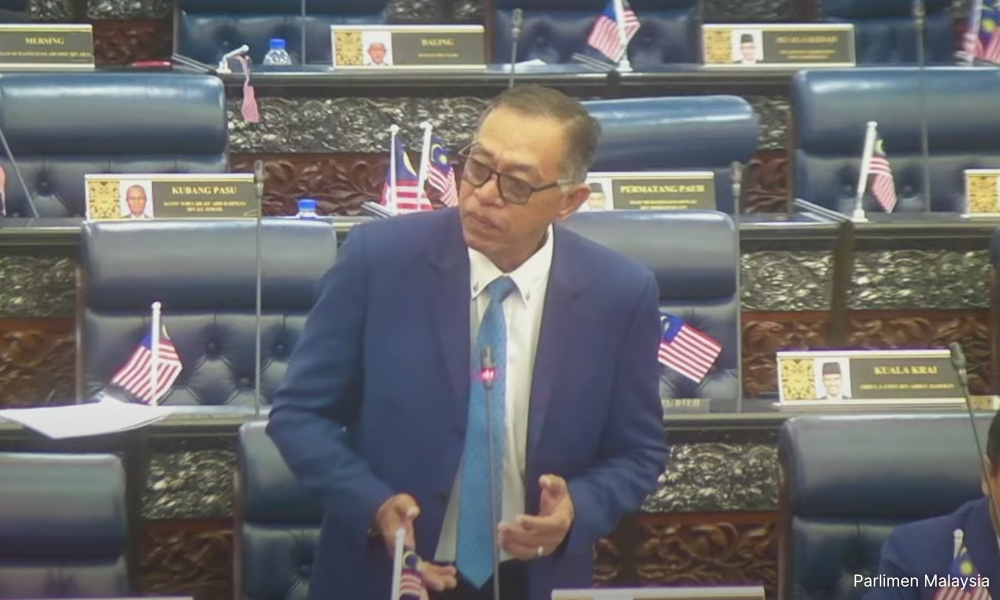
These included expressing discomfort with Mandarin in a Chinese New Year greeting, questioning multilingualism in fostering unity, and criticising a fellow MP’s language proficiency.
Awang, on the other hand, drew scrutiny for remarks involving the racial riots of May 13, 1969.
Among them was alluding to the absence of targeted development plans for the bumiputera community in the 13th Malaysia Plan, possibly leading to another recurrence of the deadly incident.
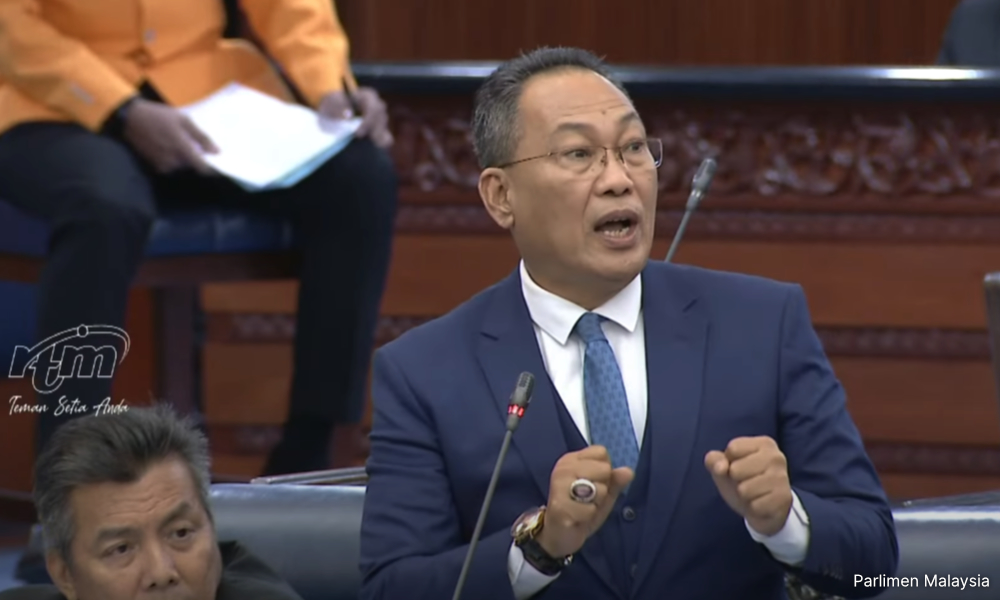
The PAS MP also alleged that Jelutong MP RSN Rayer had been involved in the incident, a claim that could be easily rebutted as a simple check revealed that Rayer was born in 1971.
The report noted that such statements, whether made recklessly or without verification, carry serious implications due to the sensitivity of the issue.
“Notwithstanding this, statements of this nature may still resonate with segments of the public who do not verify information, thereby risking the distortion of historical facts. This is particularly concerning given the sensitivity of the May 13 incident.
“Attributing involvement in such a significant and traumatic event to a contemporary political figure may be perceived as inflammatory, as it introduces a personal allegation into an already delicate historical context,” the group stated.
Meanwhile, four MPs from Harapan, three from BN, and one from Gabungan Parti Sarawak were also named in the category.
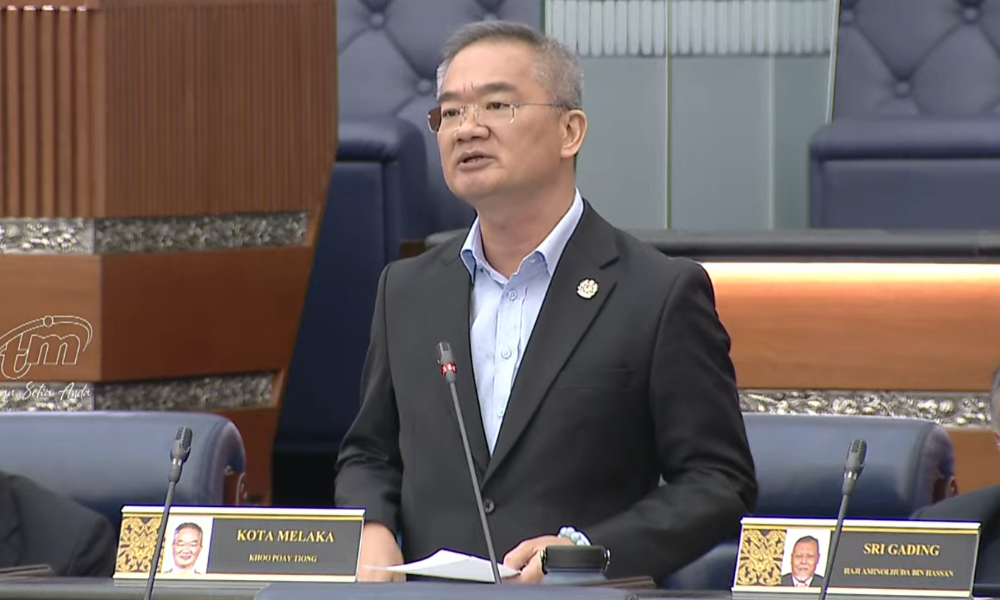
Among those, Pusat Komas highlighted Kota Melaka MP Khoo Poay Tiong's xenophobic remarks, which included stereotyping the Rohingya community as criminals and accusing migrant workers of poor waste disposal habits.
‘Ecosystem of racism’
Despite Parliament’s prominence, the report stressed that racism remains multi-layered, spanning public narratives and everyday experiences.
Pusat Komas noted the findings reflect how racism in Malaysia is not confined to isolated incidents or specific sectors, but reproduced across institutional, political and social spheres.
Outside Parliament, prejudice and provocation topped the chart with 17 cases, followed by religious discrimination with 10 cases.
Incidents in social settings, which include workplaces, schools, and housing, accounted for 19 cases, the lowest among the three macro-categories, but still indicative of persistent, lived discrimination.

“Taken together, the chart suggests that the incidents recorded in 2025 were shaped by everyday discrimination in social settings, alongside the prominence of racialised and religion-based rhetoric in both public discourse and Parliament,” the report noted.
It added that while the report highlighted the racism entrenched within the legislative body, grave concerns are attributed to racial and religious tensions that have seeped into multiple spheres of citizens’ daily lives.
Calling for accountability
As part of its recommendations, Pusat Komas reiterated its calls for establishing a National Harmony Commission - a recommendation that the group has made for the past eight years.
Pusat Komas director Jerald Joseph noted that the commission would function as a mediator to “cool down” tensions by issuing warnings and sanctioning threats to racial harmony, rather than bringing such issues to the police’s attention first.
He added that cross-ministerial collaboration could be explored to improve discrimination data tracking in Malaysia, noting that while the National Unity and Integration Department and the National Unity Ministry have collected such data, it remains inaccessible to the public.
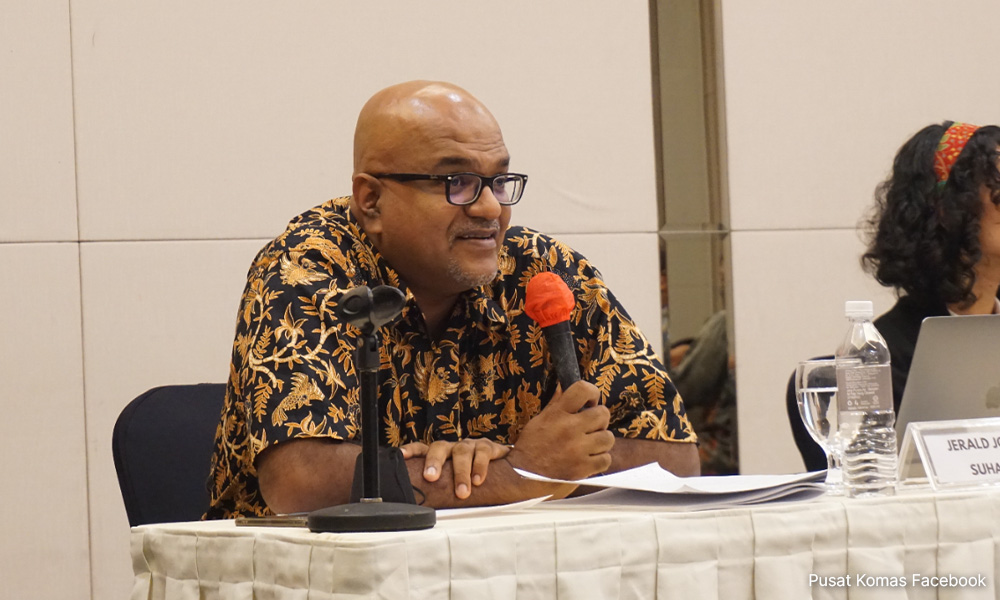
Ultimately, the director opined that commitment from politicians remains the most important avenue to improve racial tensions.
“I think the most important stakeholders are the media, politicians, and political parties.
“So, I think this is our journey. Meeting with political parties to bring this report, and ask them if they support the fight against racism,” he said.
‘3R guidelines for MPs’
Deputy National Unity Minister R Yuneswaran said that the ministry will take responsibility by taking up the issue in Parliament and collaborating with Dewan Rakyat speaker Johari Abdul to curb racist rhetoric.
“We all know that the speaker is doing his best to maintain order in the house, but ultimately it is the responsibility of the MPs to be mindful of what they say as every remark carries consequences,” he said while addressing reporters at the report launch.
Yuneswaran also added that a guideline is being drafted to prevent MPs from touching on 3R (race, religion, and royalty) issues during debates in the lower house, and the report will be submitted to Johari.

He also acknowledged that the National Unity Ministry could benefit from several improvements, as it oversees national unity but lacks the authority to intervene directly when incidents occur.
“We don’t have the power to enforce or prosecute anyone. Our authority comes from inter-ministry collaboration, such as with the Home Ministry, state governments, and other related ministries.
“But when issues related to national unity arise, everyone’s eyes naturally turn to us,” he said.
Yuneswaran noted that it is high time for the ministry to establish a legal mandate to advocate for national unity and harmony more effectively.
He stated that the ministry is looking into developing a Harmony Act to address racial tensions in the country, while simultaneously exploring the establishment of the proposed National Harmony Commission.
/file/publisher-c1a3f893382d2b2f8a9aa22a654d9c97/2021/05/d5e6ac159e47acc3c2e99603de3a51a8.jpg)
/file/1207/8951b946b2512bb9b279374041461c07.jpeg)
/file/publisher-c1a3f893382d2b2f8a9aa22a654d9c97/2022/12/41318d62f7b0e97798ee60a5a4f4741b.jpg)
/file/publisher-c1a3f893382d2b2f8a9aa22a654d9c97/2023/09/7f13a7b94fd1d9afd0a2e00480abbcb5.jpg)


Report this comment
Are you sure you want to delete this comment?
This action cannot be undone.