


/file/publisher-c1a3f893382d2b2f8a9aa22a654d9c97/2026/04/f73a039062b37d93565d2d18106d0587.jpg)

Global energy uncertainty underscores urgency of M'sia's renewable transition - experts
Malaysia must accelerate its transition to renewable energy (RE) and strengthen energy security amid growing global uncertainty driven by geopolitical conflicts and supply chain disruptions, experts said.
They warned that recent tensions between the United States and Iran could have far-reaching implications for global energy markets, particularly if disruptions occur along key routes such as the Strait of Hormuz, which handles a significant share of the world’s oil supply.
Such risks could...
Malaysia must accelerate its transition to renewable energy (RE) and strengthen energy security amid growing global uncertainty driven by geopolitical conflicts and supply chain disruptions, experts said.
They warned that recent tensions between the United States and Iran could have far-reaching implications for global energy markets, particularly if disruptions occur along key routes such as the Strait of Hormuz, which handles a significant share of the world’s oil supply.
Such risks could destabilise international oil flows, trigger price volatility, and heighten uncertainty in global energy markets.
As an oil and gas exporting country, Malaysia remains exposed to fluctuations in global energy prices despite producing crude oil, as it still imports refined petroleum products to meet domestic demand.
Rising global oil prices could therefore impact import costs, energy subsidies, and operating expenses in sectors such as transport, processing and logistics.

Malaysia, as an open economy dependent on international trade, is also indirectly affected by global economic slowdowns and rising production costs.
In this context, the US-Iran conflict is not merely a geopolitical issue but one that could affect global energy market stability and Malaysia’s economic resilience, particularly through oil price movements and market sentiment.
Experts said this highlights the urgent need to diversify energy sources, reduce dependence on imported fossil fuels, and accelerate the shift towards renewable energy.
Renewable energy refers to energy generated from naturally replenished resources such as solar, hydro, wind, and biomass, which offer lower carbon emissions and greater long-term stability than finite fossil fuels.
Push for faster transition
Malaysia’s total electricity system capacity ranges between 34,000 megawatts (MW) and 36,000 MW, with renewable energy capacity at 32 percent - exceeding the 31 percent target set for 2025 - and expected to reach 40 percent by 2030.
Some experts believe the government could achieve its 70 percent RE capacity target ahead of the 2050 timeline with strategic planning and political will
However, Universiti Sains Islam Malaysia senior lecturer Shahino Mah Abdullah said the focus should not be solely on reaching the 70 percent mark, but on strengthening critical systems such as grid infrastructure, energy storage, and transport electrification.
According to him, the current crisis highlights vulnerabilities not in electricity supply but in oil supply chains, particularly in the transport sector.
“Therefore, the process of accelerating the target must be targeted, not rushed to the point of jeopardising the stability of the energy system.
“Malaysia is well-positioned to accelerate this target because it has a diverse and stable energy base, including natural gas and hydropower,” he said.
“However, the main challenge is not technology, but system readiness, particularly the grid, large-scale investments, and policy coordination between various parties.
“The main challenges here are grid infrastructure and energy storage. This is because RE, such as solar, is intermittent and requires a more flexible grid system capable of storing energy,” he explained.

Elaborating, Shahino cited high-investment costs; governance and implementation for project approvals; and the reality of the transport sector still depended on imported fuel, as the main source of Malaysia’s vulnerability to global crises.
“Fundamentally, Malaysia’s challenge is a system challenge, not merely one of resources and technology,” he told Malaysiakini.
EV use expansion
Shahino further said the government must prioritise strengthening the national grid by incorporating smart grid technologies, energy storage systems and large-scale RE integration.
He added that efforts should also include accelerating rooftop solar development, floating solar installations, and community solar initiatives.
“This can protect the environment in efforts to achieve the target.
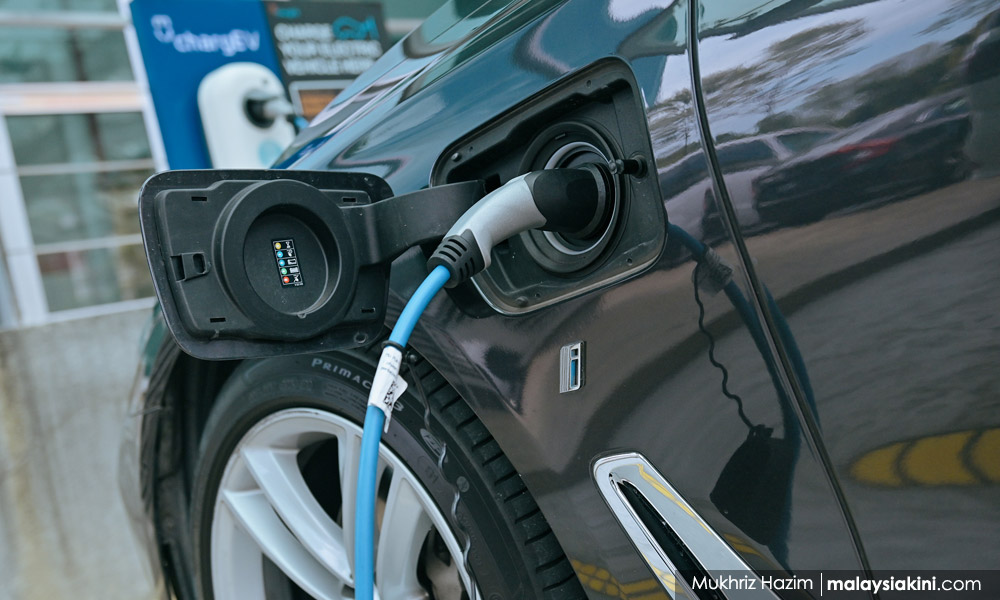
“There must also be encouragement and efforts towards the electrification of transport through the expansion of electric vehicle (EV) use, the expansion of charging infrastructure, and the integration of EVs with the grid.“
“Another equally important aspect is the reform of energy subsidy strategies, taking into account the transition to RE, the use of more energy-efficient transport, and efforts to support ownership and the market for affordable EVs,” he said.
He stressed that Malaysia must adopt a structured acceleration approach rather than relying on sudden leaps.
“With disciplined implementation, investment, and stronger efforts, it may be possible to achieve 70 percent capacity between five and 10 years earlier than the 2050 target.
“But it depends on the speed of strengthening the national grid and energy storage systems, the scale of investment and effectiveness of project implementation, and the rate of electrification of the transport and industrial sectors,” he said.
Shahino added that in the event of severe petroleum supply constraints, high RE capacity alone would not be sufficient without transport electrification and energy efficiency.
“Through a mixed and diversified energy strategy, Malaysia needs at least 60 to 80 percent RE in its electricity system to achieve a reasonable level of resilience before it can truly replace petroleum.
“Without electrification, no matter how high the RE capacity is, petroleum remains critical. This means dependence on petroleum remains important if RE is high, but electrification is insufficient,” he said.
Policy, investment key
Universiti Teknologi Brunei associate professor Zin Kandar described the 70 percent RE capacity target by 2050 as a major challenge, though technically achievable with strong political will.
He noted that Malaysia has long had energy policies in place, including the introduction of transition policies in 2001 focused on RE.

Between 2011 and 2020, the government prioritised commercialisation and public participation through the Renewable Energy Act, feed-in tariff mechanisms and the establishment of the Sustainable Energy Development Authority (Seda), alongside incentives for solar energy generation.
“The positive impact is that the public who generate solar electricity can start selling electricity to the grid, namely Tenaga Nasional Berhad (TNB).
“To date, the government is seen to be more serious in improving policies, initiatives, and promoting RE generation, especially mega solar farm projects and solar for residential and institutional use,” he said.
He stressed that achieving a 70 percent capacity target by 2050 would require a more aggressive government-led approach to attract domestic and foreign investors.
“Technically, it may be achievable, although difficult, and requires political will from the government.
“What may be achieved technically is because the availability of technology is already there, and when demand is high, costs will decrease,” he said.
He added that a 70:30 RE-to-fossil fuel ratio is realistic, noting that even developed countries have yet to achieve 100 percent reliance on renewable energy.
Solar potential
Universiti Malaysia Kelantan associate professor Hasyiya Karimah Adli echoed calls for a more aggressive approach that also goes beyond investments to specific steps, including rooftop solar integration to enable homes to function as micro power generators.
She said the transition requires data-driven energy analytics, including machine learning, to manage the intermittent nature of solar energy.
“Through smart grids, excess energy in residential areas during the day can be channelled dynamically to the industrial sector.
“At the same time, weather forecasting enables utility providers to anticipate drops in solar output and activate backup sources automatically without disrupting supply to users.
“Therefore, solar energy is not only capable of reducing the country’s dependence on fossil fuels, but also becomes a key pillar of future energy sovereignty through the combination of sunlight and the power of data,” she said.
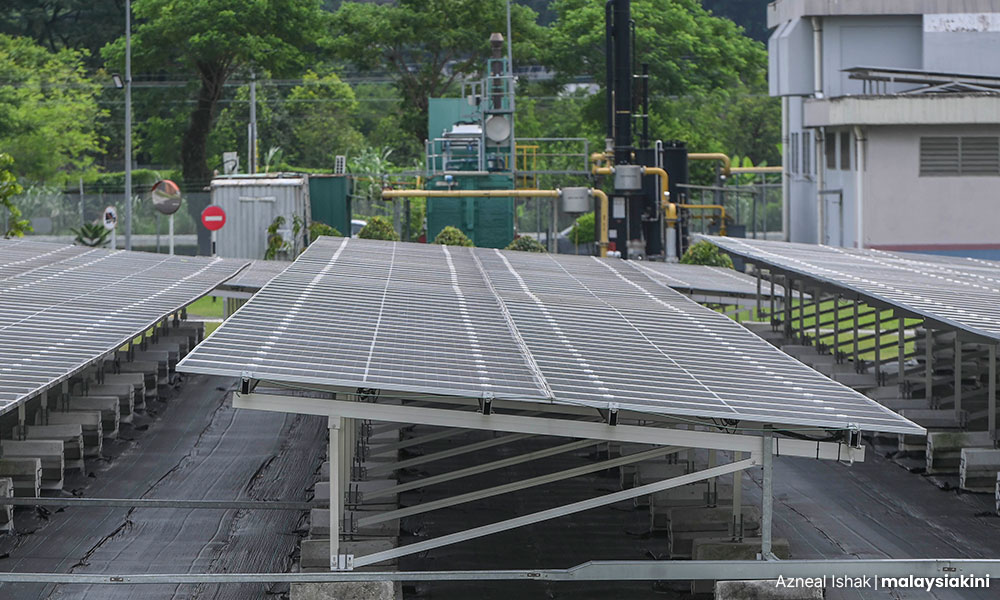
Hasyiya added that the government is strengthening its NETR commitments through initiatives such as the Solar ATAP programme and the Large Scale Solar (LSS) programme, including LSS6, which is expected to develop nearly 2 gigawatts of capacity with about RM6 billion in private investment.
Overall, LSS initiatives are expected to push RE capacity in Peninsular Malaysia beyond 10 GW by 2030.
She noted that Malaysia has strong natural advantages as an equatorial country with high solar radiation year-round, although domestic utilisation remains underdeveloped.
Kelantan’s consumption
Using Kelantan as an example, she said the state has the technical potential to achieve full reliance on solar energy.
“Based on Energy Commission statistics, Kelantan’s electricity consumption is estimated at around 3,000 GWh per year. To fully meet this through solar energy, a capacity of about 2.22 GWp is required.
“In terms of land use, it only involves about 7,777 acres or about 0.2 percent of the state’s total area, thus showing a very large implementation potential,” she said, adding that output consistency, however, remains a challenge due to monsoon weather.
Kelantan generates around 31 percent of its electricity from RE sources, with a target of reaching 46 percent by 2027.
Key projects include the 300MW Nenggiri Hydroelectric Dam, LSS5, and small hydro developments in Sungai Galas.
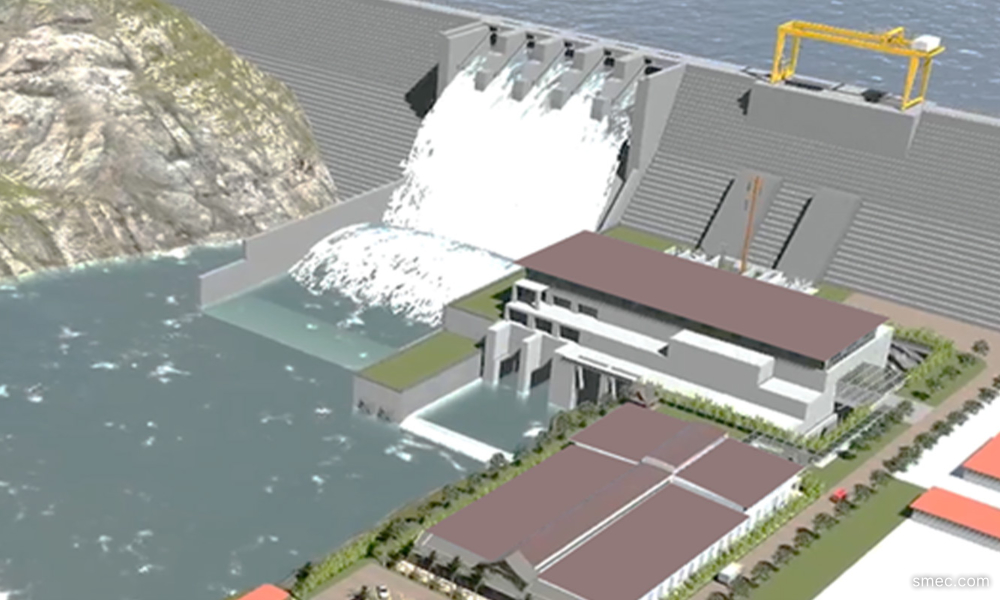
“If this capacity is fully realised, Kelantan will not only be self-sufficient in terms of energy, but also has the potential to shift from a consumer to an exporter of green energy through the national grid network.
“This will open up space for new sources of income and make solar energy a driver of a more sustainable and high-tech state economy,” she said.
/file/publisher-c1a3f893382d2b2f8a9aa22a654d9c97/2021/05/238356ce0a3c51289f7d44cbec35a2c2.jpg)
/file/publisher-c1a3f893382d2b2f8a9aa22a654d9c97/2023/02/da05f9d5224951ec147b223da87c7b40.jpg)
/file/publisher-c1a3f893382d2b2f8a9aa22a654d9c97/2020/06/c0bad336e39a7517ee0d9f26f9a05392.jpg)
/file/image/76758222_605.jpg)
/file/publisher-c1a3f893382d2b2f8a9aa22a654d9c97/2026/03/f66426d98e75064b84d14006b3c2e9ca.jpg)
/file/publisher-c1a3f893382d2b2f8a9aa22a654d9c97/2025/06/e51c23ebfc07c86bbee21f36b3a14d5c.png)


Report this comment
Are you sure you want to delete this comment?
This action cannot be undone.