


/file/publisher-c1a3f893382d2b2f8a9aa22a654d9c97/2026/05/f3db8f7d8e9129a3755c2523659779f2.jpg)

Teresa, Kedah exco clash anew over Langkawi tourism performance
A Kedah state executive council member and DAP MP Teresa Kok are continuing their debate over Langkawi’s tourism performance, after the latter claimed the island’s tourism industry is “sluggish” due to PAS gaining control of the state.
In a statement yesterday, Kok referenced Kedah Tourism, Culture and Entrepreneurship Committee chairperson Salleh Saidin’s previous citation of official data in disputing her suggestion on declining tourist arrivals to Langkawi...
A Kedah state executive council member and DAP MP Teresa Kok are continuing their debate over Langkawi’s tourism performance, after the latter claimed the island’s tourism industry is “sluggish” due to PAS gaining control of the state.
In a statement yesterday, Kok referenced Kedah Tourism, Culture and Entrepreneurship Committee chairperson Salleh Saidin’s previous citation of official data in disputing her suggestion on declining tourist arrivals to Langkawi.
Kok, however, argued that when compared to regional competitors, Langkawi is losing in the “Asean tourism race” - a situation that she again blamed on the Kedah government.
Citing international tourism sources, the Seputeh MP said Thailand’s Phuket recorded at least 12.74 million tourists between January and November last year, while the Bali Province Central Bureau of Statistics showed that Indonesia recorded 33.56 million tourists in 2025.
“The increase in the number of tourists in Bali was 17.16 million people from 2024 to 2025. The increase in the number of tourists in Phuket was 4.35 million people from 2024 to 2025,” Kok said.
“In Langkawi, the rate of increase was only 311,101 people from 2024 to 2025. What is even more ironic is that Langkawi ranked second (92.99 points) in the ‘Top Islands: Reader’s Choice Award 2025’ by Condé Nast Traveler - far surpassing Bali (6th) and Phuket (9th).
“This proves that the world recognises Langkawi’s beauty, but the Kedah PAS leadership has failed to translate that award into actual tourist arrival figures,” she asserted.
Malaysiakini previously reported that statistics released by the Langkawi Development Authority (Lada) show that Langkawi welcomed 3.2 million tourists in 2025, of which 341,000 (10.6 percent) are foreigners.
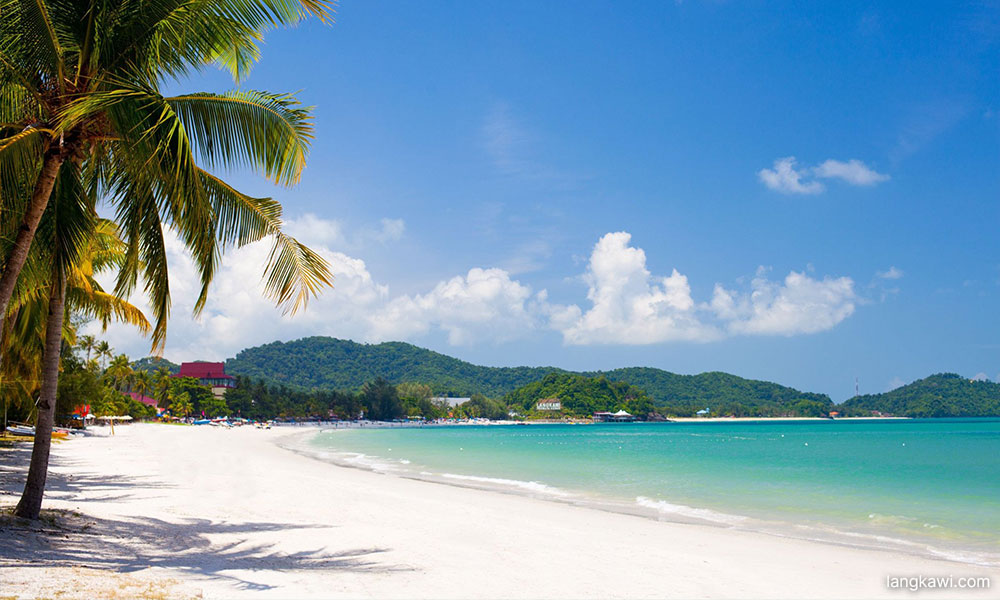
While the data does not directly establish a link between state policies and tourist composition, an overview of the decades suggests that Langkawi has long been a predominantly domestic tourism destination, with foreign arrivals only now approaching pre-pandemic levels.
READ MORE: Politics vs data: Is PAS hurting Langkawi's tourism?
As such, broader factors - such as connectivity and global travel trends - should be considered alongside the local government in evaluating the island’s tourism performance.
Focus on strategies
However, Kok opted to take a jab at Kedah Menteri Besar Sanusi Nor while urging PAS leaders to “stop poking their noses into other people's business" and focus on strategies to boost the state’s economy.
“Instead of Sanusi being busy spending time acting in the movie ‘The Keris’, why did he not use that influence to aggressively promote Langkawi?” she questioned in her statement.
“If he truly wants to attract Muslim tourists, show creative campaigns (which) showcase the state leadership and ulama having picnics on Langkawi’s beaches in traditional Kedah attire or participating in Muslim family-friendly tourism activities.
“The reality is they only know how to blame other parties, but do not make any tourism promotion efforts for this island,” Kok claimed.

Her call for PAS to hold back from interfering in “moral agendas” in other states referred to widespread objections against the three-day Rain Rave Water Festival 2026, which is estimated to have attracted 180,000 attendees and generated up to RM200 million in overall tourism revenue.
“Imagine if this RM200 million economic impact were brought to Langkawi? It would surely revitalise hotels, eateries, and taxi services in Langkawi Island.
“Langkawi is a national asset; do not let it wither just because of the Kedah state government's inability to think globally and progressively,” she added.
Shifting goalposts
In a late-night response to Kok’s recent statement, Salleh accused the parliamentarian of shifting goalposts by comparing Langkawi to Phuket and Bali in terms of tourist arrivals and the increase in attendance figures.
The Kubang Rotan assemblyperson said that such a comparison is “too simplistic, structurally unfair, denies significant differences in geopolitics, history, and economics, and is also intellectually dishonest.”
Emphasising that any comparison made must be on an equal basis, Salleh noted that Bali and Phuket are considered major tourism hubs aggressively developed by their respective central governments, with far larger international flight capacities, extensive global route networks, and more open tourist entry policies.

The Bersatu state representative said that, on the other hand, Langkawi operates in a “completely different” ecosystem, with a higher dependence on policies at the federal level.
He listed several policies which are outside of the Kedah government’s jurisdiction, including flight approvals, international route incentives, customs and taxes, cruise ship tourism, visa policies, as well as international-level tourism promotion campaigns.
Politicising issue
Adding that the biggest obstacles affecting efforts to attract more tourists to Langkawi are its ferry service, Salleh condemned Kok’s supposed attempts to politicise the matter.
“If (Kok) is sincere in helping to develop Langkawi, please bring this matter (regarding ferry services) to your colleagues in the federal government.
“It is better than composing stories of Langkawi's flaws solely for political reasons and motives. Attempts to link tourism issues through personal attacks or political perceptions of (Sanusi), as done by (Kok), also do not help strengthen the industry,” he said.
He further affirmed that in efforts to develop the tourism sector in Kedah, the state government places religious requirements and cultural customs as its priority.

“We offer what we have, (including) what is recognised by international audiences as mentioned by (Kok) herself, without needing to borrow or bring in what is contrary to local values.
“No matter how mountain-high the profits that await, we will not pawn those values,” he added.
/file/publisher-c1a3f893382d2b2f8a9aa22a654d9c97/2026/05/cbe6b46f229db22c9a751dbca4bea2f0.jpg)
/file/publisher-c1a3f893382d2b2f8a9aa22a654d9c97/2025/11/d88e4e6d2d731084005fc4c32871f39c.jpg)
/file/publisher-c1a3f893382d2b2f8a9aa22a654d9c97/2024/12/7d7961b2c0e1be39824f968757dfb407.jpg)
/file/publisher-c1a3f893382d2b2f8a9aa22a654d9c97/2025/10/5536e4507befa62a63b6c7ed5d69f0ab.jpg)
/file/publisher-c1a3f893382d2b2f8a9aa22a654d9c97/2024/12/308c7898f4f89bc4691f0b4cb5d4853e.jpg)
/file/publisher-c1a3f893382d2b2f8a9aa22a654d9c97/2025/01/48996b73b740343d09bd6464c85d5c95.jpg)
/file/publisher-c1a3f893382d2b2f8a9aa22a654d9c97/2023/09/db29f7f0895bba7330cf02489ae068ad.jpg)


Are you sure you want to delete this comment?
This action cannot be undone.