




Rais questions motives of father, son
Umno supreme council member Rais Yatim today queried the intentions behind the moves by Dr Mahathir Mohamad and his son Mokhzani to quit Umno.
Umno supreme council member Rais Yatim today queried the intentions behind the moves by Dr Mahathir Mohamad and his son Mokhzani to quit Umno.
He asked if their decision was mooted by the love for the party or for their own interests.
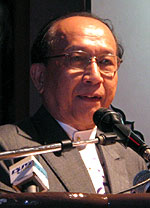 "We question the nature of the whole gamut (of their actions)," said Rais, who is also foreign minister, at a press conference in Parliament lobby this afternoon.
Rais had earlier spoken on the dispute with Singapore on Pulau Batu Puteh.
"You want to improve the party or simply utilise the party for the sake of your (own) political struggle?" he asked.
Mahathir announced his exit from Umno on Monday, a move aimed at forcing Prime Minister and Umno president Abdullah Ahmad Badawi to step down.
This was followed today by Mokhzani, who at one time served as treasurer of Umno's youth movement but no longer holds high office.
Rais said while he respected their decision to quit the party, such a move could be of no benefit to the "noble struggle to lead Umno".
Whatever differences members have with the decisions or policies of the party's top leadership, such views should be expressed openly within the structure of Umno and not outside, stressed Rais.
Learning from his own lessons
This lesson can be borne out of his own experience when he fell out of favour during the 1987 Umno crisis with the then party leadership led by Mahathir, he added.
"Take it from me: I was a victim for six years (along with) my colleagues back in 1987," said Rais.
Current circumstances, he added, "do not warrant anybody to leave the party".
"It is better, if you don't agree with some of the policies of our prime minister, to tell him openly where we need to improve. We still remain in the party, that would have been best," he said.
Lauding Mukhriz for deciding to stay in Umno despite dissenting clearly from Abdullah, Rais said this was the "better standpoint" for affecting change.
However, he said, everyone was free to act according to his or her own motivations.
"It's not something that we can force down the throat of anybody," he said.


