



PAS MP pushes for teachers' mental health literacy, Dzulkefly touts school programme and training
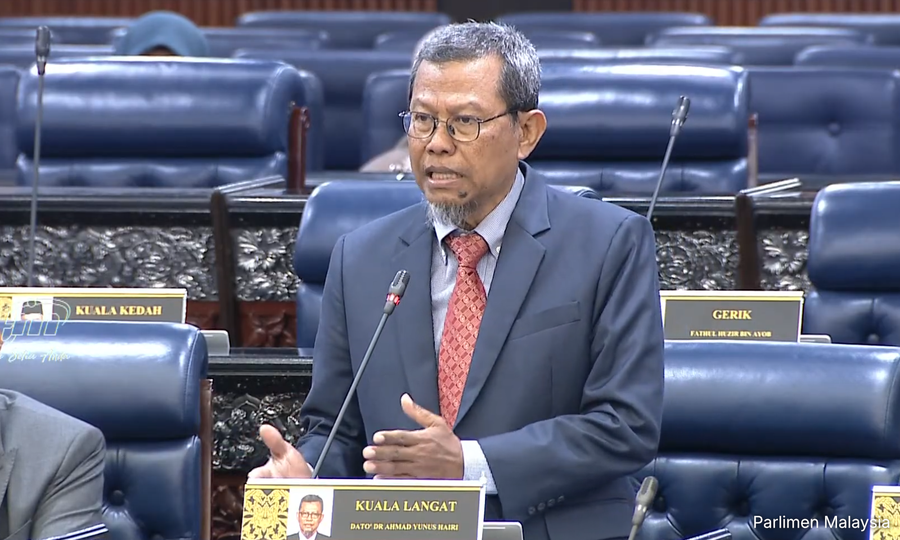
PARLIAMENT | An opposition lawmaker has urged the government to consider improving measures aimed at instilling mental health literacy among teachers, amid violent incidents involving students in schools.
Dr Ahmad Yunus Hairi (PN-Kuala Langat) said that instead of schools having to rely on the Health Ministry’s personnel or counsellors, it would be better for teachers to be equipped with the necessary knowledge to assist students struggling with their mental health...
PARLIAMENT | An opposition lawmaker has urged the government to consider improving measures aimed at instilling mental health literacy among teachers, amid violent incidents involving students in schools.
Dr Ahmad Yunus Hairi (PN-Kuala Langat) said that instead of schools having to rely on the Health Ministry’s personnel or counsellors, it would be better for teachers to be equipped with the necessary knowledge to assist students struggling with their mental health.
Yunus argued that teachers being able to identify concerning behaviour among students early on could prevent instances of “a bullying crisis or crime, as is happening today.”
Posing an additional question to Health Minister Dzulkefly Ahmad in the Dewan Rakyat today, the PAS MP referenced a July 6 incident where a 15-year-old girl injured another teenager with a knife at a secondary school in Banting.
Prior to the incident, 16-year-old Yap Shing Xuen was fatally stabbed in a Bandar Utama school toilet by a 15-year-old boy, who has since been acquitted of murder on the grounds of insanity due to untreated and undiagnosed "very early-onset schizophrenia".
READ MORE: KINIGUIDE | Legal vs medical insanity: What the school stabbing verdict really means
Yap’s family has since filed a civil suit alleging that warning signs and mental health concerns were not adequately addressed before her death.
More recently, 16-year-old Irene Sofiya Khairool Faisal died after she was found unconscious and bleeding, with multiple injuries to her head and body, inside a school hall in Yong Peng, Johor.
ALSO READ: Teary-eyed Fadhlina says she's a mother too, rejects claims bullying cases swept under rug
In his response today, Dzulkefly affirmed that the Health Ministry and the Education Ministry emphasise increasing mental health literacy among students through “promotion, prevention, detection, and early intervention”.
In particular, the minister pointed to the Health Ministry’s School Healthy Mind Programme, which he said exposes students to the importance of mental health, early warning signs, and stress management techniques.
READ MORE: Education Ministry mental health screening upped to twice a year
“(The programme also features) mental health screenings to help detect at-risk students at the earliest onset of symptoms, allowing us to nip it in the bud through immediate action.
“Students identified as at-risk through screenings receive early intervention from guidance and counselling personnel according to their needs, while those requiring further evaluation or treatment are referred directly to our facilities,” the Kuala Selangor MP added.
Noting that 10,259 schools nationwide - 7,773 primary schools and 2,486 secondary schools - are implementing the programme, Dzulkefly (below) said the capacity of future educators to address mental health issues is also enhanced via training at the Teacher Education Institute.

“The Health Ministry and the Education Ministry will continue to strengthen a whole-of-school approach involving students, teachers, counsellors, parents, and peers to foster a supportive educational environment.
“This includes reinforcing referral systems for students identified with early mental health issues to ensure timely access to support and early intervention,” he added.
In July last year, the National Union of the Teaching Profession urged the Education Ministry to form a special committee to comprehensively resolve long-standing issues on excessive teacher workloads.
Around the same time, Dzulkefly said the Health Ministry had no intention to provide full-time mental health counsellors in secondary schools, considering how counselling services are available at health facilities such as clinics and hospitals.
In July this year, Bernama reported that the counselling teacher-to-student ratio is 1:500, way below the 1:250 target set by the government.


Good move Pasman. And while at it, Pas men and ladies might want to join in too. The right mental attitude to rational politics should do the nation a lot of good. More R of this type is required.
This is good. But it should be extended to politicians too. So they can help each others mental shortfalls.
The PAS MP’s call for teachers’ mental health literacy deserves support. But Malaysia must also examine the pressures its education system places on children. The stress of competition must be balanced with opportunities for personal development. Academic achievement matters, but so do emotional maturity, empathy, creativity and the ability to cooperate with others. Finland offers useful guidance by integrating pupil wellbeing into education, supported by school health services, psychologists and social workers. Teachers help recognise distress and connect children with professionals. Awareness must be backed by accessible care. Malaysia could adapt this approach through joint Education and Health Ministry teams serving clusters of schools, with confidential consultations, clear referral procedures and timely follow-up. Screening must lead to support rather than become another administrative exercise. Mental health literacy, child development, bullying prevention and nonviolent conflict resolution should be core subjects in teacher education, beginning with preschool and childcare training, including relevant TVET programmes. Teachers also need support for their own wellbeing. Schools must provide time for sport, arts, friendships and community participation. These experiences are part of education and deserve recognition alongside examination results. The purpose of schooling cannot be reduced to producing graduates with the best grades. It must also help young people become well-rounded individuals who can understand themselves, respect others and face life’s difficulties with confidence. A child’s wellbeing is part of educational success.
Report this comment
Are you sure you want to delete this comment?
This action cannot be undone.