



Deputy minister: AI-generated child sex abuse material already covered by law
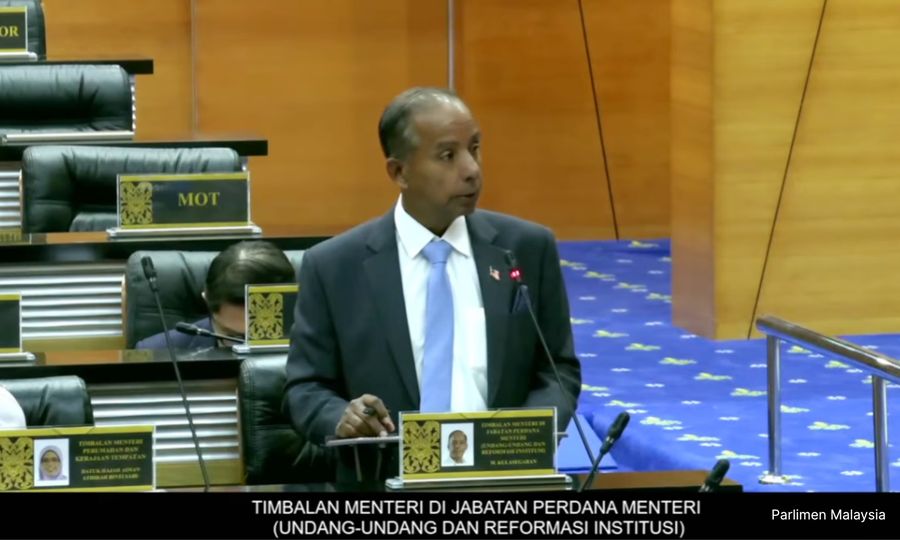
PARLIAMENT | Child sexual abuse material (CSAM) generated through artificial intelligence (AI) can already fall under Malaysia's existing criminal laws, even when no real child is depicted, Deputy Minister in the Prime Minister's Department (Law and Institutional Reform) M Kulasegaran told the Dewan Rakyat today.
He said Section 4 of the Sexual Offences Against Children Act 2017 (Act 792) covers realistic images or graphics depicting sexually explicit conduct involving children, including material generated entirely using AI.
"Material generated entirely through AI technology may also...
PARLIAMENT | Child sexual abuse material (CSAM) generated through artificial intelligence (AI) can already fall under Malaysia's existing criminal laws, even when no real child is depicted, Deputy Minister in the Prime Minister's Department (Law and Institutional Reform) M Kulasegaran told the Dewan Rakyat today.
He said Section 4 of the Sexual Offences Against Children Act 2017 (Act 792) covers realistic images or graphics depicting sexually explicit conduct involving children, including material generated entirely using AI.
"Material generated entirely through AI technology may also fall within the scope of this definition, provided that its content satisfies the elements prescribed under the section," he said.
Kulasegaran (above) was responding to Tan Hong Pin (Harapan-Bakri), who raised questions during the Special Chamber sitting, citing Malaysiakini's investigative reports exposing the sexual exploitation of children through social media, AI-generated content and online payment channels.
Tan had sought clarification on whether existing laws adequately covered AI-generated images sexualising children, particularly when the material did not involve actual children or explicit sexual acts.

He cited concerns raised by the Women's Centre for Change over legal uncertainty surrounding wholly synthetic images, as well as Suhakam's position that clearer legislation or court precedents were needed.
Kulasegaran said existing provisions under Act 792 are sufficiently broad to cover certain forms of AI-generated abuse material.
The Act also criminalises the production, distribution and possession of CSAM under Sections 5, 8 and 10, respectively.
"The use of AI technology does not, in itself, necessarily require the creation of a new criminal offence if the conduct concerned already falls within the scope of offences under existing laws.
"However, each case must be assessed based on its facts, the nature of the content and the elements of the offence that must be proven," he said.
Legal threshold
Kulasegaran, however, acknowledged a distinction between sexually explicit material and AI-generated images that sexualise children without depicting explicit sexual conduct.
"For example, an AI-generated image depicting a child in clothing or poses considered to contain sexual elements does not necessarily meet the definition of child sexual abuse material under Section 4 of Act 792.
"Such a determination depends on the actual content of the image, its context and whether the elements of sexually explicit conduct can be established," he explained.
The clarification addresses concerns highlighted in Malaysiakini's reports, including AI-generated videos depicting children in tight clothing and presented in a manner intended to evoke sexual attraction.
Tan said complainants had reportedly been referred back and forth between the police's Sexual, Women and Child Investigations Division and the MCMC when such content was deemed not to meet the statutory definition of CSAM.
He questioned which agency should take responsibility for ensuring follow-up action when content fell outside that definition.

The government, Kulasegaran said, recognised the need to ensure existing legislation remained clear and effective amid rapid technological developments.
He said the Legal Affairs Division of the Prime Minister's Department would continue examining possible improvements to Act 792, taking into account feedback from enforcement agencies, relevant ministries and stakeholders.
However, he did not provide a timeline for any proposed amendments.
Integrated reporting mechanism
Tan also called for an integrated reporting and referral mechanism to prevent complaints involving online child sexual exploitation from being passed between agencies without effective follow-up.
He proposed adopting a "no wrong door" approach, under which the first agency receiving a complaint would be responsible for recording it and confirming its referral to another agency.
The system, he suggested, should include designated liaison officers, shared reference numbers and a child-friendly national portal allowing anonymous reports.

Kulasegaran said the government would examine proposals for joint standard operating procedures, inter-agency liaison officers, and mechanisms to confirm that relevant authorities had received complaints.
He explained that police would investigate offences under Act 792, while MCMC could provide technical assistance and digital evidence as needed.
The deputy minister said proposals for anonymous reporting, mandatory reporting by digital platforms and the detection of suspicious financial transactions would require further coordination involving the Home Ministry, Communications Ministry, Women, Family and Community Development Ministry, and Bank Negara.
He also said the Online Safety Committee established under the Online Safety Act 2025 was examining issues involving child sexual abuse and exploitation material, with MCMC retaining regulatory and enforcement responsibilities over online service providers.
Kulasegaran reiterated that protecting children from sexual exploitation, whether online or offline, remained the government's priority.
He said efforts to review the legislation would complement ongoing investigations, enforcement, platform regulation and the monitoring of suspicious financial transactions.



Report this comment
Are you sure you want to delete this comment?
This action cannot be undone.