



Russia, US clash at UN over Russian troop build-up near Ukraine
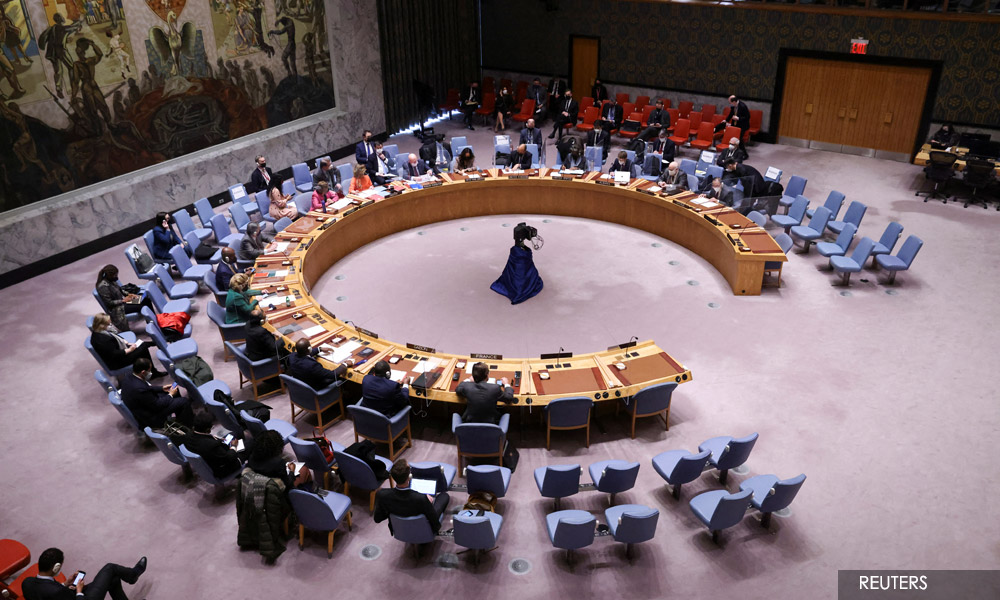
Tensions between Russia and the United States over Moscow's troop build-up near Ukraine spilt into the United Nations Security Council on Monday, with both countries accusing each other of being "provocative."
Russia failed to stop the US-requested council meeting on the build-up, allowing for a public face-off over what the United States and other nations called a threat to international peace and security.
The council is unable to take any action beyond talking about the situation as Russia is one of the council's five veto powers...
Tensions between Russia and the United States over Moscow's troop build-up near Ukraine spilt into the United Nations Security Council on Monday, with both countries accusing each other of being "provocative."
Russia failed to stop the US-requested council meeting on the build-up, allowing for a public face-off over what the US and other nations called a threat to international peace and security.
The council is unable to take any action beyond talking about the situation as Russia is one of the council's five veto powers, along with the United States, China, France and Britain.
"The threats of aggression on the border of Ukraine ... is provocative. Our recognition of the facts on the ground is not provocative," US Ambassador to the UN Linda Thomas-Greenfield told the 15-member council.
"The provocation's from Russia, not from us or other members of this council," she said, echoing a central argument from Washington as US-Russia relations have hit a new low.
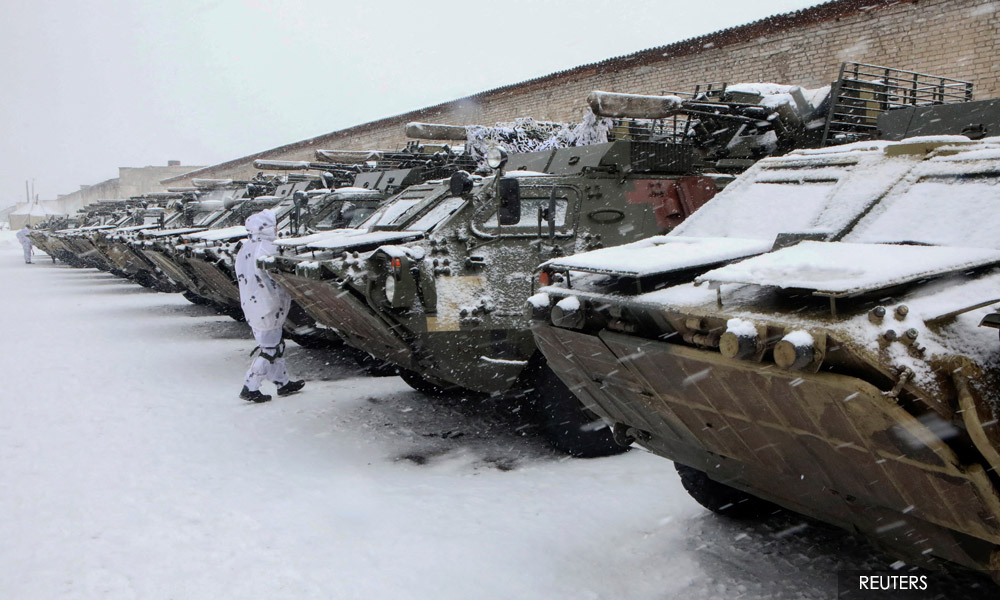
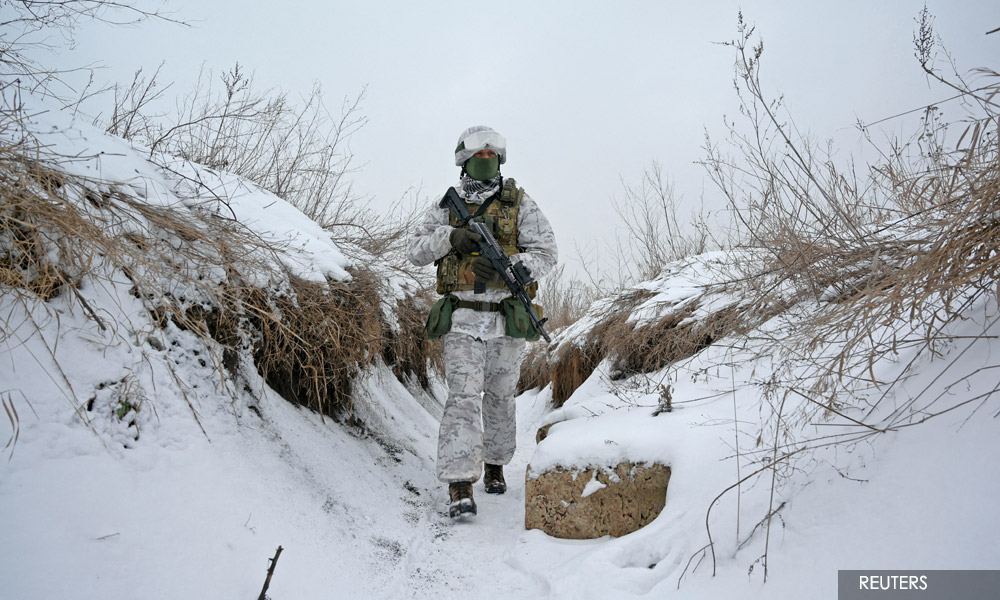
Thomas-Greenfield accused Russia of having more than 100,000 troops on Ukraine's borders with Russia and Belarus preparing "to conduct offensive action into Ukraine."
She said that Washington has seen evidence that Moscow plans to deploy 30,000 more troops in Belarus by early February.
Russia's UN Ambassador Vassily Nebenzia said there was "no proof" Moscow was planning military action against Ukraine and that Russia had consistently rejected such accusations.
"Our Western colleagues are talking about the need for de-escalation. However, first and foremost, they themselves are whipping up tensions and rhetoric and are provoking escalation," Nebenzia said.
"The discussions about a threat of war is provocative in and of itself. You are almost calling for this. You want it to happen. You're waiting for it to happen as if you want to make your words become a reality," he added.
The United States needed at least nine votes to proceed with the council meeting after Russia called a procedural vote. Ten members voted in favor, Russia and China voted no, while India, Gabon and Kenya abstained.
Nebenzia said Russia was not "scared" to discuss Ukraine, but didn't understand the reason for the meeting, saying Moscow has never confirmed how many troops it has deployed.
China backs 'quiet diplomacy'
The discussion centred on whether the build-up of Russian troops near Ukraine is a threat to international peace and security – which the Security Council is charged with maintaining - and whether the situation warranted a public council meeting.
"What is urgently needed now is quiet diplomacy, not megaphone diplomacy," China's UN Ambassador Zhang Jun said.
The Security Council has met dozens of times over the crisis in Ukraine since Russia annexed Crimea in 2014.
Nebenzia described the crisis as "domestic" and said it could only be improved by implementing the Minsk agreements, which aim to end a separatist war by Russian speakers in eastern Ukraine. Moscow has long said it is not a party to the conflict.
French UN Ambassador Nicolas de Riviere said Russia's military build-up represents "threatening conduct."
"If Russia does not choose the path of dialogue and respect for international law, the response will be robust and united -any fresh infringement of the sovereignty and territorial integrity of Ukraine by Russia will have massive consequences and a severe cost," de Riviere told the council.
Sweeping security guarantees
Russia has demanded sweeping security guarantees in talks with the United States, including a promise Nato never admit Ukraine.
Kenya's UN Ambassador Martin Kimani urged Russia, the United States and Nato to resolve their differences, recalling how Africa suffered during the Cold War.
"Our internal divisions and fragilities were weaponized on the altar of geopolitical rivalry. It confirmed the truth of the African saying that recognizes when elephants fight, it is the grass that suffers," he told the council.
The United States had described Monday's meeting as a chance for Russia to explain itself.
"We didn't hear much," Thomas-Greenfield told reporters later. "We hope that they continue along the route of diplomacy."
–Reuters


Are you sure you want to delete this comment?
This action cannot be undone.