




Unravelling the Cheras toll dispute
special report Metramac Corporation Sdn Bhd and Fawziah Holdings will appear in the Court of Appeal today, over a RM65 million licensing agreement for advertising rights along the Cheras toll-road.
Metramac is applying for a stay of execution of the award. Fawziah Holdings will only agree to this if the court imposes additional conditions that guarantee payment.
The case has led to much excitement outside the courtroom, pulling in the names of the rich, powerful and famous, and caused consternation to appellate judges as well.
Malaysiakini delves into the records to put the issues in perspective.
special report Metramac Corporation Sdn Bhd and Fawziah Holdings will appear in the Court of Appeal today, over a RM65 million licensing agreement for advertising rights along the Cheras toll-road.
Metramac is applying for a stay of execution of the award. Fawziah Holdings will only agree to this if the court imposes additional conditions that guarantee payment.
The case has led to much excitement outside the courtroom, pulling in the names of the rich, powerful and famous, and caused consternation to appellate judges as well.
Malaysiakini delves into the records to put the issues in perspective.
Facts to date
Fawziah Holdings and Syarikat Teratai KG Sdn Bhd (STKG) were incorporated as companies of business executive Fawziah Karim and her mother Maimon Bee, both of whom are directors and shareholders.
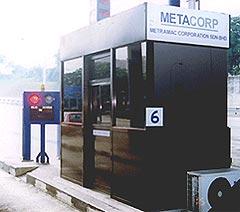 In July 1986, STKG successfully won a tender - called for by City Hall of Kuala Lumpur (DBKL) - to design, construct, finance and operate the privatisation of certain roads in the KL area.
It signed the first concession agreement on Nov 20, 1987 with DBKL. The "land right" clause within this led to a licensing agreement for signage rights in favour of STKG and later Fawziah.
The signage rights provided for advertising through signboards and billboards along the Cheras toll-concession road, which was also to be built by STKG.
After obtaining investments from institutions like American International Assurance, Lembaga Urusan Tabung Haji and Bank Pembangunan, STKG completed the road project.
STKG commenced toll collection, but was told by DBKL to suspend this on Sept 12, 1990 when public protests were mounted. The company then submitted a claim for compensation based on the termination clause in the concession agreement.
The sum was estimated at RM764.2 million, also covering cancellation of the advertising contract which was said to be worth RM78.5 million.
DBKL agreed in principle to the termination of the concession agreement and to paying compensation, although it remained silent on the quantum.
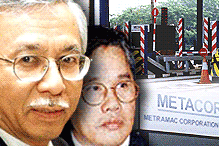 At the same time, then Finance Minister Daim Zainuddin informed STKG that the government was not in a position to pay compensation.
United Engineers Malaysia Bhd (UEM) then made a formal offer to buy STKG for RM97.5 million. The offer letter was signed by tycoon Halim Saad and business partner Anuar Othman, then shareholders and directors of Metro Juara Sdn Bhd, a nominated UEM company.
The takeover was done through the share sale agreement signed on Jan 23, 1991. On March 4, 1991, the new owners changed the name of STKG to Metramac Corporation Sdn Bhd.
The change of hands also necessitated UEM negotiating a new concession agreement with DBKL.
Crux of matter
Some time after the takeover, Fawziah Holdings alleged that Metramac had rescinded the signage agreement and repudiated the restructure of the sales agreement. It then went to court to recover the monies due.
Fawziah Holdings contended that the primary issue in its case was "breach of contract" by Metramac over the licensing agreement for advertising rights.
The Kuala Lumpur High Court ruled in favour of Fawziah Holdings on its right to claim for loss of advertising rights, but refused to award the quantum sought - RM65 million - and instead directed that the damages be assessed.
It also rejected Metramac's counter-claim for a number of declarations, including that certain clauses in the agreements were null and void, and for an account of all revenues received by Fawziah Holdings under those agreements.
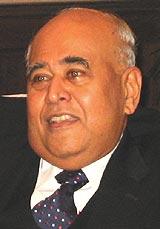 Both parties were dissatisfied with the decisions and brought the matter to the Court of Appeal before Justices Gopal Sri Ram (right), Hashim Yusof and Zulkefli Ahmad Makinuddin.
They unanimously ruled in favour of Fawziah Holdings, awarded it the full RM65 million, with Justices Gopal and Zulkefli delivering separate judgments.
Judge's observations
Gopal's observations caught public attention, as these examined the circumstances surrounding STKG after the takeover. He commented that the offer "did not make any commercial sense" considering that STKG had no money in its coffers, huge debts and no prospect of receiving any compensation.
"So why pay RM97.5 million for the shares of such company? The answer is simple enough. Anuar and Halim had something which the plaintiff did not. And that was the patronage of the then Minister of Finance, Daim Zainuddin," he said.
"The events leading to the takeover of the defendant company and subsequent thereto clearly bear this out. For example look at the confident way in which Metro Juara behaved. Even before the restructure sale agreement was signed on Jan 23 1991, Metro Juara wrote to DBKL on Jan 14, 1991 about recommencing toll collection and renegotiating the first concession agreement. It would not have written such a letter unless everything had been put in place."
Gopal further noted that, not long after the takeover, "as if by the utterance of a magic spell" all bureaucratic doors which were closed to Fawziah Holdings were opened to Metramac.
The government was, he pointed out, able to compensate Metramac to the tune of RM756 million - RM312 million for the costs of works done and another RM405 million in subsidies to meet the cost of financing works to be undertaken.
 Justice Gopal said it was puzzling that the Works Ministry had undertaken to pay RM32.5 million to Halim and Anuar as "payment for share premium" not "previously taken into account" - words which he described as "meaningless".
"For the sake of completeness, it must be mentioned that the RM32.5 million was siphoned out of the defendant's account by Annuar and Halim. I asked the learned counsel how this could have happened.
"His reply was stupefying. He said that these two gentlemen had as shareholders paid this sum to the defendant's account and were now reimbursing themselves. This answer overlooks the most elementary principle of company law: The shareholders of a company have no interest, legal or equitable, in the assets of their company."
Justice Gopal also said that it was "incomprehensible" why STKG was not given the same financial support by the government, as at least two of the shareholders were government-linked institutions.
"And in the case of Tabung Haji (a STKG shareholder), the ultimate beneficiaries would have been the poorer section of our society. I think it is a fair question to ask why taxpayers' money was channeled into the hands of two private individuals - to profit them - instead of a wider section of the general public."
He added that it was unclear why the finance minister had used his power to favour Anuar and Halim over STKG.
Outcome of remarks
Gopal's remarks had an instant and electrifying effect when amplified by the media and opposition politicians, leading to the authorities stepping in as well.
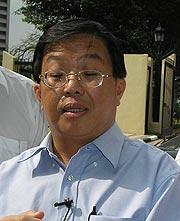 Cheras MP Tan Kok Wai (right) of the DAP lodged
police reports
against Daim, Halim and Anuar. The commercial crimes department has began a probe into alleged misappropriation and abuse of power, recording a
statement
from Tan on Jan 23, 2006.
Cheras MP Tan Kok Wai (right) of the DAP lodged
police reports
against Daim, Halim and Anuar. The commercial crimes department has began a probe into alleged misappropriation and abuse of power, recording a
statement
from Tan on Jan 23, 2006.
Halim and Daim have denied all allegations made against them in the judgment, issuing statements via the media. Daim even took the unprecedented step of calling for cabinet meeting minutes to be declassified, to back his assertions.
Justice Gopal's remarks may also lead to another kind of probe - a judicial one.
Following media reports, Metramac - through its lawyer Muhammad Shafee Abdullah - lodged a complaint with the judiciary alleging judicial misconduct. Chief Justice Ahmad Fairuz Sheikh Ab Halim said he would look into the complaint.
But Shafee landed in hot water when the Court of Appeal questioned his conduct in lodging the complaint. Justice Gopal and the other two other judges viewed it as "an attempt to muzzle judges".
The contempt inquiry - to decide whether proceedings should be initiated against Shafee - is already before the court and the preliminary inquiry will be heard after disposal of the stay application.
It will be a long wait before the matter is thrashed out, but the legal fraternity is already abuzz with the possibility that Justice Gopal's observations could be expunged.
If this happens, it won't be the first time. The Federal Court had, in the case of Ayer Molek Rubber Co Bhd & Anor v Insas Bhd & Anor, ordered a remark made by Justice NH Chan to be expunged.
It said "judicial pronouncements should be judicial in nature and not depart from sobriety, moderation and reserve".
Three-part special report on Metramac
Part 1: Unravelling the Cheras toll dispute


Report this comment
Are you sure you want to delete this comment?
This action cannot be undone.