




High-profile names in Metramac case
special report Two prominent names were on everyone's lips again when the Court of Appeal delivered its judgment on Fawziah Holdings' case against Metramac Corporation Sdn Bhd.
special report Two prominent names were on everyone's lips again when the Court of Appeal delivered its judgment on Fawziah Holdings' case against Metramac Corporation Sdn Bhd.
Daim Zainuddin and his one-time protege Halim Saad issued statements denying the allegations of misappropriation of funds, mentioned in the judgment of Justice Gopal Sri Ram.
Malaysiakini profiles the two who once commanded a high profile in the ranks of the rich, powerful and famous.
Daim Zainuddin
Business czar and politician Daim Zainuddin's name is synonymous with Malaysia's political and financial circles. The former teacher, lawyer and magistrate has been credited with helping pull Malaysia out of the 1986 global economic recession and the 1997 Asian financial crisis.
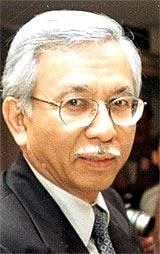 Indeed, Daim is regarded as the architect of the 1980s economic boom that resulted in annual growth of 8 percent throughout much of the decade.
He served twice in former premier Dr Mahathir Mohamad's administration, first as finance minister from 1984-1989 and then as special functions minister in June 1998 to promote economic recovery amid the regional financial crisis. He was again appointed finance minister in January 1999 following the sacking in September 1998 of former deputy premier Anwar Ibrahim.
Daim also held the influential post of party treasurer to the ruling United Malays National Organisation (Umno), which leads the ruling coalition Barisan Nasional.
Born in 1938 in Alor Star, Kedah, Daim's first job was as a teacher at the Sultan Abdul Hamid College until 1957. He passed his Bar Examination in 1959, after enrolling at Lincoln's Inn for only 18 months. He graduated with a degree in urban planning from the University of Berkeley, California in 1979. He started legal practice in Kelantan and set up his firm known as Daim & Gamani.
Daim hails from the same village as Mahathir in Kedah - Seberang Perak. He made his first millions in real estate ventures in the 1970s and moved into banking in 1981. The same year, Mahathir became prime minister and put Daim in charge of the Fleet Group, Umno's investment arm.
Daim was appointed chairperson of Peremba in the late 1970s - a subsidiary of the Urban Development Authority - with a team of young and bright hand-picked officers assisting him. Notable amongst them were Wan Azmi Wan Hamzah, Halim Saad and Samsuddin Abu Hassan. In 1980, Daim was appointed a senator.
In the 1982 general election, Daim contested the Kuala Muda parliamentary seat and was appointed finance minister in 1984. His effective management style contributed tremendously to Malaysia's economic recovery. However, he also drew heavy criticism for holding majority control of a major bank until he sold out in 1986.
Daim's job was also to nurture ethnic Malay entrepreneurs. He was known as the mentor of some of the highest fliers. As their business empires grew, so did Daim's legendary reputation. But some of those high fliers may have since become Daim's downfall.
Malaysia, with Daim as the driving force, introduced the peg on the ringgit in 1998, along with capital controls, to stave off currency speculators during the Asian financial crisis
In June 2001, Daim resigned as finance minister, best remembered as the mastermind of Malaysia's economic recovery, but also accused of having helped arrange bailouts of well-connected companies that collapsed during the financial crisis.
Halim Saad
Halim Saad's rise to fame and fortune began in 1980 when he moved to Peremba, a state-run property developer, and became a protege of then Finance Minister Daim Zainuddin, who headed Peremba.
In June 1984, Halim was appointed one of the two directors of a newly formed Umno-linked investment holding company called Hatibudi Sdn Bhd. Within a year, it acquired a construction company, United Engineers (Malaysia) or UEM.
In July 1987, UEM won a government contract to build the RM4 billion North-South Expressway Highway (Plus) - from Johor Bahru to Bukit Kayu Hitam, in Kedah - and thus making the company one of the nation's biggest infrastructure and engineering ventures.
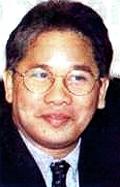 Born the eighth of nine children, Halim received his earlier education in Perlis and his academic record got him into the elite Malay College at Kuala Kangsar, before he furthered his studies in Victoria University, New Zealand, on a scholarship. After qualifying as an accountant, Halim returned home in the late 1970s.
Under the patronage of Daim, Halim spearheaded efforts to broaden UEM's business activities. He restructured the company in 1990, which saw the acquisition of a public-listed company, Renong Bhd. The business ventures of UEM and its subsidiaries were consolidated under Renong, resulting in its stocks becoming the major attraction in the Kuala Lumpur Stock Exchange (now Bursa Malaysia).
By then, Renong had more then 15 subisidary companies in its stable, involved in activities ranging from construction, engineering and real estate to telecommunication, finance, petroleum production and transportation. They included Metramac Corporation Sdn Bhd, the concessionaire of the Cheras toll in Kuala Lumpur.
Before the 1997 Asian financial crisis, Renong was actually the bluest of Malaysia's blue chip companies with a market capitalisation of RM16.8 billion, while its cash-rich subsidiary, UEM, operated the lucrative 800km North-South Expressway toll road that runs the length of Peninsular Malaysia.
During the regional crisis, Renong's finances deteriorated and the company became saddled with debt amounting to RM3.4 billion. Halim then persuaded subsidiary UEM to buy 32.6 percent of Renong at RM3.24 per share - 35 percent higher than Renong's then stock market price of RM2.40. The inflated price was widely perceived as Halim's move to bail out Renong.
In another effort to further boost the group's financial standing, UEM and Renong issued RM2.2 billion worth of seven-year zero-coupon bonds attached to Plus in September 1999.
Halim also wanted to list a dotcom subsidiary, Time Engineering - a fiber-optic cable network that covers much of the country. However an IPO (in February 2001) by Time Engineering bombed on its first day and saw the plunge of the value of holdings by banks and government-linked pension funds that invested in the initial offering.
In the mid-1990s, his marriage started to fail. Halim and his wife had a messy and public split in which they squabbled over distribution of their assets. They were divorced in 1998 after years of wrangling. Halim is now married to a Singaporean lawyer some 20 years his junior.
In July 2001, then Prime Minister Dr Mahathir Mohamad announced that UEM would be bought by the government and he installed Azman Yahya to head the restructuring efforts.
The appointment of Azman, a 38-year-old accountant with no political connections, to clean up the debts left behind by years of crony capitalism, saw the high-profile departure of Halim.
He resigned in October that year as the government took control of his companies.
Three-part special report on Metramac
Part 1: Unravelling the Cheras toll dispute


Report this comment
Are you sure you want to delete this comment?
This action cannot be undone.