




Now: The tablet-optimised web
Time was when “new media” meant a website. Today, it means a dizzying array of digital and online offerings that can make any publisher’s head spin.
Time was when “new media” meant a website. Today, it means a dizzying array of digital and online offerings that can make any publisher’s head spin.
Recently, a friend who specialised in traditional media publishing asked me to explain the broad range of new media options she could consider for a new cooking series she wanted to produce.
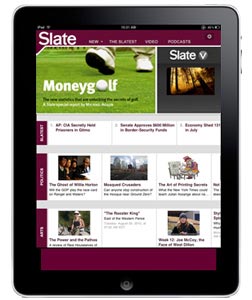 This is what I shared with her. I started off talking about apps, which is the hot new thing right now. Apps have been around even before the iPhone came into existence but it was the iPhone that really made apps a hot item.
Given that legacy, when you say “apps” people normally think “iPhone apps”. But then Apple came up with the iPad, so you now have iPad apps ( right ) too, which are not meant to be just bigger-sized versions of the iPhone app. They should have added functionalities given the increase in size.
Then, there’s Android which is growing in popularity. So, you can consider creating an Android phone (Gingerbread) app or an Android tablet (Honeycomb) app.
If you don’t want to bother with apps but still want your users to have an app-like experience, you can go for web apps , which I wrote about last week.
Next up, the web proper. That’s the web that you’re used to seeing when you surf using your laptop browser.
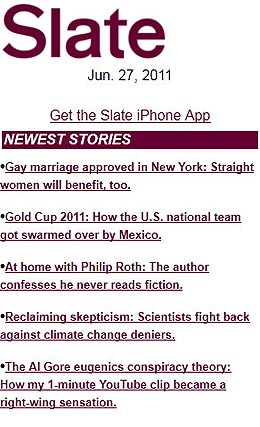 An offshoot of the regular web is the mobile web (
left
), which is not supposed to be a smaller version of your regular web. A good mobile site takes into consideration the small screen and is optimised for that. It should work on any mobile phone with a browser.
An offshoot of the regular web is the mobile web (
left
), which is not supposed to be a smaller version of your regular web. A good mobile site takes into consideration the small screen and is optimised for that. It should work on any mobile phone with a browser.
But that's not all. There's also the iPhone optimised web. What that is, is a mobile site that’s optimised specifically for the iPhone. If you want to see an example of this in action, compare the BFM site on an iPhone and on a non-iPhone smart phone. You’ll see that the same site looks different depending on whether you are viewing it on a laptop, an iPhone or a non-iPhone smart phone.
If that’s not complicated enough, there's yet another form of web that's emerging and that’s the tablet-optimised web. I first realised the need for that while working on the BFM 89.9 site. It didn’t function properly on the iPad. A few tweaks later and we managed to make it work but it looked and felt pretty much like the regular web.
A swipe-able version
If you really want to optimise your website for tablets, some further and deeper thought needs to be put into the design. One publishers that’s done that is Slate.com, one of my favourite news sites that’s already got a mobile site, an iPhone app and both an iPad and Android app.
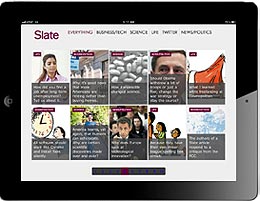 Now, it’s got a tablet-optimised website (
right
) as well. What it does is it takes into consideration that tablets all use touch-screens rather than the mouse for navigation. So, its tablet-optimised site is a swipe-able version.
Now, it’s got a tablet-optimised website (
right
) as well. What it does is it takes into consideration that tablets all use touch-screens rather than the mouse for navigation. So, its tablet-optimised site is a swipe-able version.
Instead of showing the table of contents as you would normally see on a website, the tablet version shows the content in a grid, displayed in reverse chronological order. Navigation is by swiping. Horizontal swipes take you from page to page like you would do with a book.
There are four buttons on the bottom right hand corner of the site. The speech bubble allows you to see all of the recent Facebook and Twitter activity about a particular story. The arrow button allows you to share the story via Twitter , Facebook , or email. The heart button allows you to save stories for online or offline reading later. Finally, the rocket ship button will bring up a page of related stories.
If, while using your iPad, you decide to switch back to the normal browser version of Slate, just click on the “View desktop version” button at the bottom of the screen.
Not many publishers have gone the route of creating tablet-optimised sites but as these devices become more and more popular, this is something publishers have to consider - on top of the various other websites and apps that they should also offer.
How simple life used to be for the publisher. But with the dazzling array of options, there are more opportunities to reach out to more people than ever before. And with it, more opportunities to monetise the content.
OON YEOH is a new media consultant. You can follow him at www.twitter.com/oonyeoh .


