



It’s time for a 'new Malaysia' blueprint
COMMENT | Political temperatures are running about as high as they have since GE14.
Tempers are flaring, angry demands are being made left and right, and you can almost hear the fists banging on the tables.
Maybe it’s time that we ask, through all the sound and the fury, what are we actually fighting about?
During GE 14 this year, Malaysians slew a dragon some thought to be immortal.
It was glorious. It was epic.
It was only the beginning.
Amidst the smoke and the rubble, after the euphoric cheers died down, we stop to look around, and what do we see? ...
COMMENT | Political temperatures are running about as high as they have since GE14.
Tempers are flaring, angry demands are being made left and right, and you can almost hear the fists banging on the tables.
Maybe it’s time that we ask, through all the sound and the fury, what are we actually fighting about?
During GE 14 this year, Malaysians slew a dragon some thought to be immortal.
It was glorious. It was epic.
It was only the beginning.
Amidst the smoke and the rubble, after the euphoric cheers died down, we stop to look around, and what do we see?
Many different tribes and warriors, all having been foes at some point in the past or another, armed to the teeth, fire still in their blood.
We united to fight our common foe, who threatened to destroy us all.
We won.
Now we face two words, no less threatening than the dragon itself: Now what?
The vacuum after the dragon
The simple truth is that warriors who are bred to fight will, in the absence of a higher purpose or common cause, eventually start fighting one another.
I can think of no truer explanation for what is unfolding in Malaysian politics today.
Beyond the gritty details of who is accusing who of what, or which scheme is being plotted by whom, lies the simple fact that the lack of a driving, unifying goal has former allies training their weapons on one another.
This happened to Pakatan Rakyat as well, which began to disintegrate so quickly after GE13.
It was easier when we had Najib Abdul Razak and Umno to fight. You could spot that particular dragon a mile away, and we all painted a big red target on its back.
The “old Malaysia” that we want to replace is a dragon that is not so easily identified. It’s not as easy to agree which parts we want to remove, and which parts we want to keep.
Just because it’s hard though, doesn’t mean it isn’t what we need the most.
New Malaysia needs new definition
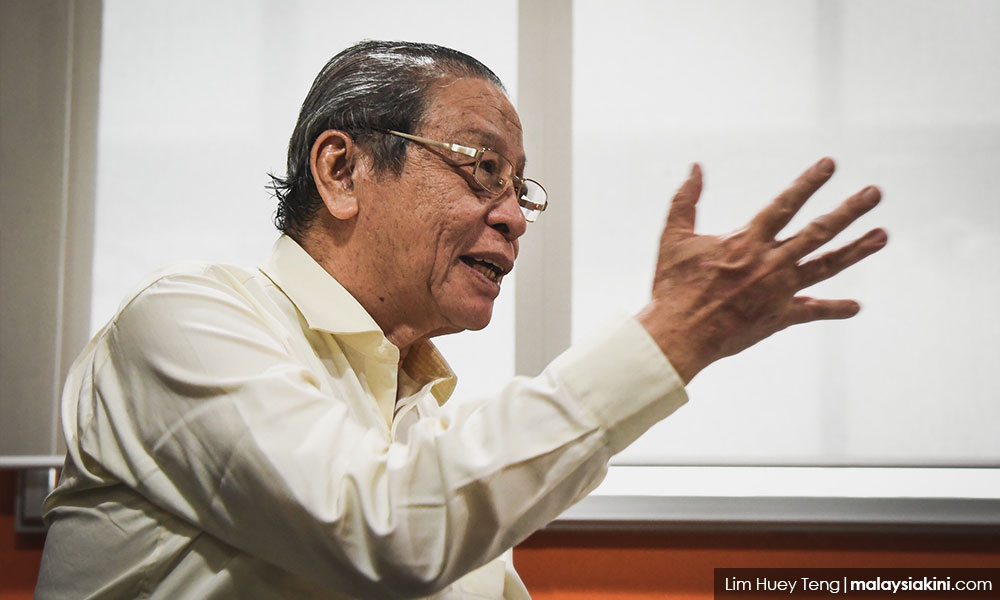
In this, I agree with Liew Chin Tong who writes that we need a new national narrative.
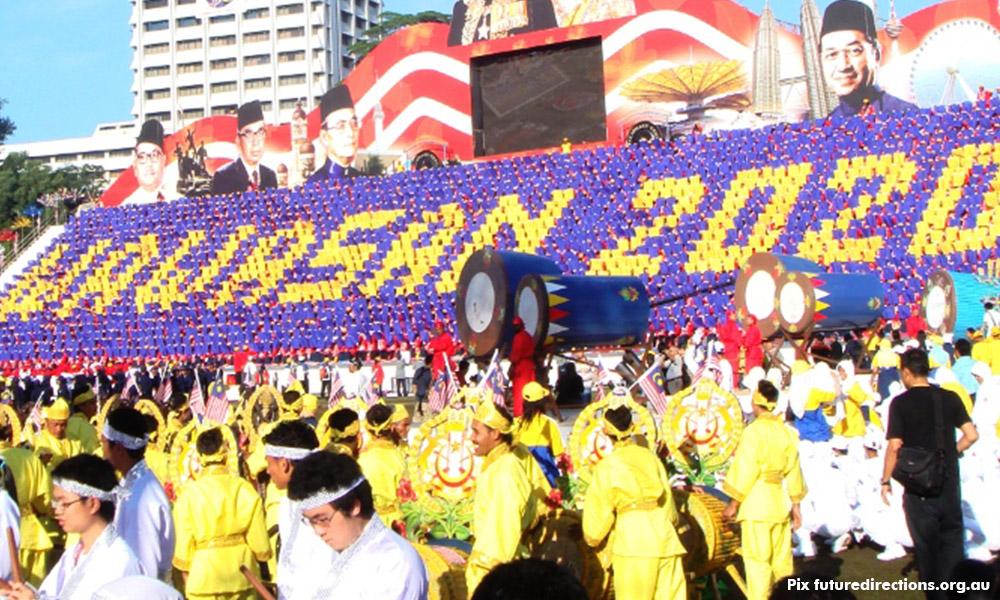
His article speaks of Vision 2020, and the important sense of shared purpose it provided.
No doubt, Malaysia has had a problem in the past with empty slogans like 1Malaysia.
The faults of 1Malaysia are easy to identify - the words all spoke of a united Malaysia, but Umno’s actions clearly meant to build a divided one. Worst of all, it was an obvious cover-up for unbelievably rampant corruption.
All that said, we may have to admit, it was something that everyone knew about. It was, whether in a positive or negative sense, part of the Malaysian psyche.
What if we had a similarly prevalent concept, but one that was backed by actual substance (and not the opposite, as happened with 1Malaysia)?
What if we already do?
The term “new Malaysia” was not the brainchild of some highly paid foreign public relations firm, like 1Malaysia was. It entered public discourse in a much more organic way, following GE 14.
Perhaps it is time that we, and the government especially, take a little more ownership of this term, and take the exercise of defining it as an opportunity to provide some much-needed direction.
The new Malaysia blueprint
While continuing all the good work that is undoubtedly being done by the prime minister and his government behind the scenes, Malaysians need a more visceral shot of inspiration - something to galvanise public imagination and keep childish politicians from squabbling amongst themselves.
This can take many forms.
One example could be to make a new Malaysia blueprint.
The Harapan manifesto is a strong document; but it was forged in a different time, based on a different set of available data, and in a different context.
Everything has changed now.
A new blueprint could identify the meta-goals of our new Malaysia, and then translate each of these goals for each and every ministry.
This will reduce some of the stumbling and bumbling we’ve seen, but more importantly, give each ministry some very clear, measurable targets to achieve, around which a minister’s performance can also be objectively evaluated.
If I could contribute my own two sen as to the meta content of the blueprint, I would propose three focus areas and one methodological principle.
Spending power, clean governance, unity
The first focus is Improving Spending Power (not having studied economics, please forgive me if there’s a better term).
Here, I agree with Rafizi Ramli’s analysis that Pakatan Harapan’s success pivots primarily on whether or not the Malaysian on the street can feel that his or her economic lot is improving.
Ramkarpal Singh’s article might have put a tad too much emphasis on anecdotal evidence surrounding the price of an egg, but his general gist is accurate: people care about the cost of living, not about the latest political drama.
The government four years to make Malaysians feel that they have more spending power than they did before, and that may be the most important thing to deliver.
The second focus is Clean Governance.
There is no doubt that a prevalent culture of corruption has done more economic damage to Malaysia than anything else.
Nothing has prevented us from fulfilling our economic potential than rampant pillaging and leakage caused by those in power, something we have begun to consider synonymous with government itself.
Replacing this with a strict culture of transparency and zero tolerance should obviously be a hallmark of our New Malaysia.
The third focus area is Unity in Diversity.
This concept is centred around empowering every single Malaysian to express their heritage freely and to feel that their culture will always have a place under the Malaysian sun.
This empowerment comes in the context of living in an even bigger Malaysian culture of constant respectfulness towards one another, and in creating the right kinds of atmospheres for Malaysians of all backgrounds to come together and build real intercommunal bonds.
In terms of the ever important emotional connection, this is one of the biggest ways we can make our new Malaysia feel different from the old one.
Data-driven governance, measurable progress
In terms of methodology, let us take a leaf out of the corporate and startup book, and focus on being data-driven.
As applies to government, there are three prongs in particular that we need to pursue.
The first is to make sure we collect accurate data.
The second is to make sure we act based on what the data suggests, not based on bias or misguided, narrow political goals alone.
The third is to be able to transparently track data over time, so that all of Malaysia can see what exactly is changing and how it is changing.
All this leads to one thing: Measurable Progress.
What we want to throw out is an approach based on an endless fumbling of ad hoc, haphazard measures (the Human Resources and Education ministries come briefly to mind).
What we want in its place is a systematic, comprehensive approach towards solving Malaysia’s problems - one in which we can see both the forest and the trees, on our road to a new Malaysia.
Achieving this also requires a more systematic approach to communicating exactly what the government is doing and achieving in an organised, well thought out manner.
Progress is like justice: it must not only be done, it must be seen to be done.
The biggest gotong-royong of all
A new Malaysia blueprint can help all Malaysians feel that we are all in the same boat and that the Malaysian ship is sailing towards genuine progress.
If we track the data transparently and well, we will all be able to see how well we are doing on that voyage.
If the government provides the right leadership, Malaysians will also know how they as citizens can contribute towards achieving the Blueprint’s goals, and see how their own day to day efforts can affect the gradients of the data graphs.
Think of it as the biggest gotong-royong in Malaysia. If we can create that sense of united purpose, it could be the biggest contribution of the blueprint of all.
As writers and Malaysians, we can spend all day and all night arguing about whether Nurul Izzah Anwar or Latheefa Koya is right, about which ex-Umno MPs should be admitted to Harapan and which should not, and so on.
It seems to me though, that this would only contribute to this phenomenon where politicians become increasingly mired in their own little world and lose sight of the things that truly matter.
We don’t need to fuel that drama.
What we need is to fuel our dreams - to come together as one nation and make those dreams come true with Malaysian sweat and blood.
NATHANIEL TAN feels like he is finally getting somewhere.
The views expressed here are those of the author/contributor and do not necessarily represent the views of Malaysiakini.


Report this comment
Are you sure you want to delete this comment?
This action cannot be undone.