


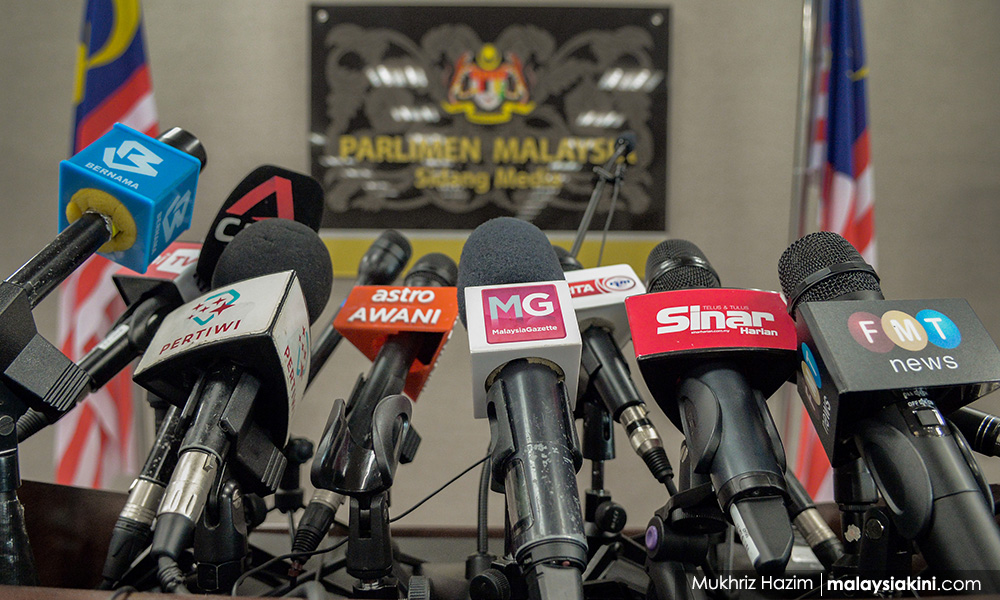

COMMENT | PN should hold regular press briefings to cement ‘legitimacy’
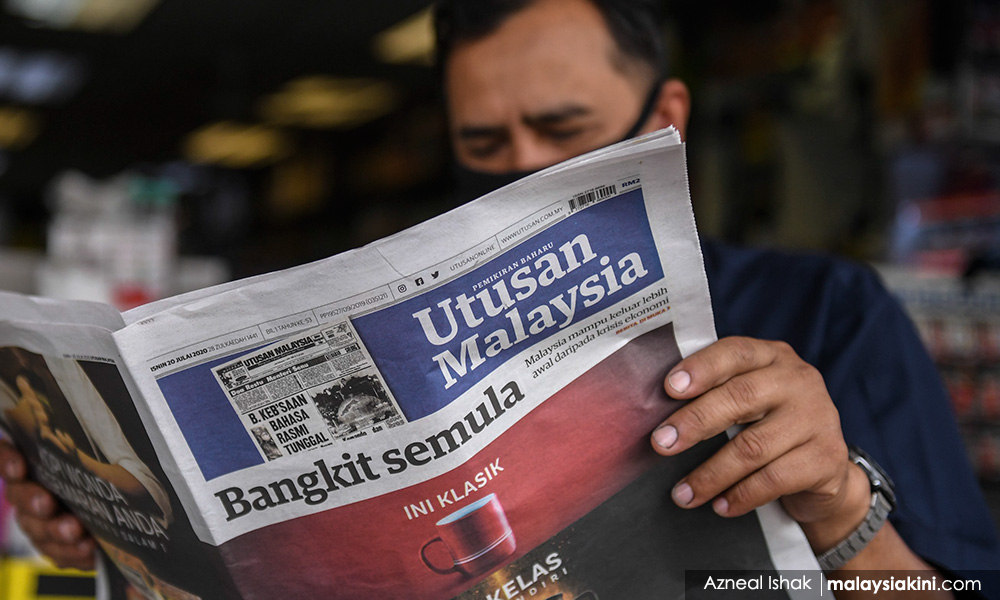
COMMENT | It was not so long ago that Utusan Malaysia headlined an op-ed “Apa lagi Cina mahu?” Chinese readers then reacted with "Apa lagi Melayu mahu?" These racial spats emerge during each communal rivalry like sand-bubbler crabs on the shore.
Malays perceive the Chinese as an economic threat, an ungrateful lot generally living in the lap of luxury. The Chinese could only see themselves as persecuted second-class citizens, with the Indians being the worst off.
Our national conversation is highly segmented. This is mirrored in the editorial focus of the Malay, Chinese and Tamil media. The consequence? Verifiable facts and contexts are compromised and politics become overly racial, notwithstanding journalists’ claim to non-partisan reporting and "objectivity".
Politicians from both sides of the aisle tend to instigate an “Apa lagi (fill in the blank) mahu?’’ exchange when their power position becomes uncertain. Journalists are not completely blameless either. They perpetuate such racialised diatribe when they merely report instead of fact-checking to facilitate a reasoned dialogue during times of uncertainty.
I wrote soon after BN was ousted in May 2018 that under Pakatan Harapan, we might just see a transformation in Malaysian journalism – from an unapologetically pro-BN-Umno coverage by the mainstream media to a more contextual reporting of in-depth news and sourcing for diverse views.
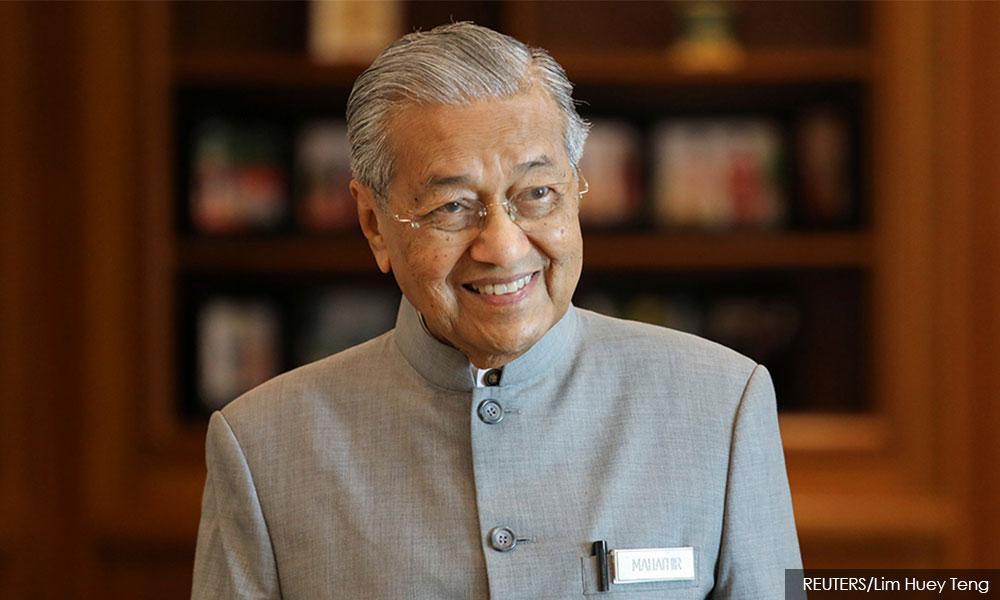
I said then: “The onus falls on veteran journalists and editors to show their reporters that they will work to higher standards in representing the people’s interests and to be more vigilant in watching over the Harapan government to ensure that they do not repeat the decades of malfeasance under BN, which Mahathir led for 22 years.”
Journalists did taste some newfound freedom, but ...
COMMENT | It was not so long ago that Utusan Malaysia headlined an op-ed “Apa lagi Cina mahu?” Chinese readers then reacted with "Apa lagi Melayu mahu?" These racial spats emerge during each communal rivalry like sand-bubbler crabs on the shore.
Malays perceive the Chinese as an economic threat, an ungrateful lot generally living in the lap of luxury. The Chinese could only see themselves as persecuted second-class citizens, with the Indians being the worst off.
Our national conversation is highly segmented. This is mirrored in the editorial focus of the Malay, Chinese and Tamil media. The consequence? Verifiable facts and contexts are compromised and politics become overly racial, notwithstanding journalists’ claim to non-partisan reporting and "objectivity".
Politicians from both sides of the aisle tend to instigate an “Apa lagi (fill in the blank) mahu?’’ exchange when their power position becomes uncertain. Journalists are not completely blameless either. They perpetuate such racialised diatribe when they merely report instead of fact-checking to facilitate a reasoned dialogue during times of uncertainty.
I wrote soon after BN was ousted in May 2018 that under Pakatan Harapan, we might just see a transformation in Malaysian journalism – from an unapologetically pro-BN-Umno coverage by the mainstream media to a more contextual reporting of in-depth news and sourcing for diverse views.
I said then: “The onus falls on veteran journalists and editors to show their reporters that they will work to higher standards in representing the people’s interests and to be more vigilant in watching over the Harapan government to ensure that they do not repeat the decades of malfeasance under BN, which Mahathir led for 22 years.”
Journalists did taste some newfound freedom, but only for a while. Two years under Harapan saw our press freedom index improve from 145 to 101 out of 180 countries, according to Reporters San Frontieres. Six months under Perikatan Nasional’s uncertain governance amid its slim majority saw us scuttling back with clampdowns on detractors and heading for a possible snap election at the end of this year.
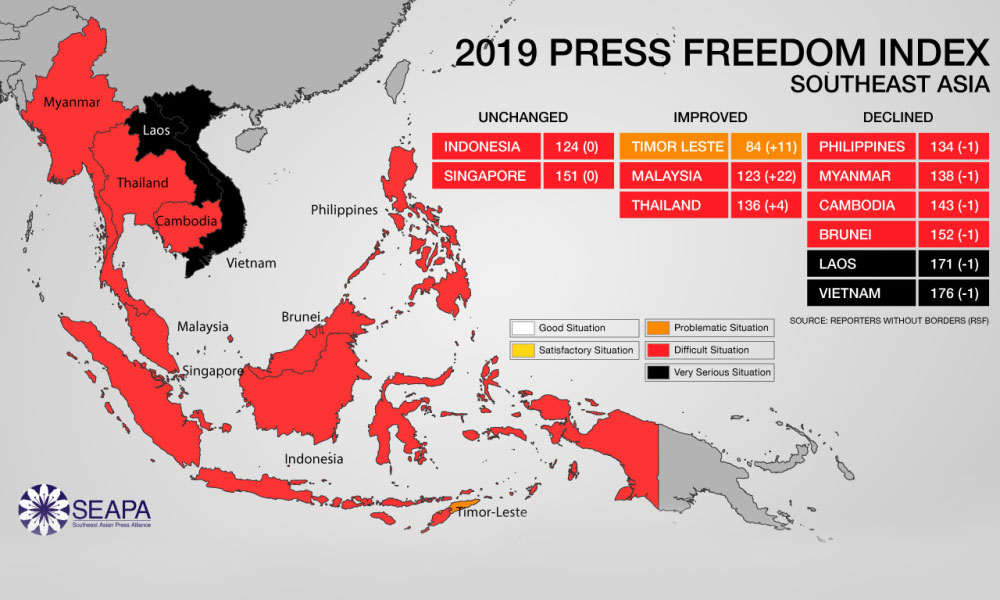
Are the media clampdowns basically driven by an insecure government that is becoming increasingly sensitive to public criticisms? What should PN be doing instead to cement its legitimacy and project transparent governance diametrically opposed to a “Malay first, Malaysian second” government?
Instead of intimidating journalists through contempt of court charges, and suppressing coverage it does not like, most recently Al Jazeera’s "101 East" documentary on migrant workers during the Covid-19 lockdowns, the government should tell their side of the story, point out the factual errors if any, and clarify the context of the reported maltreatment of migrant workers.
Right to report
Clearly, the more strategic move is to be upfront with the media rather than expelling the journalists, staying inaccessible or declining to comment when approached for reactions and clarifications.
Politicians from the ruling and opposition parties should ask a basic question: What are journalists – and the readers they represent - thinking and asking but have either misunderstood, misreported or missed the complete picture?
The answers are simple. Journalists have a right to report and the people have a right to know how the state is governed. Therefore, hold regular press briefings – akin to how the director-general of health, Dr Noor Hisham Abdullah conducts his daily Covid-19 briefings. Stop sheltering from the media. Cease preventing journalists from doing their job.
It is said that an effective statesman feels the pulse of the nation and the people. This national heartbeat is tracked by the state-owned media, independent news portals, the commercial mainstream, the vernacular papers. Journalists provide this feedback loop from the people to the state, which ultimately impacts on the functioning of a fair and just society.
Regular televised press briefings have been a traditional benchmark of transparency and accountable governance in democracies where journalists can freely ask government leaders any question in the public interest.
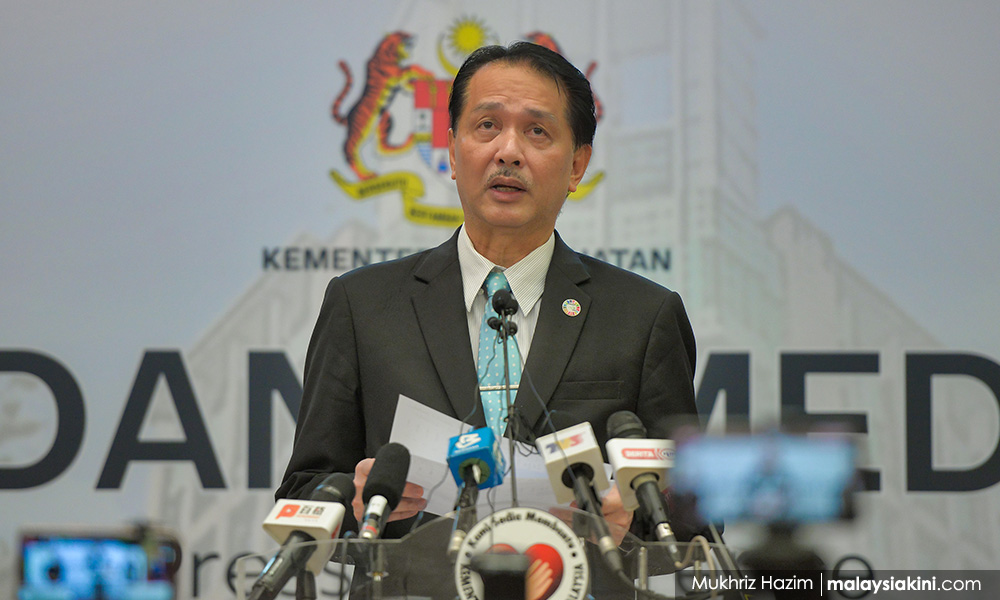
The root problem with the current reporting of national affairs is the inaccessibility of our MPs who are protected by a wall of bureaucracy from a critical media that is duty-bound to hold politicians accountable.
The Dewan Rakyat has been the only place where reporters are able to observe how MPs are representing the concerns of their constituents and vote on certain bills. The official website of Parliament is not completely helpful either with its limited information and response structure.
As long as I can remember of the bad old days, regular press briefings were never a standard practice. When the occasional press conferences were held, state leaders are "revered". They usually called the shots by virtue of their position. Journalists avoided asking the hard questions – at least not directly.
Regular press briefings once or twice a week, if they were to be held with, for instance, a Putrajaya press corps that comprises journalists from the state-owned media and "independent" news portals will show the people that PN will indeed govern with a modicum of accountability and put to bed the “Apa lagi (fill in the blank) mahu?” exchange.
ERIC LOO is the founding editor of the academic journal Asia Pacific Media Educator.
The views expressed here are those of the author/contributor and do not necessarily represent the views of Malaysiakini.



Are you sure you want to delete this comment?
This action cannot be undone.