



COMMENT | Discipline is a key requirement in life
COMMENT | The day-to-day work life requires discipline. What happens when it all breaks down when it is disrupted by the start of an international pandemic or a satellite falling to earth?
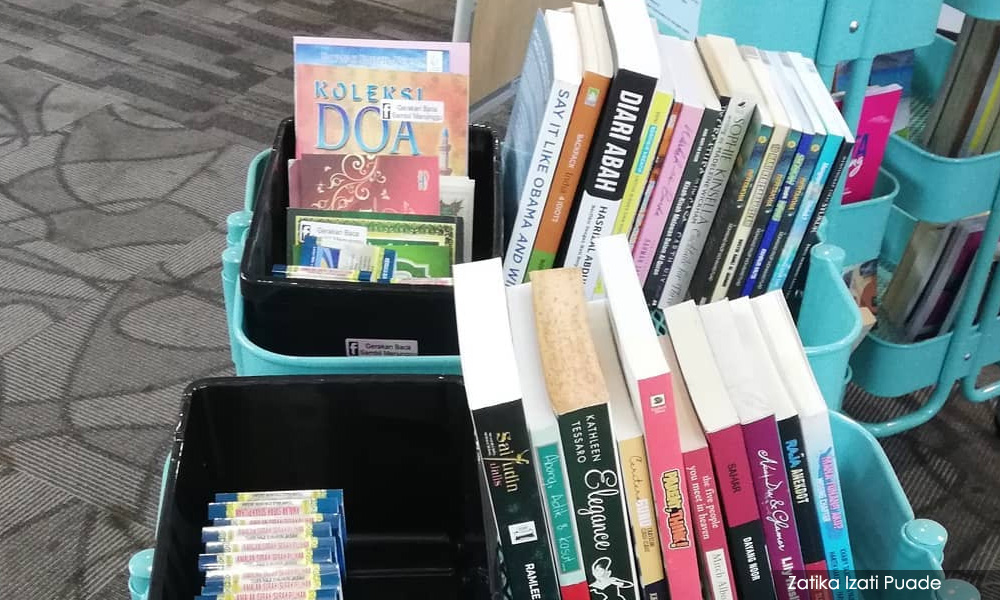
The first MCO was an unexpected, uneasy chance to think of other futures and possibilities, and externally there were many discussions on the opportunities for domestic systemic change. But for me, reading was more comforting, even if one of the most striking books that I read during this period was one which I had read many times before.
Tania de Rozario's Somewhere Else, Another You was a break from the silence of the neighbourhood streets, weaving together the sense of alienation from modern society. So far, so relatable, but several pages into the choose-your-own-adventure book, every decision made charting an alternative future, broader questions started to seep in: questions about the nature of life, the universe and the philosophical implications.
Another book that I read constantly was the memoir of the British neuropsychologist Paul Broks, in The Darker the Night, the Brighter the Stars, musing on grief, consciousness and existence in the wake of his wife’s death. On the surface, both books have seemingly little to do with each other, but they touched on a similar constellation of existential dread/acceptance/submission that was entirely fitting...
COMMENT | The day-to-day work life requires discipline. What happens when it all breaks down, when it is disrupted by the start of an international pandemic or a satellite falling to earth?
The first MCO was an unexpected, uneasy chance to think of other futures and possibilities, and externally there were many discussions on the opportunities for domestic systemic change. But for me, reading was more comforting, even if one of the most striking books that I read during this period was one which I had read many times before.
Tania de Rozario's Somewhere Else, Another You was a break from the silence of the neighbourhood streets, weaving together the sense of alienation from modern society. So far, so relatable, but several pages into the choose-your-own-adventure book, every decision made charting an alternative future, broader questions started to seep in: questions about the nature of life, the universe and the philosophical implications.
Another book that I read constantly was the memoir of the British neuropsychologist Paul Broks, in The Darker the Night, the Brighter the Stars, musing on grief, consciousness and existence in the wake of his wife’s death. On the surface, both books have seemingly little to do with each other, but they touched on a similar constellation of existential dread/acceptance/submission that was entirely fitting.
At the heart of the books is the same question: what is the meaning of life? The same question posed by Nietzsche, Schopenhauer, Camus, answered by Douglas Adams in The Hitchiker’s Guide to the Galaxy, amplified by an infinite cosmic scale.
As KJ Ratnam writes in Intellectuals, Creativity and Intolerance, “[w]hat is one to do when faced with information on this scale? ‘Nothing’, might be a reasonable answer for most of us . . . [or, in turn quoting an episode from Conversations About the End of Time] one might also react the way the Romanian writer Emil Cioram did”, when he stopped shaving midway through listening to an astronomer discussing the multitude of stars in the universe, suddenly struck by our smallness (p. 30).
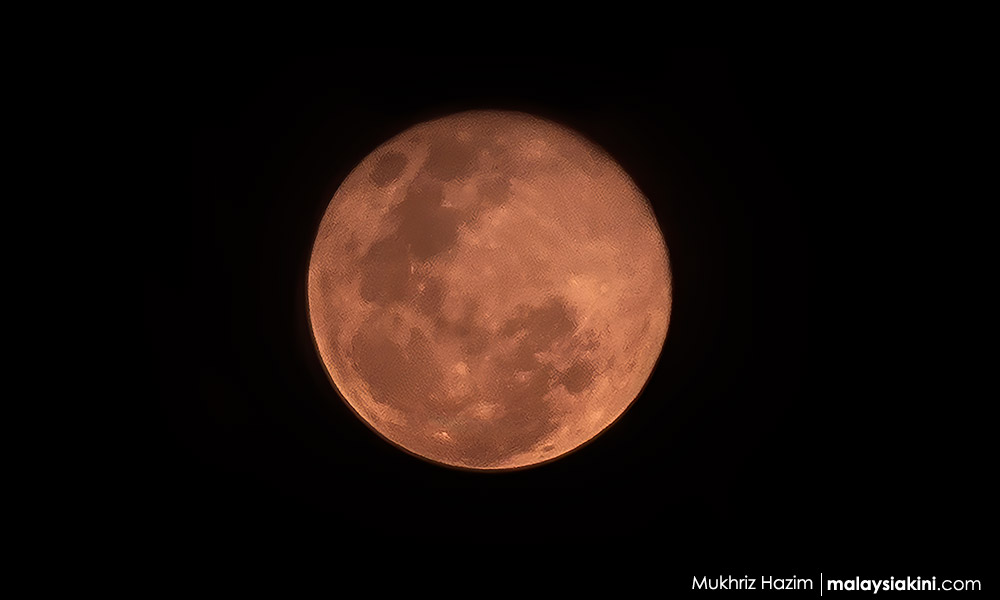
Why do hourly wages, societal expectations and annual bonuses matter, coupled against the greater forces of nature: climate change, pandemics and the nature of time and space? In spite of this we are not entirely cut-off from the larger universe: Broks, paraphrasing the astronaut Edgar Mitchell, returning to earth from his flight to the Moon, spoke of a sense of “‘universal connectedness’ … [t]he atoms of his body and the atoms of his spacecraft had the same origins in the furnaces of ancient stars blazing in the heavens all around.” (p. 201)
De Rozario's book picks up the thread of these discussions and fears, each of the reader’s individual decisions about mundane events allowing for the inherent strangeness of life to emerge. “If there exists such a thing as destiny, it is that we are inevitably earth, ocean, stars and sky” (p. 26) This statement, and others, form an internal philosophical framework as it becomes inevitably clear that the protagonist of the book is living one of several possible lives: each decision taken leads to a split, two worlds branching off on parallel tracks, equally real.
In particular, it seems to be inspired by the Many-Worlds Interpretation of quantum mechanics which, as defined by the Stanford Encyclopedia of Philosophy, “holds that there are many worlds which exist in parallel at the same space and time as our own.” It should be noted that this is one of the many interpretations that have been offered to make sense of quantum phenomena, and its subjectivity makes it particularly popular in science fiction. It is no surprise that this book was rooted in a writer-in-residence programme held at the Centre for Quantum Technologies, at the National University of Singapore.
On a broader scale, the book is a confluence of art and science, interpreting a highly technical subject for a seemingly polar opposite audience, breaking through the divide between what CP Snow described as the "two cultures". And it was a gateway to further readings, books on subjects that took into consideration the probabilistic nature of reality, seemingly breaking with the established world of classical mechanics. Einstein, despite being credited with his world-shattering theories of relativity and interpretations of space and time, was uneasy with the implications of the work by a new breed of physicists like Bohr, Schrödinger and Heisenberg: quantum mechanics.
Perhaps there is a link between actions on a quantum level and the workings of the brain, and as Clarissa Lee has alluded to in her book, which I edited, research into neuroscience allows for the interactions of various fields of knowledge. From there it is not a large leap to speculate on the nature of consciousness, built from individual subsystems comprising a much larger system, and thus, as Broks writes in The Darker the Night, it is a “scheme of things or a process, or a network of relations…
Consciousness is a creature of the fourth dimension: time.” (p. 170) But despite the knowledge that we have, there is still much that we do not know about how it all comes together to “give rise to a coherent sense of self… [i]t is quite possible that there is no solution to be found, that the self, like the soul, will turn out to be an illusion.” (p. 255) For us, on a daily level, it becomes a challenge of living with the knowledge of this strangeness. We remain fundamentally observers in a grander scheme of things, living as we do with assumptions and the limitations of our knowledge and senses.
Perhaps this realisation of the strangeness of things can be most poignantly summed up in translation of the poignant, famous letter written by Einstein to the widow of his friend, the late engineer Michele Besso: “Now he has departed from this strange world a little ahead of me. That means nothing. People like us, who believe in physics, know that the distinction between past, present and future is only a stubbornly persistent illusion."
Yet there is some beauty in this existential dread, and as de Rozario continues to explore this unease, the uncertainty of our understanding of the universe can perhaps offer some sense of comfort to us on a daily basis, “more particles in each of our bodies than stars in the observable universe. Here we are, matter in motion, disappearing, reappearing, fleeting like a daydream.” (p. 34-5)
So, what happens if we learn all there is? Can a grand unified theory that accounts for all the forces of the universe, their interactions and implications, the type that Einstein strove to discover? One that reconciles the weakness of gravity with the nuclear forces that hold atoms, and in turn molecules, systems, organisms and inanimate matter together, condensing the past and future? That find truth in or dispense with gravitons and calculations of imaginary time, double copy theory and light cones?
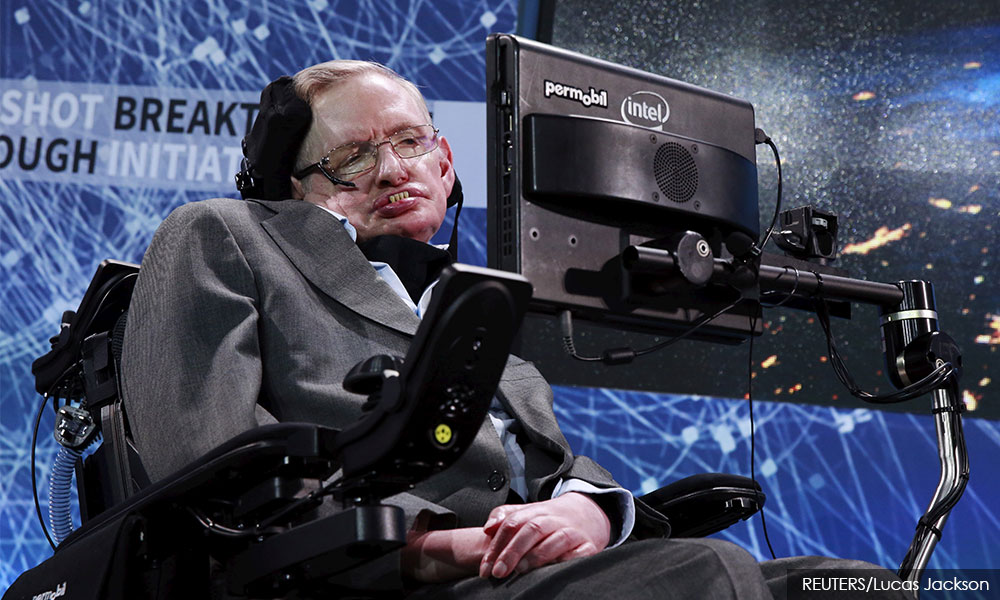
As Stephen Hawking, already wheelchair-bound in his struggle with amyotrophic lateral sclerosis, wrote in A Brief History of Time, such a theory “should in time be understandable in broad principle by everyone, not just a few scientists. Then we shall all, philosophers, scientists and just ordinary people, be able to take part in the discussion of the question of why it is that we and the universe exist.” (p. 185)
Or, perhaps on a day-to-day basis, nothing will change: life goes on as usual. The astronomical confirmation of Einstein's work by Eddington made headlines across the world but it kept sinking into economic depressions and war and peace and crisis. So, for now, regardless of the further adventures of the Voyager probes into the interstellar flight, our musings and models determined to posit the start and fate of the universe, our destinies remain earthbound.
WILLIAM THAM WAI LIANG is an editor at Gerakbudaya and the author of two novels. His new novel, The Last Days, is set in 1981 and covers the continuing legacy of the Emergency. His first book, Kings of Petaling Street, was shortlisted for the Penang Monthly Book Prize in 2017.
The views expressed here are those of the author/contributor and do not necessarily represent the views of Malaysiakini.







Are you sure you want to delete this comment?
This action cannot be undone.