



COMMENT | Mathematics and society: A conversation with Wong Tian An
COMMENT | A friend once mentioned that the film The Man Who Knew Infinity was one of the most accurate depictions of mathematicians he had seen, specifically in terms of the way it showed them thinking and working away.
This was perhaps not surprising, given that the mathematician Ken Ono served as its consultant. It was based on the life of the Indian mathematician Srinivasa Ramanujan, whose poetic and intuitive understanding of mathematics posed some difficulties for his mentor GH Hardy who was forced to insist on the necessary demonstration of written proof.
This was in addition to other themes, such as colonialism and religion, which made for a rich film to dissect and ponder.
Ramanujan’s intuitive approach, however, is not necessarily unorthodox. Iain Stewart writes about the absence of a universal “mathematical mind”, recognising that mathematicians do not necessarily “proceed one logical step at a time; only the polished proofs of their results do that”.
Mental imagery and creative thinking is as much a part of the process as the necessary symbolic calculation and rigorous logic. They add to a historic body of work, which Stewart describes as such: “There is an unbroken line of mathematical thought that goes all the way back from tomorrow to Babylon.”
How then may mathematics be reconciled with general society?...
COMMENT | A friend once mentioned that the film The Man Who Knew Infinity was one of the most accurate depictions of mathematicians he had seen, specifically in terms of the way it showed them thinking and working away.
This was perhaps not surprising, given that the mathematician Ken Ono served as its consultant. It was based on the life of the Indian mathematician Srinivasa Ramanujan, whose poetic and intuitive understanding of mathematics posed some difficulties for his mentor GH Hardy who was forced to insist on the necessary demonstration of written proof.
This was in addition to other themes, such as colonialism and religion, which made for a rich film to dissect and ponder.
Ramanujan’s intuitive approach, however, is not necessarily unorthodox. Iain Stewart writes about the absence of a universal “mathematical mind”, recognising that mathematicians do not necessarily “proceed one logical step at a time; only the polished proofs of their results do that”.
Mental imagery and creative thinking is as much a part of the process as the necessary symbolic calculation and rigorous logic. They add to a historic body of work, which Stewart describes as such: “There is an unbroken line of mathematical thought that goes all the way back from tomorrow to Babylon.”
How then may mathematics be reconciled with general society?
In “Can Mathematics be Antiracist?”, an online lecture hosted by the University of Michigan-Dearborn, Malaysian mathematician Wong Tian An briefly brings mathematics within the purview of the general public.
After speaking briefly to the assistant professor of Mathematics of the university, a Q&A format seemed too clunky, and so I have paraphrased his responses thematically below.
Told in Wong’s own words, we dive into the deeper linkages between mathematics and society.
Applying mathematics to society
In the US mathematics community, there is an ongoing conversation about what good maths can do for society. Standard applications of our work in the “real world” are developing programmes, conducting statistical research or applying it to engineering or design.
The core question, though, is to what extent are these applications politically neutral? You can develop facial recognition, but you only have a certain degree over how it is applied.
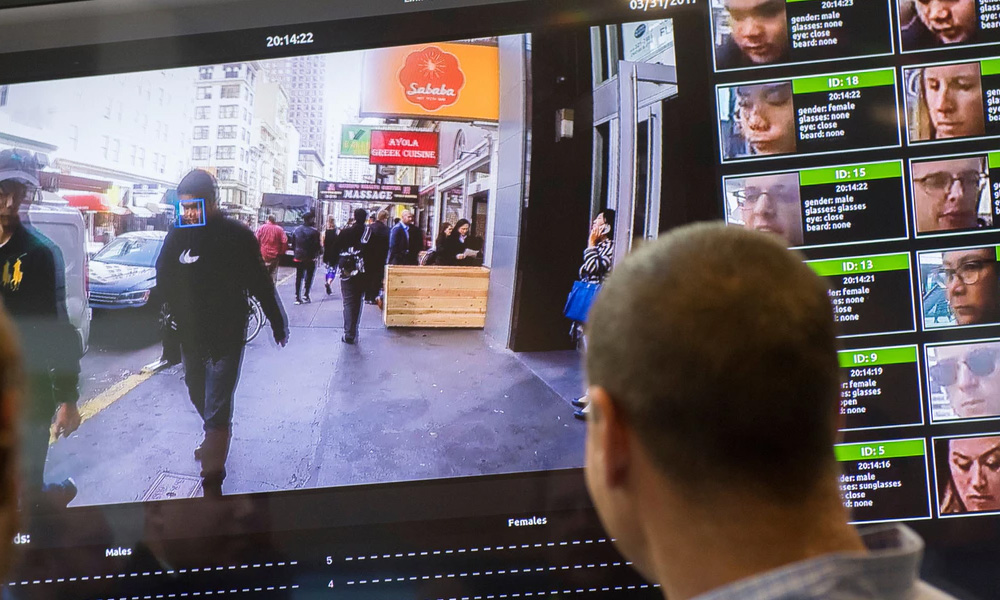
And if you developed some model or programme with a sort of bias, it’s a lot harder to detect and notice what’s going wrong somewhere down the line. Are problems the fault of the person who wrote the code, implemented a programme or collected the data?
It’s somewhat clear that maths can be used for negative purposes, such as when predictive policing is misused. What is less obvious is how it can be used for “good”, or so to speak.
For me, I think the biggest challenge is the sort of incentive structure in place. If you’re trying to reduce crime, the government or the police will fund your research. It is less likely that NGOs and NPOs can do this.
Work in this area, however, is seen more as a “social justice” issue and isn’t recognised as a field of maths in its own right. Therefore, you can’t get published in mathematics journals easily, and because of the incentive structure in place, it’s hard to get a job.
Things do change, though: there is now some push to think about gerrymandering from a mathematical perspective. Mathematically and politically, it turns out to still be a hard problem to address!
Such questions are starting to gain more traction in the US, after some years of being pioneered by a handful of lonely (tenured) people doing so on their own volition.
Partially, it is because there is more computing power now, and so mathematicians can start to attack issues from a more computational perspective.
Such conversations have become almost mainstream – maybe now you can start getting a job as a mathematician doing these kinds of studies.
Politicisation and misuse of mathematics
A simple example is a cryptography. It applies tools found in number theory, my area of expertise. The basics of the theory were developed hundreds of years ago with no practical intentions. In some sense, a symbiotic relationship has developed between the number theory and the cryptographic communities.
It’s somewhat known that the National Security Agency (NSA) is possibly the largest employer of mathematicians in the world, so that’s where you can see a grey zone in terms of how maths is being applied.
The NSA works with the National Institute of Standards and Technology (NIST) on developing certain protocols for cryptographic systems being deployed in the US.

I think it was partly revealed by Edward Snowden that such cryptographic systems were known to have certain “backdoors” – basically cheat codes that let one intercept or eavesdrop on conversations.
After Snowden, the maths and cryptographic community started having certain introspective discussions – what are we doing, and what are people doing with our work and findings?
On one level, I like maths because it’s like solving a puzzle, I think of it as a hard sudoku problem. But in our day and age, we start to understand that our work has ramifications in real life.
Control of information
There are plenty of stories of people suspecting that their devices are eavesdropping on them since they are shown tailored advertisements. But the scary thing is that devices are not listening to conversations – they don’t have to!
Large social media companies generate models, not just of their users, but they have enough data to generate information of connections who are not their users – we can call them “shadow profiles”.
They can predict your needs based on such models, which are mostly generated through machine learning – currently the most prominent subfield of artificial intelligence.
Essentially, machine learning requires computing previous historic data to predict what will happen next. The more dramatic examples are computers beating masters in chess and going with MMORPGs as the next challenge.
The mathematical tools needed to do this were actually developed decades ago, but only recently has computational technology been able to catch up and start making strong predictions. It’s all about having control of lot more data.
Within a capitalist system, such data is controlled by big companies, whose revenue comes from selling advertisements.

Is a different incentive structure possible? These are powerful systems, but can you use them for social good? It’s an open question.
Thinking mathematically
Mathematicians like Eugenia Cheng, in my interpretation, would like us to be mathematically minded about fraught issues – although not necessarily in a strictly mathematical sense.
If you think of categories like gender and race, in terms of binaries or a finite number of categories (eg male or female; Chinese, Malay or Indian), this is inaccurate because they are actually socially constructed.
Life is complicated. It’s not easy for math to take such complexity into account since it works more easily with discrete objects (ie yes/no responses).
There are more flexible mathematical structures, of course, but it’s not obvious how you might apply them to social categories. We would like for maths to do better, but we don’t know how yet.
On education and life journeys
I went to high school and did my A-Levels in Malaysia. At that point I was in the science stream – my parents are both engineers, so I initially applied for chemical engineering programmes. But I had other interests, like art, and did not want to commit so early on.
However, I was fortunate enough that my mother studied in the US, and had an understanding of the liberal arts schools that I became interested in and eventually applied to.
It was only in the third year of college when I landed on maths, having been led there by personal readings on quantum physics and pondering the origins of life.
I didn’t understand the maths, so I took a class, and stuck with it. In places like the Ivy League schools, the pressure is enormous if you are not at the top, but my school was small enough so I didn’t have that.
Regarding the Malaysian education system, it is hard to do basic research in Malaysia, but there are still good Malaysian mathematicians. For example, Gan Wee Teck is among the top experts in my field.
I don’t think that an applied focus is necessarily a bad thing, but it is unlike the liberal arts approach, where you don’t have to decide on the shape of your life very quickly. It just happened to suit me better, even in hindsight.
But I still tried to keep an interest in the humanities: politics and religion and American culture. It was through that sort of exposure that I got to know other theories, although I have not reconciled them with my mathematical work yet.
Mathematics education
There are basically two subfields of study in mathematics. The first is maths as the way we generally think of it (ie with calculations) and the second is maths education. These fields are somewhat parallel and don’t interact much.
Maths education, in the US at least, can encompass different approaches. One of them, ethnomathematics, is concerned with decentring the accepted history of western mathematics – moving away from the Egyptian, Greek and European genealogy to looking at how other civilisations and societies developed other number systems and mathematical thinking.
For example, they look at Chinese, Indian, Islamic, African and indigenous systems – our own numerals are derived from Arabic.
Rehumanising mathematics is more about pedagogy. It’s mainly developed in the US context, with lots of concerns about race and gender, where an implicit bias assumes that there are “standard students” who are expected to do well.
The focus is on how pedagogical methods can be inclusive, engaging students in different ways and being sensitive to various differences and cultures.
WILLIAM THAM WAI LIANG is an editor at large for Wasafiri. His new novel, The Last Days, is set in 1981 and covers the continuing legacy of the Emergency. His first book, Kings of Petaling Street, was shortlisted for the Penang Monthly Book Prize in 2017.
The views expressed here are those of the author/contributor and do not necessarily represent the views of Malaysiakini.






Are you sure you want to delete this comment?
This action cannot be undone.