


/file/publisher-c1a3f893382d2b2f8a9aa22a654d9c97/2024/11/43b243337f2ab246697571a82f35d82d.jpg)

COMMENT | Lessons from 2024 US election for the Madani govt
COMMENT | Three weeks ago, Donald Trump won the US presidential election, securing both the House and Senate majority for the Republicans.
Malaysians have been quick to characterise the outcome of the US election as a reflection of America and her unique conditions.
A closer look suggests that the US election offers important...
COMMENT | Three weeks ago, Donald Trump won the US presidential election, securing both the House and Senate majority for the Republicans.
Malaysians have been quick to characterise the outcome of the US election as a reflection of America and her unique conditions.
A closer look suggests that the US election offers important lessons for the Madani government. Ignoring your political base comes with electoral peril. Losing your moral compass erodes your core support.
Divided society, close but far
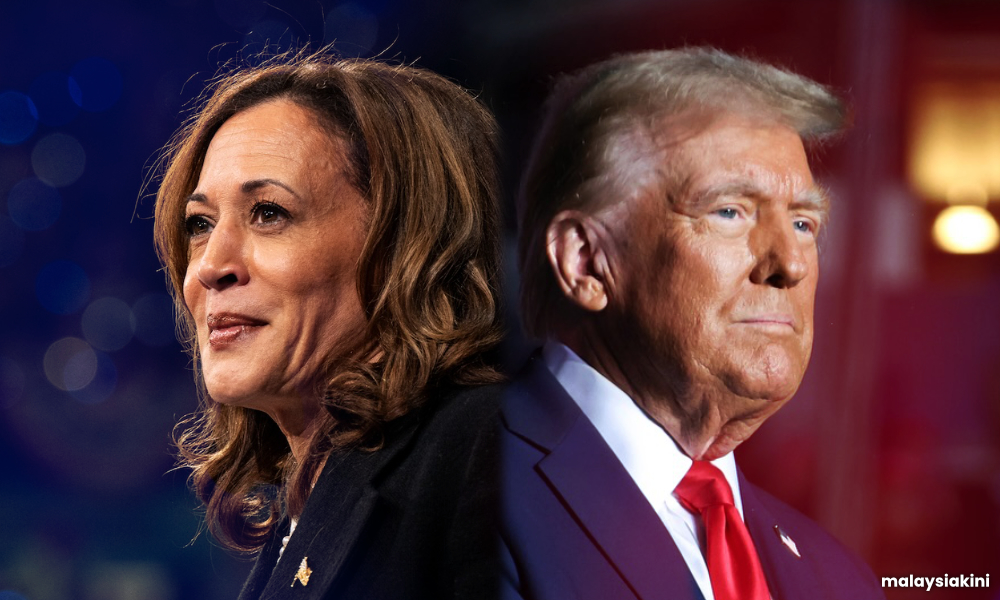
Let’s start by looking carefully at the US results. The Electoral College numbers of 312 for Trump vs 226 for Kamala Harris tied to the first-past-the-post electoral system obscures how divided voting was, with only a handful of states showcasing an overwhelming victory for one candidate.
As the ballots have been officially counted, the final tally is much closer than has been reported, with a projected 1.5 percent margin in the difference in the popular vote. This will make this US election the closest since 2000.
At the same time, the Trump campaign made gains across America, including in traditional Democratic heartland areas such as New York City. The Republicans won greater support by mobilising resentments around the economy, immigration and empowerment of women and minorities, effectively tapping into insecurities.
Despite his close alliances with wealthy businesspersons, Trump continued to capture ultranationalism, anti-elite anger and protest votes for those wanting “change”.
The Democrats lost support among its traditional base of less educated, younger and working-class voters and minorities, especially among Hispanic males in an election that was the party’s worst performance in 40 years.
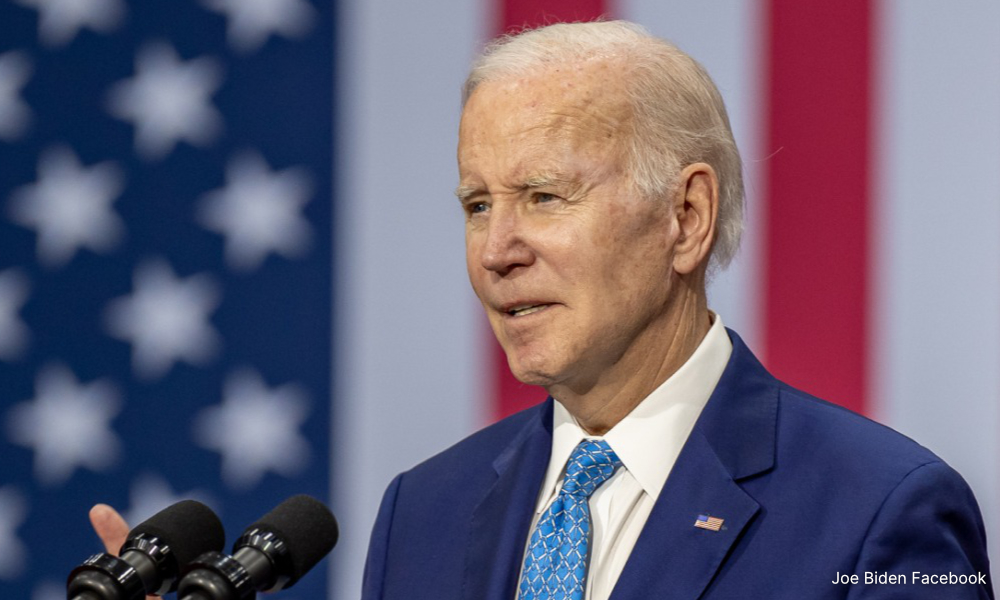
Clearly, Joe Biden should have made way earlier. Harris inherited a dissatisfaction with Biden’s leadership. His administration has not been effective in projecting its successes, especially in strengthening and restructuring the economy.
He also failed to fully appreciate the level of anger among many Americans over the blind support for Israel and the ongoing genocide in Gaza. If one narrows in on key swing states – Wisconsin, Michigan and Pennsylvania – which came down to around 300,000 votes out of millions, this issue mattered. In places with large Muslim communities like Dearborn, Trump beat Harris.
Many more disenchanted voters stayed home as leaders were seen to make political compromises to appease vested interests rather than principled decisions.
Harris’ own campaign never managed to get off the ground after the first month of a short three months. Her main message focused on being “not Trump.” Despite the mantra “moving forward” Harris did not clearly articulate what her governance would mean and, as such, did not meaningfully pick up support from new voters.
Trump dominated the political narrative, both as a candidate and the main talking point of the other candidate, boosted by greater access to social media and media attention around his provocative campaign antics.
The result speaks for itself, with the high emotions around the campaign still personally resonating.
America not exceptional
Clearly, America’s local context, candidates and campaign mattered. The outcome of the US election is deeply rooted in the rise of anti-establishment candidates/movements and the strengthening of the political right for decades.
Notably, the myopic focus of American Christians on abortion has served to blind many religious institutions to broader values as the moral compass has been lost. One can be convicted of a felony, still win the presidency and have charges dismissed after an election.
The 2024 election was pivotal for the lines it crossed, including assassination attempts. Few across the US political divide would disagree over the acrimony and decline of America. Keep in mind that the Trump campaign’s message was “Make America Great Again” – implying she has lost her way.
Yet, the results speak to broader global trends in politics. American exceptionalism has long been over, as she has suffered the effects of democratic decay and arguably reinforced this trend globally.
She no longer stands as a democratic role model. The consequences of political polarisation, the rise of violence, targeted social media, rampant misinformation, the erosion of civic values and civility and the weakness of political parties in addressing deep insecurities have been on display. Discontent dominates as it does globally.
The impact of the pandemic on the election cannot be discounted as it has left a psychological imprint. It has encouraged a narrowing of priorities, and selfishness while fuelling distrust and alienation.
Conspiracy theories have thrived. Too many have yet to recover from the hardships and scars of these difficult years. Those in power are no longer given the benefit of the doubt.
These conditions are not uniquely American; they echo many similar political conditions in Malaysia.
Core political base erosion
The US election offers insights for the Madani government. Let’s start with electoral behaviour. The US election parallels two trends in recent Malaysian elections – a contraction of traditional political support and lower turnout.
The erosion of the political base for coalitions in the Madani government Umno/BN and Pakatan Harapan have been ongoing.
Umno/BN’s political base has dropped precipitously since 2004 and in every general election since then. The contraction has reached more than half of its traditional support. The modest recent gains in by-elections are not yet reaching 2018 levels, far below what the coalition yielded in support. Umno/BN is still in electoral trouble.
Harapan has also entered a serious electoral decline with a failure to appreciate the engagement in democratic political reform. This began with the Malacca 2021 polls and has extended through Anwar Ibrahim’s tenure as prime minister.
The election results speak for themselves, fewer parliamentary seats compared to 2018, closer victories and fewer votes from Malays and younger voters nationally.
Of the four by-elections involving Harapan parties since 2022, Simpang Jeram, Pulai, Sungai Bakap, and Kuala Kubu Baharu, Malay support averaged 14 percent, far lower than in the last two general elections and marginally lower than in the 2023 state elections.
In these same four by-election elections, youth support of voters under 30 averaged 47 percent, with the trend in the last two by-elections this year even lower at 40 percent. These results do not show gains in support.
The Anwar government and its supporters are in an Umno-like denial of what is happening on the ground electorally. Now half of the electorate are younger voters. Orchestrated meetings with students and rehashed programmes for youth are not adequate to significantly reverse electoral trends to date.
It would be misguided to be overly optimistic that trends can be meaningfully changed without substantive policy measures and different patterns of voter engagement.
Danger of lower base turnout
Beyond support patterns, turnout patterns show further erosion of support for Harapan. Of the four by-elections involving Harapan parties since 2022 the average turnout levels among non-Malays have dropped, with an average turnout of 64 percent for Chinese and 57 percent for Indians.

Even acknowledging these are by-elections and lower state election results – where overall turnout is lower, this data should be a serious wake-up call that Harapan’s base has lost ground.
It is important to appreciate that the Democrats lost the election due to lower turnout. An estimated seven million voters who traditionally supported the party did not vote. They showed their dissatisfaction by staying home. Low turnout was a major factor that cost Harris the election. Taking the core base for granted had an electoral effect.
In contrast, Trump won over an estimated 1.5 million new voters. Trump, while in office and on the campaign trail, prioritised his core political base giving them concrete policy outcomes and then extended his outreach.
Anwar’s government is pandering to voters who did not vote for him, conservative Malays, and not winning them over, as voting trends show. To his progressive reform political base, his government offers another discharge not amounting to an acquittal to his political ally due to the failure of the prosecution to provide proper and timely documentation.
To think this will not have a political effect would be imprudent.
Lack of connectivity
Other lessons for the Madani government have to do with voter engagement. Biden, and to a lesser extent, Harris were not able to connect to voters as well as Trump. Even those who despise Trump had a connection to him in anger against him.
A serious question the Madani government grapples with is the ability of its leaders to connect with a significantly changing Malaysian society. Harris did not win over support because she was seen as personifying the elite, speaking with words that many did not understand, inadvertently distancing herself from voters. She talked above most voters.
Anwar also uses language that many voters do not understand. The Madani government as a whole faces similar challenges, often talking at rather than with the electorate, even regularly dismissing public criticism.
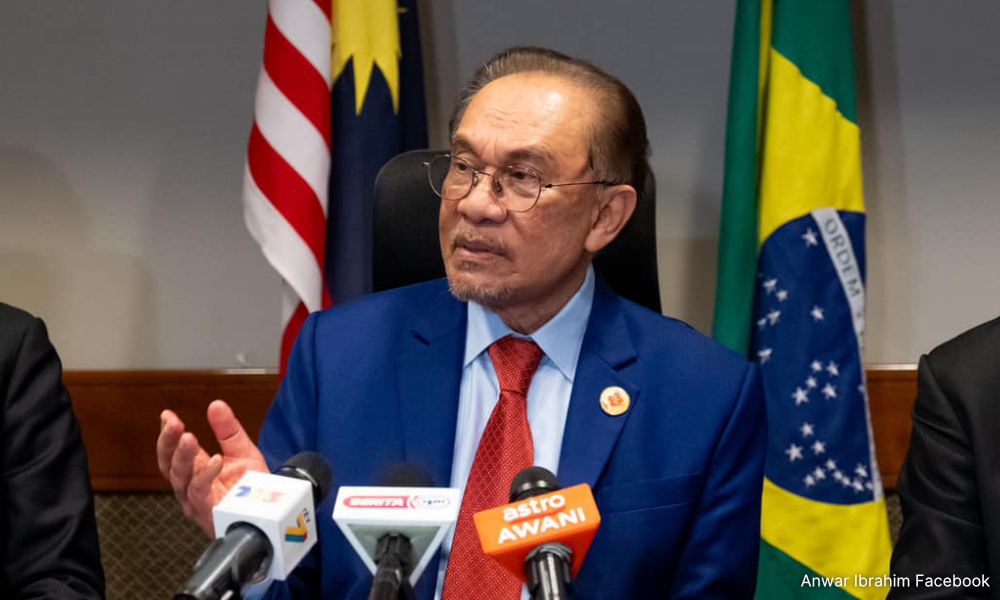
Arguably the area where the connectivity with voters is most challenged is the economy. Inflation did stabilise under Biden, but voters blamed him nevertheless for the post-Covid high prices. The Madani government has stabilised prices, but wages have not meaningfully increased, and the high cost of living continues to resonate.
Whether many see the economic gains as positively impacting their lives is crucial. It is hard when so many people are living on the financial edge.
The Madani model of economic growth focusing on foreign investment has yet to translate into significant jobs and spillovers into the domestic-owned economy, with many small businesses struggling. Biden learned that restructuring an economy does not necessarily benefit the party engaged in the process.
Serious questions need to be asked on how to make Malaysia’s current economic growth model more impactful to ordinary voters. The US election showed that perceptions of economic realities matter, not government growth and investment numbers.
Risks of incumbency
Incumbents heading to elections face serious challenges. They were not only rebuked in the US but in India, Japan and Sri Lanka. Indonesia is an exception, where the popular incumbent president and his endorsements mattered (even in yesterday’s regional polls). Anwar’s popularity levels are far below that of Jokowi.
The Anwar Madani government risks its own electoral fortunes if it does not learn from and act on lessons elsewhere, especially Harapan parties.
Umno failed to acknowledge its decline before 2018 and now is dependent on others for access to power. The Democrats did not effectively act on their electoral weaknesses and lost the 2024 presidential election.
It remains to be seen if the Anwar government will learn and act on lessons. The first step is to see them.
BRIDGET WELSH is an honourary research associate of the University of Nottingham’s Asia Research Institute, a senior research associate at Hu Fu Center for East Asia Democratic Studies, and a senior associate fellow at The Habibie Centre. Her writings can be found at bridgetwelsh.com.
The views expressed here are those of the author/contributor and do not necessarily represent the views of Malaysiakini.
/file/publisher-c1a3f893382d2b2f8a9aa22a654d9c97/2024/11/443cfae7b95ce5a80050fa39ab53bcd5.jpg)
/file/publisher-c1a3f893382d2b2f8a9aa22a654d9c97/2024/10/3b9149f8890a38db1f562e98e2e32bf9.jpg)
/file/publisher-c1a3f893382d2b2f8a9aa22a654d9c97/2024/11/0e67cb17b2d588f6d9e54fb0524c6efe.jpg)
/file/publisher-c1a3f893382d2b2f8a9aa22a654d9c97/2020/10/c18473232beefad46a426bd9888dd5c5.jpg)
/file/publisher-c1a3f893382d2b2f8a9aa22a654d9c97/2024/10/045c6e2d43afdc674ca2723299cf3087.jpg)
/file/publisher-c1a3f893382d2b2f8a9aa22a654d9c97/2024/08/60d2d2360a5a13d9d14f9538fc3f68b6.jpg)
/file/publisher-c1a3f893382d2b2f8a9aa22a654d9c97/2024/11/74476254650c0012d4e4dffb076e0d8d.jpg)


Report this comment
Are you sure you want to delete this comment?
This action cannot be undone.