


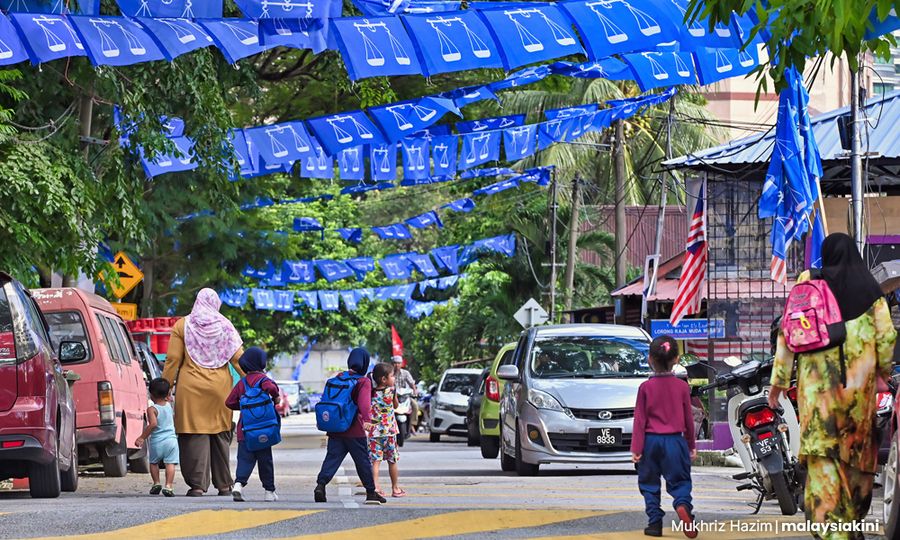

COMMENT | MCA's Malacca walkout exposes BN's unresolved question of representation
COMMENT | MCA’s walkout from BN's Malacca candidate announcement should not be read as another quarrel over seats. It exposes a deeper question confronting Malaysia’s mature coalition system: what exactly gives a component party bargaining authority today - historical status, electoral performance, community representation, organisational machinery, or its capacity to add votes beyond its core?
MCA president Wee Ka Siong and other party leaders left BN’s event at the Melaka International Trade Centre on Oct 24 after objecting that seats previously contested by MCA had been reassigned without proper consultation. Wee said MCA had been told the programme was an election-machinery launch and learnt later that candidates would be announced. He said the party had objected to the proposed allocation.
BN chairperson Ahmad Zahid Hamidi acknowledged the communication failure. He said Wee had been...
COMMENT | MCA’s walkout from BN's Malacca candidate announcement should not be read as another quarrel over seats. It exposes a deeper question confronting Malaysia’s mature coalition system: what exactly gives a component party bargaining authority today - historical status, electoral performance, community representation, organisational machinery, or its capacity to add votes beyond its core?
MCA president Wee Ka Siong and other party leaders left BN’s event at the Melaka International Trade Centre on Oct 24 after objecting that seats previously contested by MCA had been reassigned without proper consultation. Wee said MCA had been told the programme was an election-machinery launch and learnt later that candidates would be announced. He said the party had objected to the proposed allocation.
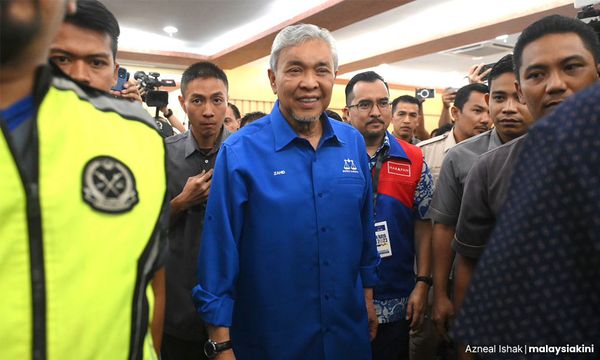
BN chairperson Ahmad Zahid Hamidi acknowledged the communication failure. He said Wee had been surprised by the announcement, that candidate endorsement letters had not yet been signed, and that discussions could continue before nomination on Oct 31. Malacca BN chairperson Ab Rauf Yusoh, however, said negotiations had been finalised, with BN contesting 21 seats, two allocated to MCA and one to MIC, while seven went to strategic partners.
Those statements reveal more than disagreement. They show that coalition authority can operate on several levels simultaneously: national leadership, state leadership, component-party leadership and election machinery. When those levels communicate different degrees of finality, the dispute stops being only about MCA. It becomes a governance problem inside the coalition itself.
My assessment is that the central issue is no longer whether MCA “deserves” a particular number of seats. Democratic representation cannot be inherited like property. MCA contested seven Malacca seats in 2021 and won Kelebang and Machap Jaya. That record gives the party a legitimate basis to argue from experience, organisation and incumbency. It does not automatically establish permanent ownership over the same constituencies.

Equally, reducing representation to recent winnability alone would be too narrow. Coalitions are not corporations allocating branches only according to quarterly returns. They also aggregate communities, political traditions, organisational networks and competing policy perspectives. A component party with a weakened electoral record may still contribute reach, credibility or social representation that cannot be captured by one election result.
Governing logic
The more important question, therefore, is whether BN has a contemporary theory of representation. If seats are allocated principally by measurable winnability, the coalition should say so. If component-party balance remains a foundational principle, that should also be explicit. If strategic partnerships with parties outside BN now take priority in selected constituencies, members and voters deserve to understand the governing logic.
READ MORE: Rauf, Akmal stay in their safe seats, MCA irked, risky seats left to PN
This matters especially in Malacca because the election is occurring under a changed coalition landscape. BN is cooperating electorally with PAS and its allies, while MCA remains a formal BN component. That creates a structural tension: external strategic cooperation can expand the coalition’s reach, but every seat transferred to a partner can also reduce the space available to an internal component. Neither outcome is inherently illegitimate. The difficulty arises when the criteria are unclear.
MCA faces its own strategic question. Walking out demonstrates dissatisfaction, but protest alone cannot substitute for a renewed political proposition. The party must explain why its presence strengthens BN beyond historical symbolism. That case could rest on constituency service, candidate quality, Chinese voter engagement, policy expertise or cross-ethnic appeal. Whatever the argument, it should be measurable rather than nostalgic.

BN, meanwhile, must decide whether it is still primarily a federation of component parties or has evolved into a broader electoral platform capable of accommodating formal members and external partners under different arrangements. That distinction affects how authority, representation and responsibility are understood.
The Malacca dispute, therefore, offers a useful test before polling day on Nov 14. The question today is not simply who receives two seats, seven seats or twenty-one. It is whether coalition politics can adapt when historical entitlement, present-day performance and strategic necessity point in different directions.
Malaysia’s coalition era has matured faster than many coalition institutions. The durable solution is not to guarantee old allocations or reward whoever protests loudest. It is to define representation in terms that voters can understand, and parties can defend. Political dignity matters greatly, but in a competitive democracy, dignity is strengthened when relevance can be demonstrated.
AZAM MOHD is an independent political and economic analyst.
The views expressed here are those of the author/contributor and do not necessarily represent the views of Malaysiakini.




MCA doesn't deserve that many seats, because as GREEN WAVE engulfs the nation, MCA ( as well as DAP, PKR, Amanah) who relied on NM votes will be swept into oblivion. Only our WINNING PAS deserves ALL of the seats if based on the WINNABILITY criteria.
MCA is just unhappy they were not consulted. The truth is, even if they are consulted, the number of "their" seats given to PAS compared to what UMNO "sacrifice" is still insulting to them. So they have to do something.. Walk out is what they did. What will they get? Not sure. What can Zahid do to placate them? My bet? One or two of the appointed exco seat. I think one, because UMNO wants them too.
Report this comment
Are you sure you want to delete this comment?
This action cannot be undone.