


COMMENT | Malacca the harbinger - Part 1
COMMENT | Malacca heads to the polls on Nov 14, with nominations set on Oct 31.
The incumbent Umno/BN state government currently led by Chief Minister Ab Rauf Yusoh is expected to easily win another term, likely delivering the third electoral loss this year to the Anwar Ibrahim-led Pakatan Harapan coalition which has adopted a defensive posture heading into the state elections.
Malacca has long been a harbinger of national politics, from the early days where independence was declared and BN was forged through the friendship of former deputy prime minister Ghafar Baba and MCA veteran Tan Cheng Swee through to the 1980s to the “giant killer” Shamsul Iskandar Akin’s (then-PKR youth chief) parliamentary entry of PKR in 2013 and the rise of Bersatu in 2021 and 2022 with leaders such as Masjid Tanah MP Mas Ermieyati Samsudin.
In 2022, BN lost all of its parliament seats, suffering a defeat in a state where it was historically grounded.
The outcome reflected the national shift in Umno’s political fortunes. The 2026 poll thus becomes a test of Umno/BN’s recovery - and its future.
In this two-part analysis, I look at the unique features of elections and...
COMMENT | Malacca heads to the polls on Nov 14, with nominations set on Oct 31.
The incumbent Umno/BN state government currently led by Chief Minister Ab Rauf Yusoh is expected to easily win another term, likely delivering the third electoral loss this year to the Anwar Ibrahim-led Pakatan Harapan coalition which has adopted a defensive posture heading into the state elections.
Malacca has long been a harbinger of national politics, from the early days where independence was declared and BN was forged through the friendship of former deputy prime minister Ghafar Baba and MCA veteran Tan Cheng Swee through to the 1980s to the “giant killer” Shamsul Iskandar Akin’s (then-PKR youth chief) parliamentary entry of PKR in 2013 and the rise of Bersatu in 2021 and 2022 with leaders such as Masjid Tanah MP Mas Ermieyati Samsudin.
In 2022, BN lost all of its parliament seats, suffering a defeat in a state where it was historically grounded.
The outcome reflected the national shift in Umno’s political fortunes. The 2026 state polls thus becomes a test of Umno/BN’s recovery - and its future.
In this two-part analysis, I look at the unique features of elections and voting behaviour in Malacca to show that shifts and surprises are an integral part of Malacca’s electoral history.
The state has her own distinctive politics, drawing from a theme developed in my forthcoming book on the state’s politics.
In part 2, I delve into what makes the 2026 Malacca election different, as it is setting in place new political alignments, showcasing the consequences of elite political deal-making and moving Malaysia toward a new political configuration.
A BN test in a harbinger state
A key part of the test for Umno/BN is whether it can reverse its poor performance in recent elections. In 2022, Umno/BN won only 38 percent of the popular vote.
The only other time this happened was in 1969, where the Alliance - the precursor to BN - managed to hold onto the state government despite losses.

The losses for Umno/BN have been across communities - and decisive and across four elections.
Using the methodology of ecological inference, my findings show that Malay support has halved since its high in 2004, reaching only an estimated 41 percent in the 2022 general election and an estimated 49 percent in the previous 2021 state polls.
The main beneficiary of Malay support shifted from Pakatan Harapan in 2018, to the Muhyiddin Yassin-led Bersatu in 2022.
Chinese support is even lower, one of the lowest in the country, reaching an estimated four percent in 2022, falling from an estimated 45 percent in 2004.
Support among Indians, Orang Asli and others is higher but has also declined and fluctuated.

Collectively, past results show that the 2026 election is one in which Umno/BN seeks a turnaround in the coming polls from a historically comparatively low position.
It has opted to rely on “strategic partners” of PAS to assist in this effort, hoping to gain Malay support from allies.
This has come at the expense of strengthening its BN coalition partners, MCA and MIC, who have only been allocated their incumbent seats - a move that makes it harder for these parties to win over their respective ethnic bases.
READ MORE: MCA ends 96-hour standoff, agrees to contest two Malacca seats
Malacca’s Umno/BN decline in support mirrors that elsewhere across Malaysia, but there are unique features that make the state special.
First, Malacca has been a traditional harbinger - an early sign of what is to come, setting the precedent of what follows nationally.
The political rise of the DAP came through Malacca, for example from 1969 through the 1990s. Malacca’s 2013 election results foreshadowed the electoral rise of Harapan, as did the 2021 state results for the rise of Bersatu, later leading to the formation of Perikatan Nasional.

It would be through PN that PAS would win its first seats in 2022 in this traditionally Umno/BN state.
Multicultural yet polarised
Part of the reason Malacca is a harbinger is that the state’s population closely mirrors that of Peninsular Malaysia, with slightly more Malays and Indians than the peninsular as a whole.
Despite her comparatively smaller size, Malacca combines urban and rural areas, stretching from beaches to an agricultural interior, with voters across this varied terrain and capturing the diversity of Peninsular Malaysia.
Part of this is her strong cultural roots; Malacca’s history from the sultanate to the declaration of independence has been intertwined with Malaysia’s history and identity.
Malacca is also an educational hub, with multiple universities and religious schools, bringing contemporary connectivity paralleling her past.
Unlike other states, Malacca’s openness as a trade and cultural centre has made her open to the changes taking place across Malaysia, arguably more so than her neighbours.

Combined, these features accentuate Malacca’s role in capturing national sentiments. With an estimated nearly 30 percent of her voters living outside Malacca - largely in the Klang Valley and Singapore, voters bring national sentiments home on polling day - at least those that return.
The ethnic composition of Malacca’s seats reflects her multiculturalism. While Malays comprise the majority in most of the seats, Chinese comprise at least a fifth (20 percent) in 15 seats, with the decisive 10 percent swing in another eight.
Indians are an important minority, comprising 10 percent of the vote in seven seats, with Borneo voters also over 10 percent in Sungai Udang.
This ethnic diversity - and the ability to receive cross-ethnic support - has long advantaged Umno/BN, an advantage that is lost with growing ethnic polarisation in voting.
In the 2022 general election, Umno/BN won only an estimated four percent of the Chinese vote and an estimated 23 percent of the Indian vote, while the Malay vote was split among the other coalitions.
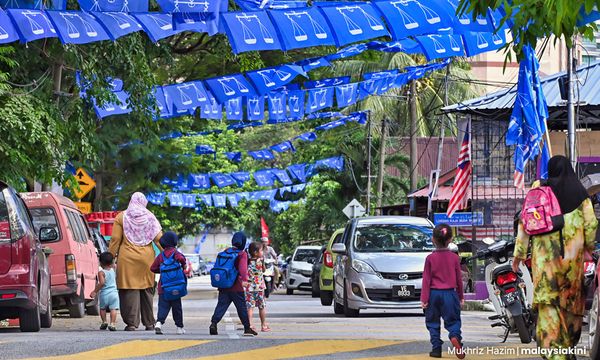
What will be important to watch is the level of continued ethnic polarisation, which is likely to be accentuated by the “strategic partnership” of Umno-PAS, especially among the Chinese.
Malacca has a long history of ethnically polarised campaigns stretching from debates about citizenship and education to Bukit Cina and pig farming.
In the state’s tourist-driven economy, there is significant concern among businesspersons across communities about PAS’ increasing political role in Malacca and about how it could harm the core driver of the economy.
Personal and competitive
Malacca’s small size also has been part of its politics, with elections highly personal and shaped by personalities.
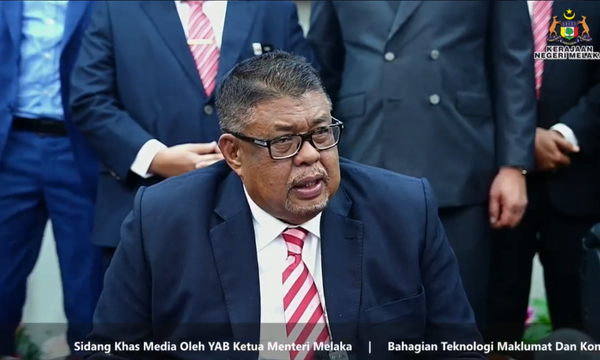
The Umno/BN campaign is centred around Rauf, who is the campaign’s “poster boy” - and prominent on all of the Umno/BN posters.

This personal dynamic makes the campaign less about parties and more about individuals, which has been common in Malacca politics.
On the ground, Malacca campaigns are often shaped by story-telling and gossip, with alleged scandals, reflecting the personalisation of Malacca politics.
Traditionally, there has been intense competition among individuals for a limited number of political positions and a history of party infighting and protests which have shaped results, as was the case with Shamsul’s victory in 2013.
The “small and tight community” feature of Malacca where everyone knows everyone assures that information is shared quickly in the tight and robust social networks of Malacca society.
The personal nature of politics and strong social ties contribute to the intensity of competition, and, as in the case of 2026, has also contributed to the seat negotiations and deals.
Still a harbinger?
The 2026 state election will test whether Malacca remains a harbinger. All signs suggest it will: the BN-PAS “strategic partnership” is consolidating, minority partners are being compartmentalised in both BN and PN, and party leaders are already frowning on warming ties with parts of Harapan and Bersatu.
READ MORE: 'Red line': Malacca DAP rules out Harapan-Bersatu pact for state polls
After decisive swings in each of the past four elections, voters look set to swing back to Umno/BN.
Yet history counsels caution. In 2021, Umno/BN won a commanding state victory, only to be routed in Malacca at the general election barely a year later.
That 2021 mandate - built on seat deals, low turnout and a divided opposition - did not translate into durable support, and in an era of rapid, decisive swings Malacca proved a poor predictor of what followed.
The same risks apply now, as part 2 explores.
BRIDGET WELSH is an honorary research associate of the University of Nottingham’s Asia Research Institute and a senior associate fellow at The Habibie Centre. Her writings can be found at bridgetwelsh.com. Forthcoming book titled "Political Contestation in Modern Melaka" is expected to be published next year.
The views expressed here are those of the author/contributor and do not necessarily represent the views of Malaysiakini.




The harbinger - Bersama. Melakans will show Malaysia the path forward.
Let's hope the Malacca voters are as wise as the NS voters....
Report this comment
Are you sure you want to delete this comment?
This action cannot be undone.