


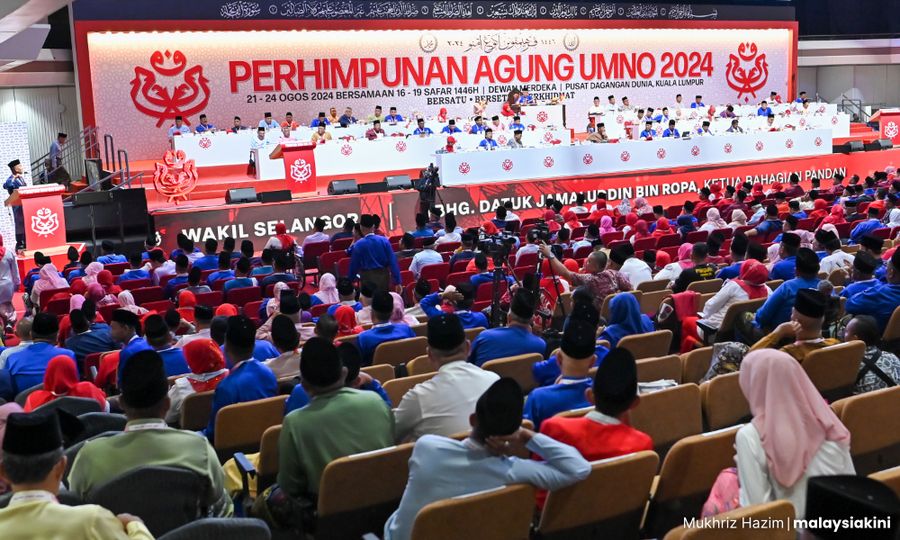

COMMENT | Politics of division, strategic alliances and Umno's tactical flexibility - Part 2
COMMENT | Following the formation of the coalition government in 2022, Umno president Ahmad Zahid Hamidi's political strategy did not end with securing the deputy prime minister's position. Arguably, the more consequential phase of his political manoeuvring began after Umno entered the coalition government.
The fundamental challenge for Zahid was to restore Umno's traditional Malay political constituency without allowing its partnership with Pakatan Harapan, particularly the DAP, to undermine the party's identity and electoral ambitions.
This required a delicate balancing act: remain in government, benefit from executive power, maintain political cooperation with Anwar, but simultaneously differentiate Umno from its coalition partners.
One of the most effective instruments in this political strategy has been the use of race and religion as political mobilisation issues.
Umno Youth chief Dr Akmal Saleh has become a...
COMMENT | Following the formation of the coalition government in 2022, Umno president Ahmad Zahid Hamidi's political strategy did not end with securing the deputy prime minister's position. Arguably, the more consequential phase of his political manoeuvring began after Umno entered the coalition government.
The fundamental challenge for Zahid was to restore Umno's traditional Malay political constituency without allowing its partnership with Pakatan Harapan, particularly the DAP, to undermine the party's identity and electoral ambitions.
This required a delicate balancing act: remain in government, benefit from executive power, maintain political cooperation with Anwar, but simultaneously differentiate Umno from its coalition partners.
One of the most effective instruments in this political strategy has been the use of race and religion as political mobilisation issues.
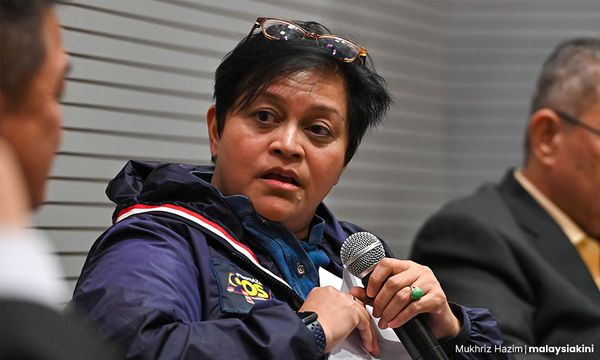
Umno Youth chief Dr Akmal Saleh has become a particularly prominent voice in raising contentious issues involving Malay rights, Islam and the position of DAP within the coalition government.
Akmal's political rhetoric has frequently placed DAP in an uncomfortable position. While DAP is an important component of the governing coalition, it has also become a convenient political target for those seeking to portray Umno as the defender of Malay political interests.

The political implications are significant. Umno can participate in a government led by Anwar while allowing sections of its leadership and youth wing to challenge the policies, statements and political positions of its own coalition partners.
READ MORE: URA postponed to consider 14 proposals, Zahid says
This creates an unusual political arrangement in which a governing partner can simultaneously behave like an opposition party towards another governing partner.
It would not be fair to conclude that every confrontation involving Akmal is directly orchestrated by Zahid. Nevertheless, the political benefit to Umno is evident.
The party can maintain its Malay nationalist credentials, appeal to sections of the electorate concerned about race and religion, and create political differentiation from Harapan without immediately surrendering its executive positions.
Akmal's call for Umno to reconsider its support for the coalition government in January, alongside his criticism of DAP, illustrates the continuing tension within this arrangement.
DAP’s plight, Anwar’s poor leadership
DAP has consequently found itself in an increasingly difficult political position.
Despite having greater parliamentary representation than Umno within the coalition government, DAP faces repeated political challenges from its coalition partner.
Its leadership must defend its political principles without triggering a breakdown of the government.
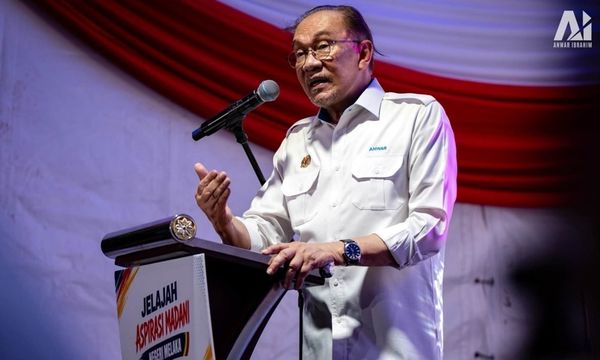
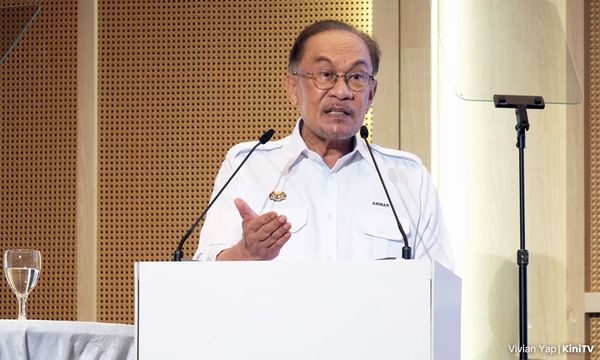
This is where the weakness of Harapan's coalition management becomes apparent. Anwar, as prime minister and PKR president, is expected to maintain political discipline among his governing partners.
Yet DAP has frequently had to respond to political attacks without the kind of consistent and unequivocal support that a coalition partner would reasonably expect from its leadership.
Zahid, meanwhile, benefits from the arrangement. Umno can negotiate with Harapan at the federal level while competing against Harapan at the state level.
This is not necessarily a contradiction in Malaysian coalition politics; it is a deliberate consequence of parties having different electoral interests despite sharing government.
The Johor and Negeri Sembilan elections in 2026 illustrate the extent of this political advantage.
In Johor, BN secured 48 of 56 state assembly seats, including 36 for Umno. Harapan was reduced to eight seats.
In Negeri Sembilan, BN secured 18 seats, with Umno winning all 16 seats it contested. These results strengthened Umno's bargaining position and demonstrated that the party could regain electoral ground while remaining part of Anwar's federal government.

However, the results should not be interpreted as proof that Umno has completely recovered its national electoral standing.
Local political dynamics, opposition fragmentation, candidate selection and voter dissatisfaction with Harapan also contributed.
Nevertheless, they demonstrate that Zahid's strategy of maintaining federal cooperation while pursuing independent electoral ambitions has produced tangible political advantages.
'Keeping doors open'
There is another dimension to this strategy: the changing relationship between Umno and its traditional coalition partners.
Umno's willingness to accommodate Malay nationalist narratives while maintaining a working relationship with DAP has placed Harapan in an uncomfortable position.
It must defend its multiracial political platform while accommodating a partner whose political messaging sometimes directly challenges that platform.
At the same time, Umno has maintained the option of rebuilding relations with PAS. This gives Zahid additional bargaining leverage.
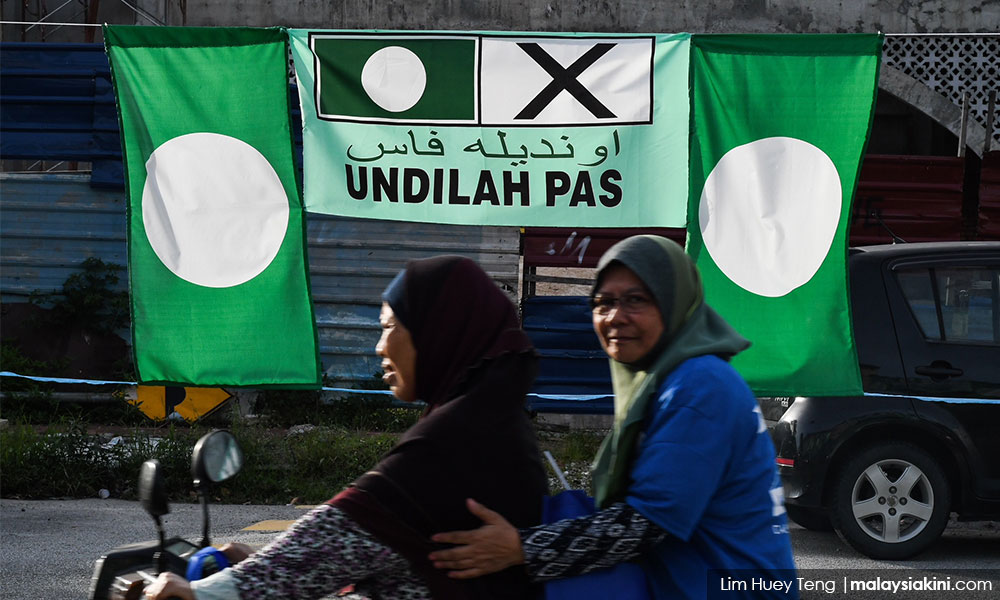
If cooperation with Harapan becomes electorally costly, Umno has the possibility of exploring a different political arrangement with its former political rival.
In other words, Zahid has kept multiple political doors open.
A weakened PKR
The internal difficulties within PKR have further complicated Anwar's position.
The departure of Rafizi Ramli and Nik Nazmi Nik Ahmad from PKR, alongside former Subang MP Wong Chen's departure, represents a significant loss of political experience and organisational capacity.
Rafizi, in particular, had been one of PKR's most recognisable electoral strategists and a prominent figure in the party's policy and economic agenda.

The political consequences are clear. Anwar now faces the challenge of maintaining PKR's organisational strength, rebuilding its strategic capabilities and managing internal divisions while simultaneously negotiating with a politically resurgent Umno.
CNA's analysis of the political situation identified the departures of Rafizi and Nik Nazmi as a significant blow to PKR, while also highlighting the structural difficulties confronting Harapan.

This presents an interesting political paradox: Anwar occupies the prime minister's office, but Zahid appears increasingly capable of strengthening Umno's bargaining position within the very government that Anwar leads.
The question is whether Anwar's leadership has inadvertently provided Zahid with the political space to rebuild Umno at Harapan's expense.
Art of political warfare
To understand Zahid's political approach, it is useful to examine it through the perspectives of Niccolò Machiavelli and Sun Tzu.
Machiavelli's book titled “The Prince” emphasises the importance of political survival, strategic alliances, the management of opponents and the preservation of power.
Sun Tzu's “The Art of War”, meanwhile, teaches that victory does not always require direct confrontation.
Understanding an opponent's weaknesses, controlling the strategic environment and choosing the right moment to act can be more effective than engaging in open conflict.
And Zahid's political conduct demonstrates elements of both approaches.
He has repeatedly shown that political alliances are not necessarily permanent commitments but arrangements that must serve particular political objectives.
His relationship with Bersatu, his pressure on former prime minister Muhyiddin Yassin, his support for ex-premier Ismail Sabri Yaakob and subsequently his partnership with Anwar illustrate a willingness to adapt to changing political circumstances.
This does not mean that every political decision was part of a predetermined master plan. Rather, Zahid has demonstrated an ability to recognise political opportunities and exploit them before his competitors can consolidate their positions.
Comparison with Dr M
There is also an interesting comparison with former prime minister, Dr Mahathir Mohamad.
Mahathir's political legacy was built partly on the centralisation of authority, the management of political opponents, the use of institutional power and the cultivation of political loyalty.
These characteristics became associated with what is commonly described as Mahathirism.
Zahid appears to have adopted elements of this political tradition, particularly in managing internal party opposition and consolidating his position within Umno.
His handling of the 2023 Umno party polls, including the decision not to allow the contest for the presidency and deputy presidency and the subsequent removal or suspension of several prominent critics, demonstrated how organisational control could be used to preserve leadership authority.
I would describe Zahid as a political practitioner who has learned from the traditions of Mahathir-era power politics.
His political relationship with Anwar also makes the present situation particularly interesting. Both have experienced the consequences of Malaysian political realignments, but their approaches to coalition management and political survival are increasingly different.
Anwar's political philosophy has traditionally emphasised reform, institutional legitimacy, consultation and coalition consensus. These are important principles in a plural and democratic society.
However, consensus politics becomes a vulnerability when one coalition partner consistently uses the freedom provided by that consensus to strengthen its own political position at the expense of the others.
This is where Harapan's approach, which I would characterise as overly conciliatory and reminiscent of a Confucian preference for harmony, has become problematic.
Harmony cannot be sustained by repeatedly accommodating political confrontations without addressing their underlying causes.
Neither can coalition solidarity survive indefinitely when one partner benefits from attacking another while continuing to enjoy the advantages of government.
The lesson from Sun Tzu is particularly relevant: political opponents do not necessarily need to defeat you directly if your internal divisions and strategic weaknesses are sufficient to undermine your position.

In this respect, Zahid has demonstrated considerably more tactical flexibility than Anwar's coalition management has sometimes allowed.
Who’s the next PM?
The most recent statements by Zahid provide another indication of his political calculations.
On Sept 27, Zahid indicated that BN would leave the coalition government once Parliament is dissolved.
Subsequently, on Nov 10, he argued that dissolving Parliament to obtain a fresh mandate would be preferable to conducting a cabinet reshuffle.
These statements should not be interpreted as an immediate withdrawal of BN's support from Anwar. Rather, they demonstrate that Zahid is already positioning Umno and BN for the next political contest.
ALSO READ: COMMENT | Zahid's chess play: From electoral defeat to political dominance - Part 1
The message is straightforward: Umno's participation in the coalition government does not mean that it intends to subordinate its political ambitions to Harapan indefinitely.
This brings us to the most important question surrounding the next general election.
If BN secure sufficient parliamentary support to form the next government, who should become prime minister?
Would Zahid seek the premiership himself? Would he support another senior Umno leader? Or would he prefer to remain the principal power broker behind a different prime minister?
Zahid's political achievements cannot be dismissed. He has brought Umno back from a devastating electoral defeat, strengthened his position within the party and restored its importance in national coalition negotiations.
However, political effectiveness should not automatically translate into suitability for the highest office in the country.
In my assessment, Malaysia has already experienced the consequences of highly personalised political leadership.
We have had a prime minister who governed the country twice and whose political legacy continues to shape our institutions, political culture and national debates.
We cannot afford another administration in which political survival, personal authority and the consolidation of power become more important than institutional accountability, democratic principles and national interests.
Malaysia needs a prime minister who can govern institutions, not simply manage political opponents.
Ultimately, the question is not whether Zahid is politically intelligent. The issue now is whether Malaysia should reward political survival skills with the premiership when the country needs institutional renewal.
And Anwar should also recognise that political cooperation cannot be sustained through accommodation alone.

Harapan must defend its institutional principles, protect the integrity of its coalition and demonstrate that multiracial politics is more than an electoral arrangement.
Ultimately, Malaysia's next political chapter should not become another contest between powerful personalities seeking to outmanoeuvre one another.
We have already experienced enough of that.
The country needs leadership that places national interests above party survival, institutional integrity above personal loyalty, and democratic accountability above political expediency.
GE16 should therefore be more than another opportunity for Umno to reclaim power.
It should be an opportunity for Malaysians to decide what kind of political leadership they want for the next generation.
R PANEIR SELVAM is the principal consultant of Arunachala Research & Consultancy Sdn Bhd, a think tank specialising in strategic national and geopolitical matters.
The views expressed here are those of the author/contributor and do not necessarily represent the views of Malaysiakini.



Report this comment
Are you sure you want to delete this comment?
This action cannot be undone.