



LETTER | Parliamentary impartiality begins with the chair
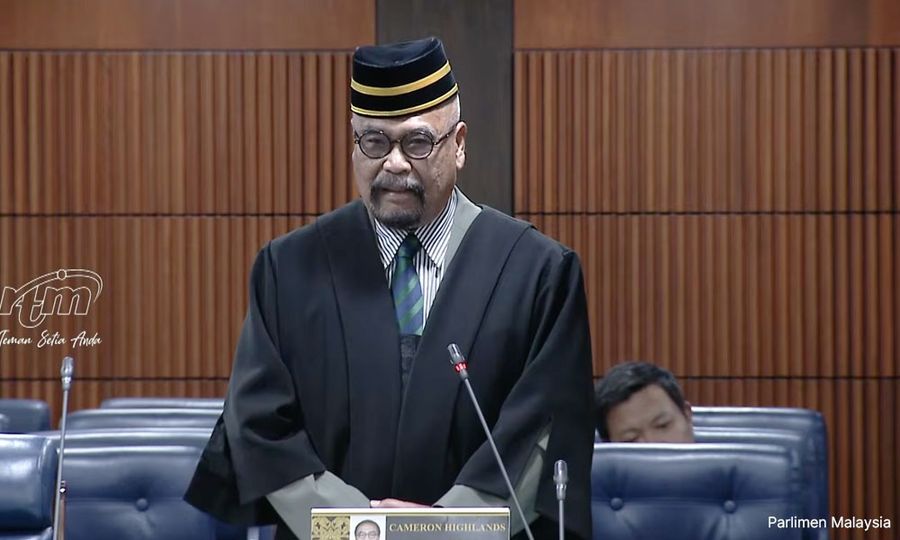
LETTER | On Monday, an unusual incident unfolded in the Dewan Rakyat when deputy speaker Ramli Nor decided to participate in the committee-stage debate on the Works Ministry's allocation under Budget 2027.
While presiding over the sitting, Ramli, who is also the Cameron Highlands MP, announced his intention to speak and proceeded to leave the speaker's chair for his seat on the parliamentary floor.
His decision immediately drew an objection from Beluran MP Ronald Kiandee, who questioned who would preside over the proceedings while the chair remained vacant.
Ramli defended his decision by arguing that he had examined the Standing Orders and found no provision prohibiting him from doing so. He maintained that he could participate in the debate and subsequently return to his duties as deputy speaker.
The incident raises an important question about parliamentary procedure: Can a presiding officer participate in a debate while continuing to exercise the authority of the chair?
Importance of an impartial chair
It is important to distinguish between a deputy speaker's rights as an elected representative and their responsibilities as a presiding officer.
There is no reason to deny a deputy speaker the opportunity to represent their constituents in parliamentary debates, provided that the relevant parliamentary rules and conventions are respected.
The concern arises when the roles of participant and presiding officer overlap.
Under the Westminster parliamentary system, the impartiality of the chair is fundamental to the proper functioning of parliamentary proceedings.
A presiding officer does considerably more than announce the order of speakers. They determine who may speak, rule on points of order, maintain discipline and ensure that parliamentary proceedings are conducted according to established rules.
These responsibilities require the confidence of members from across the political divide.
Parliament is, by its nature, a place where disagreements are expected. Government and opposition MPs may hold fundamentally different views on legislation, public expenditure and national policies. The role of the chair is to ensure that these disagreements can be debated fairly and in an orderly manner.
This is why impartiality should not be understood merely as the absence of actual bias.
It is equally important that members have confidence in the fairness of the person presiding over their debate.
Consider a situation in which a deputy Speaker argues against a particular government policy and subsequently returns to the chair to decide procedural objections arising from the same debate.
Even if every ruling is made fairly, questions about the impartiality of those decisions may arise.
The issue is therefore not whether the individual is capable of being fair. It is whether parliamentary procedures should allow such a potential conflict of roles to arise in the first place.
What can Malaysia learn from other Westminster parliaments?
Different Westminster parliaments have adopted different approaches to balancing the rights of elected members with the responsibilities of presiding officers.
In the United Kingdom's House of Commons, both the speaker and deputy speakers are expected to remain politically impartial and do not participate in parliamentary debates or votes.
New Zealand takes a more flexible approach. Its deputy speaker and assistant speakers may participate in debates, but parliamentary convention discourages a presiding officer from speaking in a debate over which they have been officiating.
These differences demonstrate that political impartiality does not necessarily require every parliament to prohibit deputy speakers from participating in debates altogether.
Nevertheless, both approaches recognise the importance of maintaining a clear distinction between participating in parliamentary debates and presiding over them.
Malaysia need not adopt the United Kingdom's stricter model. Our deputy speakers are also elected representatives with responsibilities towards their constituents.
However, their right to participate should be exercised through procedures that preserve the independence and impartiality of the chair.
Limits of procedural discretion
Returning to Monday's incident, Ramli's argument rested largely on the absence of an explicit prohibition in the Dewan Rakyat's Standing Orders.
However, the absence of an express prohibition does not necessarily establish that a particular practice is consistent with the principles governing parliamentary proceedings.
Standing Order 7(3) already provides a mechanism through which the speaker may temporarily appoint another member to preside over a sitting.
This allows the responsibilities of the chair to be transferred without unnecessarily interrupting parliamentary business.
Had a proper handover been made before Ramli participated in the debate, the immediate concern over the vacant chair and the exercise of presiding authority could have been avoided.
Ramli also referred to Standing Orders 99, 99A and 100 in defending his decision.
Standing Order 99 provides for the speaker's authority to interpret parliamentary rules and conventions. Standing Order 99A ensures that a failure to comply with the Standing Orders does not automatically invalidate parliamentary proceedings or decisions.
Neither provision should be understood as a general exemption from procedural responsibilities.
More importantly, Standing Order 100 allows the speaker to regulate matters not expressly provided for in the Standing Orders, but requires such arrangements to remain consistent with the existing rules.
The distinction is important. Procedural discretion exists to facilitate the proper functioning of Parliament, not to eliminate the need for safeguards governing the exercise of parliamentary authority.
Whether Monday's incident amounted to a specific breach of the Standing Orders may remain a matter of procedural interpretation. However, the controversy itself demonstrates why clearer conventions are necessary.
Parliamentary reform must extend beyond administration
The timing of this incident is particularly relevant to Malaysia's ongoing parliamentary reforms.
After years of efforts to restore Parliament's administrative autonomy, the Parliamentary Services Act 2025 came into force in October 2026.
The legislation is intended to strengthen Parliament's institutional independence by allowing greater autonomy over its administration and personnel, reducing dependence on the executive branch and enabling parliamentary staff to carry out their responsibilities more professionally.
This represents an important step towards strengthening Parliament as an institution.
However, institutional independence and parliamentary professionalism are not determined by administrative arrangements alone.
They also depend on how parliamentary authority is exercised, how procedural decisions are made and whether established conventions are respected by those entrusted with presiding over the house.
Parliamentary staff may be given greater institutional autonomy and professional responsibilities, but these improvements must be accompanied by equally clear standards for the conduct of parliamentary proceedings.
The standards expected of parliamentary officers should also extend to those who exercise authority from the speaker's chair.
Are parliamentary conventions sufficiently clear?
Monday's incident therefore offers an opportunity to examine whether Malaysia's parliamentary conventions are sufficiently clear, particularly regarding the circumstances in which Deputy Speakers may participate in debates.
A reasonable approach would be to preserve their opportunity to speak as elected representatives while requiring an explicit transfer of presiding responsibilities before they participate.
Parliament should also consider whether a deputy speaker ought to participate in a debate over which they have already presided, taking into account the experience of other Westminster legislatures.
Such clarification would not require a fundamental change to our parliamentary system. It would provide greater certainty for presiding officers and members alike.
The Parliamentary Services Act is an important part of building a more independent and professional Parliament. Yet administrative independence must be accompanied by sound parliamentary practice.
Ultimately, the credibility of parliamentary proceedings depends not only on the rules that govern the house, but also on how those rules are understood and applied by those entrusted with its authority.
The views expressed here are those of the author/contributor and do not necessarily represent the views of Malaysiakini.


Report this comment
Are you sure you want to delete this comment?
This action cannot be undone.