




Suaram urges revival of IPCMC
The government must revive the scuttled Independent Police Complaints and Misconduct Commission (IPCMC) if it truly wants to push wide-ranging reforms in the police force, said pro-human rights group Suaram.
The government must revive the scuttled Independent Police Complaints and Misconduct Commission (IPCMC) if it truly wants to push wide-ranging reforms in the police force, said pro-human rights group Suaram.
Its coordinator, Yap Heng Lung said they agreed with Prime Minister Najib Abdul Razak's announcement last night to amend Section 27 of the Police Act 1967 - which deals with police powers in approving a public assembly - but were sorely disappointed with the premier's caveat against street demonstrations.
Yap stressed that the proposed amendments to Section 27 of the Police Act would not address the issue of alleged police abuse of power with countless cases of civilians shot dead or wounded, suffered from their brutality, deaths in custody and bribery.
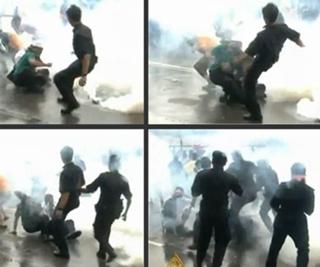 "The lack of human rights awareness and the high handed culture in the police institution has led to repeated violations of basic human rights by police officers," he said in a statement today.
Yap slammed the government for ignoring repeated public demands for the formation of the IPCMC, which was mooted by a Royal Commission to enhance the police's operations and management in
He insisted that only by setting up an IPCMC can the country hope to see effective implementation of wide-ranging reforms and improvements to the police force.
Hurdles to free assembly remain
Suaram also argued that amending Section 27 of the Police Act does not give sufficient safeguards to the public's right to freedom of assembly, as there are still other Acts that have the power to curtail such rights.
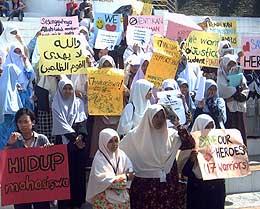 Yap pointed out that these Acts include the Universities and University Colleges Act 1971, the Workers' Union Act 1959 and the Societies Act 1966.
"If the government has the political will to improve the standard of human rights in this country, then these laws must also be amended," he said.
Reciting Suhakam's 2001 report on Freedom of Assembly, Yap noted that the public should be fairly accorded the right to assembly, and police refrain from erecting road blocks as a preventive measure and that police allow a suitable time frame for participants to disperse without resorting to firearms or violence.
"The demonstrations that we are referring to are peaceful demonstrations that serve as a channel for the people's voice and the form of assembly should be decided by the people... the government should not restrict the people's right to assembly or ban them from demonstrating peacefully," he said.


Are you sure you want to delete this comment?
This action cannot be undone.