




Guan Eng: Our CPI can rise to top 30 under Pakatan
Pakatan Rakyat rule from Putrajaya will lead to Malaysia's position in the Transparency International Corruption Perception Index (CPI) rising to the top 30 by the end of its first term, DAP secretary-general Lim Guan Eng claims.
Pakatan Rakyat rule from Putrajaya will lead to Malaysia's position in the Transparency International Corruption Perception Index (CPI) rising to the top 30 by the end of its first term, DAP secretary-general Lim Guan Eng claims.
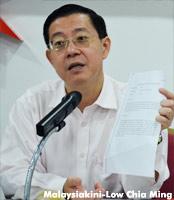 The coalition would introduce the reforms recommended by Transparency International if it becomes the federal government after the 13th general election, Lim said.
The major structural reforms include the reduction of monetisation of politics and elimination of opportunities for state capture, strengthening law enforcement institutions, especially the Malaysian Anti-Corruption Commission (MACC), judiciary and police, overhaul of the Official Secrets Act, the introduction of a federal Freedom of Information Act and improving legislation to protect whistleblowers.
Although the latest CPI showed that Malaysia has improved its ranking from 60 out of 183 in 2011 to 54 out of 176 countries in 2012, Lim believes that Malaysians would only be satisfied with efforts to fight corruption when ‘big fishes' are prosecuted and structural changes introduced to fight corruption.
'Improvement' masks other worrying findings
"The improvement in the CPI does not appear to have stopped scandals such as the RM250 million National Feedlot Corporation scandal from continuing.
"Only now do we see the extent of the abuse of power in the previous Selangor government, for example, where land parcels now worth RM300 million were sold to BN component parties at RM1 a square foot, or how BN representatives in Penang sold prime land, next to Gurney Drive in Penang, at RM1psf in Tanjung Tokong," Lim said in a statement today.
Lim, who is Penang chief minister pointed out that the overall improvement in the CPI scores masked other worrying findings.
 "For example, when asked ‘how common is it for public officials in this country to demand or accept bribes', Malaysia's score was 4.1 out of 5 (5 being the worst), which is on par with Indonesia, a country which is placed at 118 in the CPI ranking.
"When asked ‘how common is the misuse of public funds by high ranking public officials and politicians', Malaysia's score was 4.3 out of 5, which was actually worse than Indonesia's score of 4.2.
"Most worrying is the fact that 50 percent of the respondents believed they lost business due to bribery, making Malaysia the worst ranking country out of the 31 countries surveyed in the Bribe Payer's Survey, worse than even Indonesia (47 percent), Pakistan (42 percent) and Russia (39 percent)," he said.
Lim also noted that no action was taken on the allegations and investigative reports made against the chief ministers of Sarawak and Sabah, and neither did the MAAC step in to investigate.
"The 2012 Transparency International report did not cover the resurfacing of the RM40 million alleged ‘political donation' to Sabah Umno that continues to escape the attention of the MACC or the revelations made by high-flying businessperson Deepak Jaikishan relating to shady land deals," he added.


Are you sure you want to delete this comment?
This action cannot be undone.