


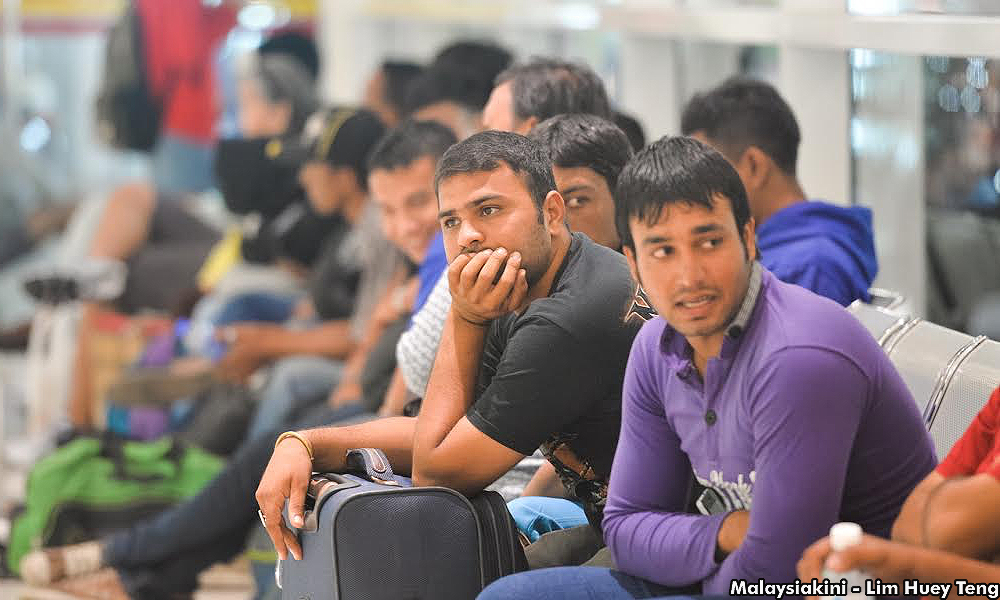

NGOs: Do we really need 1.5m Bangladeshi workers?
Non-governmental organisations (NGO) that protect migrants have once again questioned the need to bring in 1.5 million Bangladeshi workers into Malaysia.
Commenting on the Bangladesh cabinet’s approval of a draft deal between Bangladesh and Malaysia that will allow 1.5 million Bangladeshi workers into Malaysia, Tenaganita programme director Aegile Fernandez believes that taking these workers was nothing more but corruption taking place.
Non-governmental organisations (NGO) that protect migrants have once again questioned the need to bring in 1.5 million Bangladeshi workers into Malaysia.
Commenting on the Bangladesh cabinet’s approval of a draft deal between Bangladesh and Malaysia that will allow 1.5 million Bangladeshi workers into Malaysia, Tenaganita programme director Aegile Fernandez believes that taking these workers was nothing more than corruption taking place.
Instead of taking these workers, Fernandez is of the opinion that the Malaysian government should instead document existing undocumented workers in the country.
“There’s already a large number of undocumented workers. They already have skills, (so) document them,” Fernandez ( photo ) told Malaysiakini .
These workers, she said, had become undocumented due to the 6P and 3P programmes for migrant workers.
“Many undocumented migrants had given money to middlemen,” she added.
The government should therefore rectify these mistakes first before agreeing to bring in more Bangladeshi workers into the country.
“Document them first and then do an analysis on whether there is a need to have more workers,” she said.
The country, said Fernandez, has approximately 5.2 million migrants but only around 2.4 million are documented while the rest continue to remain undocumented.
Bangladeshi cabinet secretary Mohammad Shafiul Alam was yesterday quoted by news portal bdnews24.com as saying that the memorandum of understanding on the agreement between the countries will be signed within a month.
The workers will enter Malaysia under the G2G (government-to-government) Plus scheme which allows them employment in construction, service, manufacturing and agriculture sectors.
Currently, Bangladeshi workers are only hired in the plantation sector.
Lead to negative implications
Meanwhile, Migrant Care Malaysia country director Alex Ong pointed out that having too many workers might not be as productive to the country’s economy.
This, he said, is apart from creating undesired social ills that will lead to negative implications.
“Malaysia's policy needs a pragmatic approach to engage our economy and not just political rent-seeking justifications,” he said.
Like Fernandez, Ong pointed out how the country still has a high number of undocumented workers.
“Why not let these people have the amnesty and work permit? Do we need another 1.5 million new Bangladeshi workers when the work permits of these undocumented people are not settled yet?”
Ong believes that the best way to get undocumented workers to register and formalise their immigration status is by abolishing the monopoly by cronies.
Pos Malaysia Berhad, Ong pointed out, has the capacity and credibility to conduct the registration, rehiring and repatriation (3P) of these workers.
Pos Malaysia has 742 branches and more than 2,500 counters to serve the public interest, he added.
Home Minister Ahmad Zahid Hamidi last year was reported to have said that 1.5 million foreign workers from Bangladesh would be brought to Malaysia in stages in the next three years to meet the needs of employers from numerous sectors.
He, however, denied that the government was trying to profit by bringing in the Bangladeshi workers.


Are you sure you want to delete this comment?
This action cannot be undone.