



Language, religion, home - Sarawakians in the Klang Valley
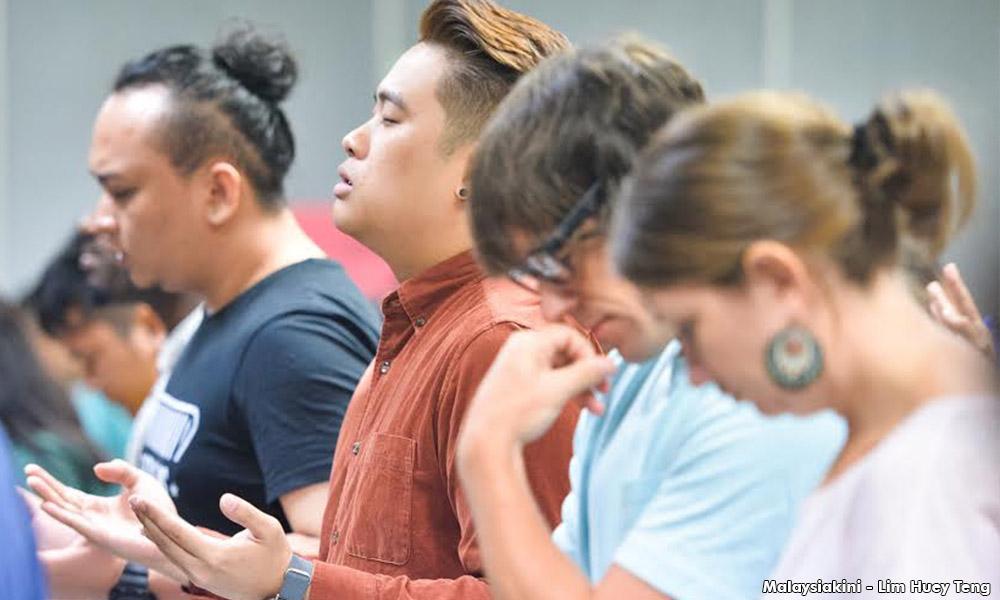
MALAYSIANS KINI Every Sunday morning, Malay-language hymns can be heard from the fourth floor of Sidang Injil Borneo Kuala Lumpur (SIB KL). It is a worship service specifically for Christians from East Malaysia.
Timothy Upai Lindris, 26, who hails from Limbang, Sarawak, joins the service. He sways to the band's rhythm and sings ‘Bersama Mu Bapa’ with 200 other natives of East Malaysia.
When the music stops, he closes his eyes and helds out his hands to pray silently as the pastor reads out the Malay-language scripture. The pastor then preaches on Agape - God's love.
After each service, Timothy usually goes for lunch with other Sarawak natives, but today he takes time out to sit for an interview with Malaysiakini at the church canteen.
"I feel more at home and part of the community because I can meet my friends from Sarawak here," Timothy says.
 SIB KL offers several types of church service and the Malay-language one joined by Timothy is called ‘Kebaktian Bahasa Malaysia’.
"This make me more comfortable, at least a day when I can speak my own tongue," says Timothy.
Across the South China Sea, Sarawakians' lifestyle, food, culture, language and even their perception of home and country differ from those from Peninsular Malaysia.
The difference is more keenly felt by Sarawakians who live and work in the peninsula...
MALAYSIANS KINI Every Sunday morning, Malay-language hymns can be heard from the fourth floor of Sidang Injil Borneo Kuala Lumpur (SIB KL). It is a worship service specifically for Christians from East Malaysia.
Timothy Upai Lindris, 26, who hails from Limbang, Sarawak, joins the service. He sways to the band's rhythm and sings ‘Bersama Mu Bapa’ with 200 other natives of East Malaysia.
When the music stops, he closes his eyes and helds out his hands to pray silently as the pastor reads out the Malay-language scripture. The pastor then preaches on Agape - God's love.
After each service, Timothy usually goes for lunch with other Sarawak natives, but today he takes time out to sit for an interview with Malaysiakini at the church canteen.
"I feel more at home and part of the community because I can meet my friends from Sarawak here," Timothy says.
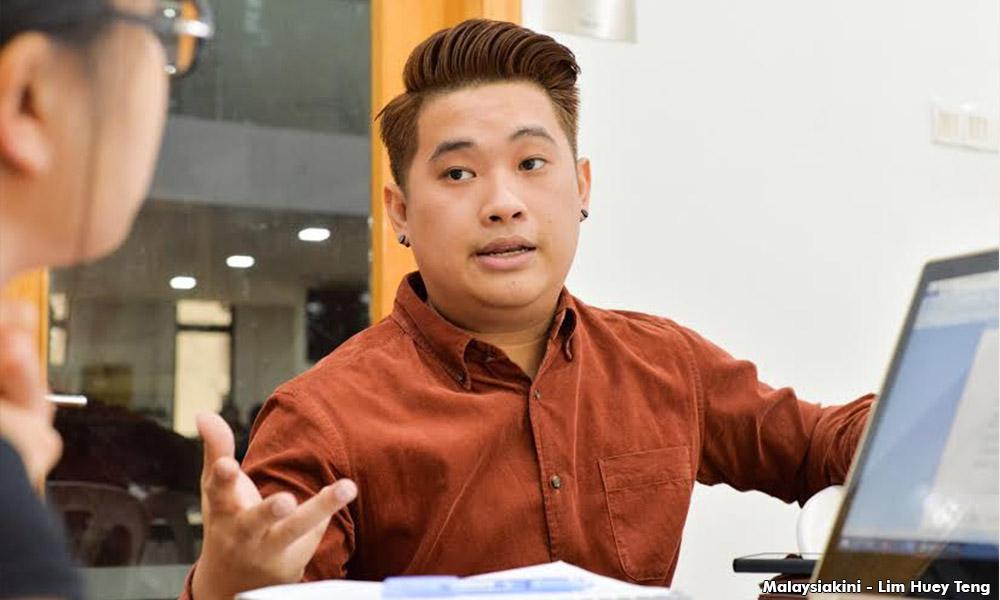 SIB KL offers several types of church service and the Malay-language one joined by Timothy is called ‘Kebaktian Bahasa Malaysia’.
"This make me more comfortable, at least a day when I can speak my own tongue," says Timothy.
Across the South China Sea, Sarawakians' lifestyle, food, culture, language and even their perception of home and country differ from those from Peninsular Malaysia.
The difference is more keenly felt by Sarawakians who live and work in the peninsula.
‘What’s so important about my race?’
Timothy came to Kuala Lumpur in September 2014 after graduating from Universiti Malaysia Sarawak (Unimas). Despite a year and a half in the city, he still sees himself as a “newbie”.
The communications studies graduate moved to Kuala Lumpur for better career prospects - there are not many media companies based in Sarawak.
"The job opportunities are limited in Sarawak. I like adventure and like to get out of my comfort zone, so I choose to work here," Timothy says.
He finally landed a job in a local media company as an executive digital publisher after six months in Kuala Lumpur. The position is in line with his ambitions in life.
Timothy is a Lun Bawang, an ethnic group which makes up a tiny minority in Sarawak. For simplicity’s sake, he often tells people it’s a branch of the Orang Ulu.
The Orang Ulu make up five percent of Sarawak’s population and Lun Bawang is one of the seven main tribes.
His hometown, Limbang, is located in the eastern Sarawak highlands, but he can easily pass as ethnic Chinese.
Ethnicity is one of the biggest culture shocks for Timothy when he moved to the peninsular.
In Kuala Lumpur, whether working or walking in the street, people often ask Timothy, "Are you Chinese?"
Initially, Timothy thought it was just because of his looks, but there was also a time when two girls asked if he was Malay when he offered his seat to them on the Light Rail Transit.
"Maybe because my accent seems like Malay when I speak to them, therefore they asked if I am Malay.
"What is so important about my race? If I am Malay, I cannot offer you a seat ke?" Timothy lamented, the Malay word underscoring his fluency in the language which led to the confusion.
This innocent encounters have led Timothy to conclude that ethnic differentiation in the peninsula is profound.
Luckily, skin fair enough to rent a room
He recalls a less innocent experience.
When he first arrived in Kuala Lumpur and was looking for a room to rent, he saw an advertisement stating ‘Chinese only’. Desperate for a place to stay, he bit the bullet and gave the advertised number a call.
"When I called that Aunty, I asked her if the room was still available and she said, ‘Yes.’ Secondly, she asked me, 'Are you Chinese?'. I answered, ‘I am Sarawakian’, then she asked me, 'Are you fair?'
"It was kind of shocking. I said. ‘I think I am okay (fair enough).’ We met later and she said, 'Good, your face is acceptable'.
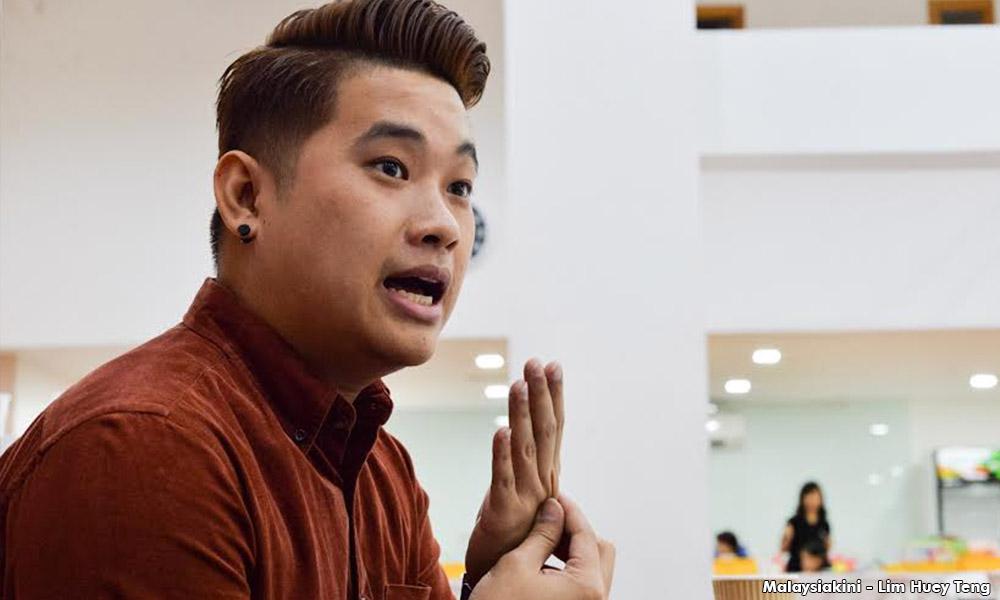
"Imagine. Not all Sarawakians are fair and have a ‘Chinese look’ like me. Imagine if I had not met her requirements. She may have said, 'Sorry, the room has been filled’.”
He stayed there for three months before moving to Tiara Damansara, where he now resides.
Timothy laughs while sharing these experiences but his feeling of bitterness and helplessness comes through in his facial expressions, in his exclamations of ‘wows’ and ‘oohs’.
In Sarawak, he says, people will not ask whether you are Chinese, Malay, or Indian, because there are a lot of ethnic groups. Instead, they rely on their ear.
"From the slang, we will automatically know you are Iban or Melanau. If you realised, there was a girl who wore a necklace during the service just now; we know (from the necklace) she is from the Kayan tribe.
"I am not saying that people here are racist. I think maybe it’s because it is not like Sarawak, where we have so many races," he says.
Life in Peninsular Malaysia is like a “roller coaster” - it is a challenge to fit in, he laments.
The National Census does not record the places of origin of Klang Valley residents, but ethnic demographics may give an indication.
In 2015, there was an estimated 21,500 non-Malay bumiputera living in Kuala Lumpur, 9,000 in Putrajaya, and 77,500 living in Selangor; most of these areas make up the Klang Valley.
Non-Malay bumiputera are mostly the Orang Asli from the peninsula and indigenous groups from Sabah and Sarawak.
Muslims need not fear the cross
Suryana Manterang, 27, has been a quantity surveyor for nearly three years. She left Kuching in 2008 to pursue her studies at INTI College, Nilai, before pursuing her degree in Brisbane, Australia.
She moved back to Kuala Lumpur after graduation for better career advancement, but never feels lonely. An easy-going person, she soon made a lot of local friends.
While Timothy is finding it difficult to navigate the hyper-race consciousness in the peninsula, Suryana feels it is not all that different from Sarawak. Like in Sarawak, she says, her friends from different races get along well.
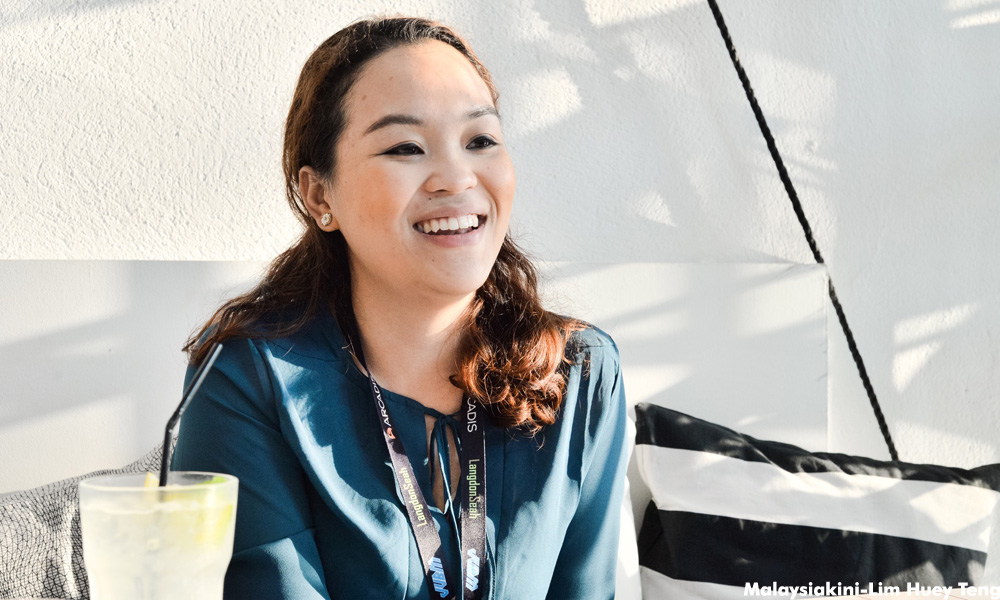 But one incident has stuck in her mind - the protest by a Muslim group over a cross sign put up by a church in Petaling Jaya. Suryana thinks the protesters were unnecessarily making a “fuss”.
"The cross is not an issue at all. If a Chinese or Christian person stays next to a mosque, it doesn't mean he or she will convert to Islam.
"Similarly for us (Muslims), if there is a cross there, it doesn't mean I will convert to Christianity," said Suryana.
Her secondary school - SMK St Mary in Kuching - has a cross in the school, and here she is, after five years of studying there, still not a Christian, she says.
Suryana's mother is a Bidayuh who converted to Islam, following her Muslim father. Her mother's family is mostly Christian.
“When my grandfather passed away, we went to his grave. Yes, it was a Christian cemetery but this is not an issue for Muslims. We respect everyone, and he was part of my family,” she says.
Her greatest struggle, she says, is surviving the capital city’s high cost of living. She uses a Malay proverb ‘kais pagi makan pagi, kais petang makan petang’ (having just enough to survive) to describe her current economic status.
"I rent an apartment in Kota Damansara with my brother and we pay RM1,300 every month. And we still need to pay water and electricity bills.
"My salary is enough to cover all expenses but I can't go shopping lavishly, I can only buy one or two shirts," says Suryana.
A minor struggle is transitioning from Bahasa Sarawak to Bahasa Malaysia.
"Sometimes, I’d blurt out Bahasa Sarawak, words like ‘aku’ (me) we say ‘kamek’, ‘kau’ (you) we say ‘kitak’. It is different but no problem, I can fix it," says Suryana.
Church, mosque share open space
Seeming distrust between Christians and Muslims in the peninsula, too, is a curiosity for Sibu-born filmmaker Stephen Chua.
At home, says Chua, who also sings for the indie band ‘Lang Mang’, a church and a mosque share carpark space.
"You (Muslims) can use it on Friday and Sunday is our turn to use it," says Stephen, who is Christian.
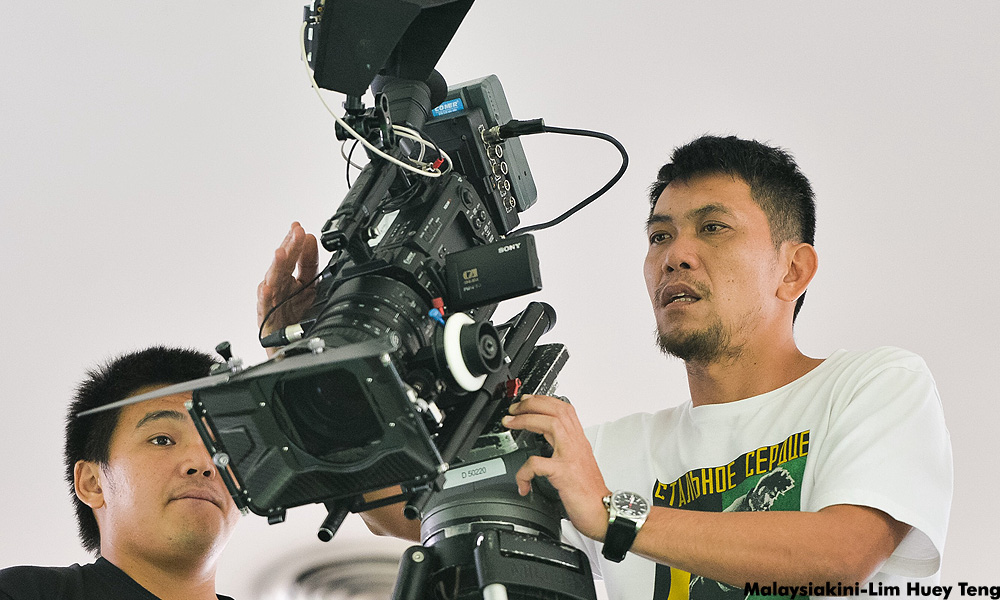 Stephen, 42, has spent 19 years in Peninsular Malaysia, first leaving Sibu in 1994 to pursue his filmmaking dreams by taking up a course at the Malaysian Institute of Art (MIA) in Kuala Lumpur.
A veritable “veteran” of Kuala Lumpur, he, too remembered feeling depressed when he first moved to the big smoke - so much so that he flew back to Sibu.
But his dreams of making it in the film industry pulled him back to Kuala Lumpur, and now he is anchored by his Johorean wife and their nine-year-old daughter.
Compose song to express uneasiness on Sarawak
Stephen’s father was once the deputy manager of a movie theater, and he spend much of his childhood in the cinema watching movies. It grew into a lifelong passion, but there was nowhere for him to pursue this in Sarawak.
“In those days, if you want to study movies in Sarawak, everyone will be stunned.
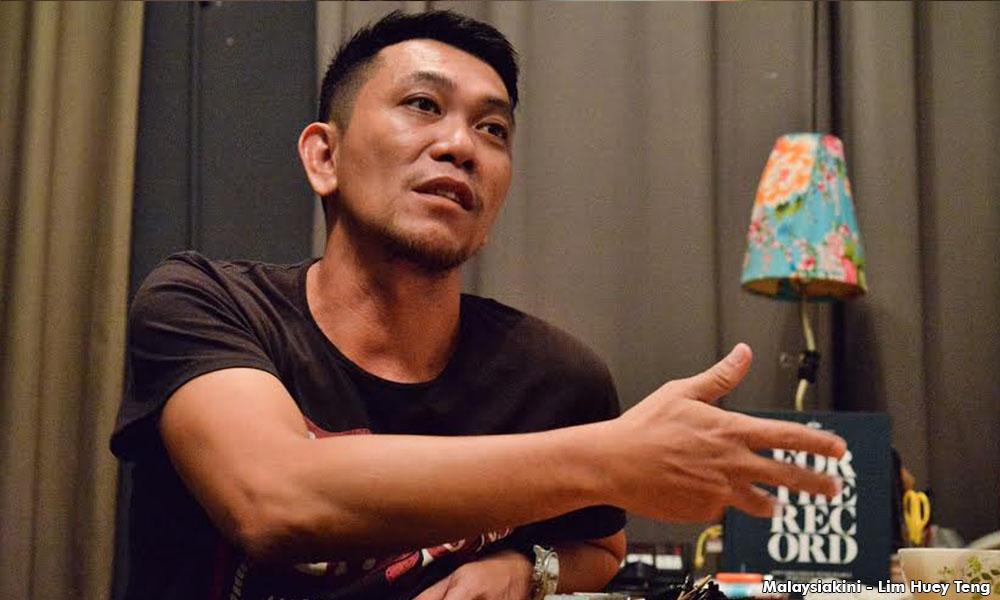 "After I graduated from MIA, I worked in a local production company but after two years of working, I started to feel anxious, bored, and even felt like the standards were going down.”
It was then that he packed his bags and returned home, thinking of helping his father’s business.
“But I couldn't stay there. It felt painful because I found no kindred spirits - most friends were business friends instead of art friends," Stephen says.
Ties to home remain deep, however, and he expresses this through songs. One of them is called ‘The Southern Tree’.
"I felt uncomfortable when I saw the land of Sarawak because the forests are being cut and the river like 'teh tarik'; I felt despondent.
“At that time, many people were losing their jobs (in the peninsula, due to the financial crisis)... No film projects, so I thought, better if I sing," he says.
His band, Lang Mang, is now considered old timers in the Kuala Lumpur indie music scene. As for Stephen, he has returned to his first love - filmmaking.
Leave wife to seek more higher salary
Muhammad Hafriz Fareedy did not move to Kuala Lumpur to chase a dream; he came because of money.
Hafriz, a 29-year-old Muslim Bidayuh, works as a safety supervisor in a construction company, and left Kuching five years ago.
He speaks slowly and patiently, amid the bustle of the fast-paced city. Here, he says, he makes double what he can make in Kuching.
It was also more difficult to find a permanent job in Sarawak, he says, with most employment offered on a contract basis at unattractive salaries. The last job he did in Bintulu was on contract basis, too.
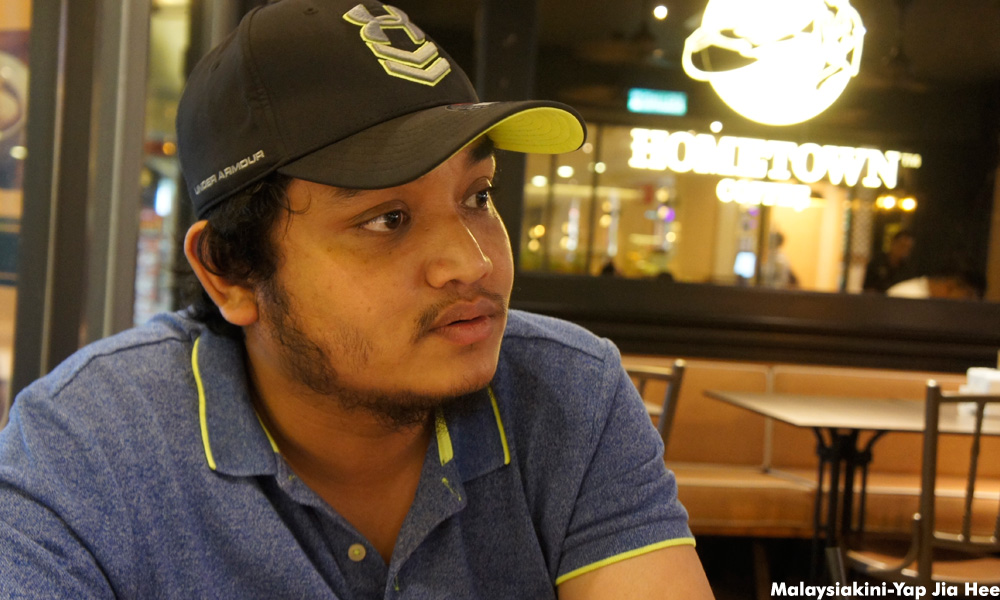 "In Islam, we call this rezeki. Here, the salary can be as high as RM6,000, but in Sarawak only more or less RM3,000, so it is better I choose to work here."
Hafriz is married to a Melanau woman, but she remains in Sarawak while Hafriz lives with his brother in Sunway, Selangor.
Apart from the separation from his wife, the most painful part of living in the Klang Valley, he says, is the traffic congestion.
"In Sarawak, you don’t need to rush and everything is very slow. Like my mom, she works as a custom officer and she can come back home every afternoon to have lunch.
"I now work in Bandar Tasik Selatan and it is around nine kilometres from my house, but the traffic jam is a nightmare," he says.
And this, despite paying more than RM10 a day in highway tolls.
Where is home?
After all the ups and downs of migrating to Peninsular Malaysia, where is home for these Sarawakians?
Timothy: Of course Sarawak, after all I have only been here for two years. There is no place like home. I really hope peninsula people can visit Sarawak and find out the differences themselves.
Suryana: Sarawak is my home, I have my family, friends, and food there. I came here just to gain working experiences.
Stephen: From a professional point of view, I belong to Kuala Lumpur. But on a personal level, Sarawak is my home. I was born there.
Hafriz: Of course, Sarawak. I work and live here, I spend most of the time here but the peninsula is my second home.
Tomorrow: Will they return to Sarawak in the future, and will they vote on May 7 to help shape the future of the state?
MALAYSIANS KINI is a series on Malaysians you should know.
Previously featured
How the Malay indie publishing mafia sparked a reading renaissance
It’s punk rock, not punk ideology
Paramedic goes white to black to lead medic team at Bersih 4


Are you sure you want to delete this comment?
This action cannot be undone.