


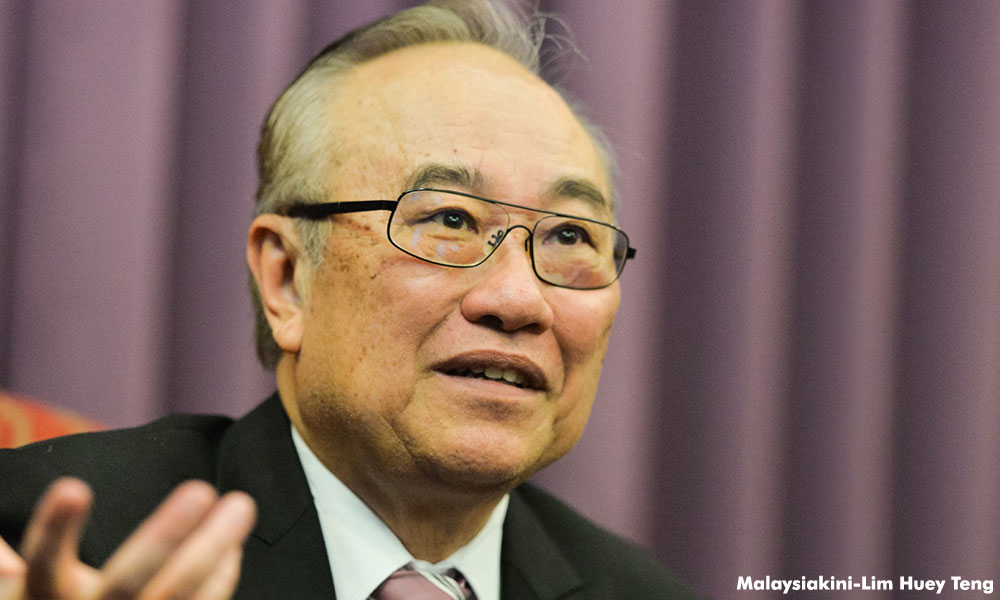

Paul Low: Gov't favours full disclosure on political donations
Rather than limiting expenditures for election purposes by political parties, the government is more in favour of enforcing full disclosure on all funds the parties receive, Minister in the Prime Minister’s Department Paul Low said today.
A full disclosure clause will be a key feature in the proposed Political Donation Act that is currently being drafted, Low said.
Rather than limiting expenditures for election purposes by political parties, the government is more in favour of enforcing full disclosure on all funds the parties receive, Minister in the Prime Minister’s Department Paul Low said today.
A full disclosure clause will be a key feature in the proposed Political Donation Act that is currently being drafted, Low said.
"We favour a special account for receiving and spending money. Secondly, we favour public disclosure.
"As I have said, voters are interested in the political financing sources of individuals and all political parties," Low told a press conference after delivering his closing speech at the Malaysian Integrity Institute’s international political financing conference in Kuala Lumpur.
The voters were also interested in how political parties were spending the funds that they received.
"In a way they can judge your level of integrity by the funds you receive, from whom, and how you spent it.
"Of course, you (the public) won't know how the money was spent until after the elections, but then the main issue is that the public can see it," said Low who is minister in charge of integrity, governance and human rights.
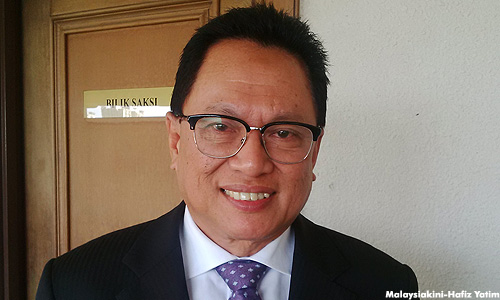 Low said this when asked to comment on the revelation by Department of Special Affairs (Jasa) director-general Mohd Puad Zarkashi (photo) that Prime Minister Najib Abdul Razak had explained to Umno leaders the source of the RM2.6 billion donation deposited into his personal bank account.
"It (donation) should be disclosed," said Low as chairman of the National Consultative Committee on Political Financing that was set up in August last year to draft the relevant laws.
Former de facto law minister Nazri Abdul Aziz similarly said this morning that Najib had no obligation to inform anyone that he received a RM2.6 billion political donation.
'Public’s right to question political funds'
Commenting further, Low said enforcing full disclosure on political donations would give the public the right to ask questions on a particular individual over their source of funds and expenditures.
"It also provides the sense of accountability to the people, because, as you know, it is very hard to monitor.
"Apart from passing the (Political Donation) Act, enforcing it will not be so easy. So the best would be to enforce it by public opinion," he explained.
Other proposed provisions under the new law, Low said, would include a 'negative list' of prohibited sources of funds.
"I would like to include any money coming from outside (the country) because it is difficult to identify the original source," he said.
Low added that a draft proposal on the new law and amendments to other related laws, including the Election Offences Act 1954, were expected to be tabled to the cabinet by August this year.
It is targeted that the political financing reforms can be enforced by the time the 14th general election is called.


Are you sure you want to delete this comment?
This action cannot be undone.