




Twin by-elections campaign focus may be on Chinese voters
Both the Sungai Besar and Kuala Kangsar parliamentary constituencies may be Malay majority seats, but the numbers of Chinese voters there are significant - especially case in Sungai Besar, where there are more than 14,000 Chinese voters.
With Chinese support possibly being the game changer in both the by-elections to be held on June 18, both the BN and the opposition sides are claiming to have the advantage in garnering votes from the Chinese community.
Both the Sungai Besar and Kuala Kangsar parliamentary constituencies in the upcoming twin by-elections may be Malay majority seats.
However, the numbers of Chinese voters there are significant - especially case in Sungai Besar, where there are more than 14,000 Chinese voters.
With Chinese support possibly being the game changer in the two by-elections to be held on June 18, both the BN and the opposition sides are claiming to have the advantage in garnering votes from the Chinese community.
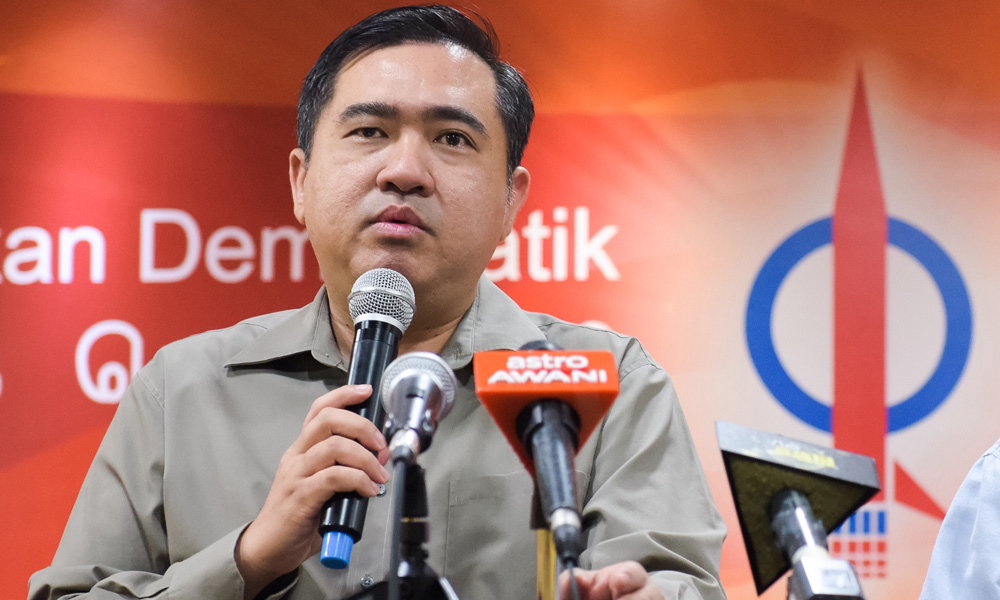 DAP organising secretary Anthony Loke (photo) expressed confidence that Chinese support would not go to the BN because of the various scandals plaguing Umno.
“We hope, and we are confident, that Chinese voters will back Pakatan Harapan’s candidates in both seats.
“We see no reason why the Chinese would want to support the BN,” Loke told Malaysiakini.
And supporting PAS, on the other hand, would be out of the question when it comes to Chinese voters.
 Loke pointed out how Chinese voters had voted for PAS in previous elections as the Islamist party had represented Pakatan Rakyat, which is no longer the case today.
“For these two by-elections, the Chinese voters will definitely not support PAS because of the issues which have occurred in the past few years, and in particular after what happened yesterday,” he said.
Loke was referring to PAS president Abdul Hadi Awang’s Private Member’s Bill, which was allowed to be tabled in Parliament yesterday but Hadi, however, decided to postpone the bill until the next parliamentary sitting.
Loke also said an extra factor that would work in favour of Pakatan Harapan was its popular assemblyperson for Sekinchan, Ng Suee Lim, who has been able to solve many land issues there.
“The local Chinese voters are happy with the (Pakatan Harapan-led) Selangor government, for many land titles were given after the 2008 general election,” he said.
Nevertheless, Loke admitted Kuala Kangsar would prove a more difficult challenge for Pakatan Harapan, as the opposition coalition is not the state government in Perak.
“But in the past general elections, the Chinese voters in Perak have supported Pakatan and I’m confident that the trend will continue.”
However, in the event there are three-cornered fights, Loke believes this will benefit the BN due to the split in Malay votes.
‘Worry is more over turnout’
“So, although we are confident that the Chinese will back Pakatan Harapan, we have to work extra hard if a three-cornered fight occurs in Sungai Besar, because the Malay votes will be split,” he said.
And Pakatan Harapan would have to work harder to convince young voters to return to cast their votes.
“The concern for Chinese support is not so much on which party they will support, what we are worried about is the turnout. We are scared that outside voters won't come back to vote,” Loke admitted.
 Loke may be confident that Chinese voters lend their support to Pakatan Harapan but Gerakan deputy Youth chief Andy Yong (photo) is of the opinion that a slim majority of voters will return to the BN, citing the Sarawak state election.
Pointing out how voter turnout would not be encouraging as was the normal occurrence in previous by-elections, Yong said the likelihood of young Chinese voters returning to vote will therefore be reduced.
“If that happens, that will work in favour of BN,” he said.
Apart from a low voter turnout affecting Pakatan Harapan’s chances, Yong said voters may be fed up with the infighting among the opposition parties.
And Chinese voters will definitely be the game changer, should there be three-cornered fights, he added.
Gerakan, therefore, will employ the Jalinan Rakyat (JR) system in which the party campaigners will go from house to house to understand the people’s problems and needs.
This, he said, will start after nomination day, a strategy, added Yong, for them to better understand the people.
“As you know, the opposition will be banking on the 1Malaysia Development Bhd (1MDB) and goods and services tax (GST) issues, so we want to know whether these issues really affect the people.
“Based on our ground survey, the senior citizens can't really be bothered about these issues,” Yong said.
At the end of the day, the most important thing would be bread-and-butter issues, as well as security matters, he added.
“A big group of Chinese voters in Sungai Besar are into agriculture, some are fishermen. We know there are problems in these areas. Gerakan is looking into this, together with MCA.”
Chinese trend ‘mix of all factors’
MCA Youth chief Chong Sin Woon, meanwhile, is of the opinion that the Chinese voting trend would be a mix of all factors.
Like Yong, Chong cited infighting among the Pakatan Harapan component parties, as well as the clash between PKR top leaders Azmin Ali and Rafizi Ramli.
Apart from these factors, he said, it also depended on which party would be contesting in the by-elections.
 “All these will affect Chinese voting pattern,” said Chong (photo) who was recently appointed as MCA’s by-election steering committee chairperson for Sungai Besar.
Similar to Loke, Chong does not think the Chinese will lend their support if PAS candidates are fielded. And the DAP, on the other hand, would not dare to campaign for PAS, he added.
“It’s still too early, but based on pre-analysis, this time we (BN) have slightly better chances than the last election, when we won with slim majorities.
“But although we have a slight advantage, things will evolve. On our side, we have started our campaign. We will start by working hard to get the support of MCA members,” he said.
Wong: Chinese won't flock to BN
Meanwhile, Penang Institute fellow Wong Chin Huat opined that Chinese voters will be voting based on party lines or basic ideological positions.
If there are going to be three-cornered fights, Wong does not think that the Chinese would be returning to the BN.
“I don’t think that would happen and I doubt that any votes will go to PAS. PAS was hoping that Parti Ikatan Bangsa Malaysia (Ikatan) would pull in the non-Muslim votes but Ikatan is a non-entity. Hardly anyone knows them,” he said.
Hadi’s recent remarks, too, that only a Muslim bumiputera can govern Sarawak, would not be of help.
“I doubt that will win him any votes,” said Wong.
PAS’ stand on political cooperation with Umno on certain matters, on the other hand, will not appeal, not just to Chinese voters but those who are against Prime Minister Najib Abdul Razak as well.
On PAS and Umno, both of which back the implementation of hudud in Kelantan, Wong said this would harden the support of the PAS followers, but would not help the Islamist party in winning anything else.
“If Chinese voters come out to vote, they will vote for Parti Amanah Negara (Amanah),” he said.
But the ultimate question, said Wong, would be the voter turnout rate.
Malaysians, he pointed out, seemed to be suffering from political fatigue and were disillusioned and so they may decide not to come out to vote.
“That could be an issue that may affect Amanah's chances, but if they do come out to vote, it will help Amanah,” Wong said.
Pointing out how most voters in Sungai Besar are from Sekinchan, which is a DAP stronghold, he said, the voters would either vote for Amanah or would not come out to vote at all.
Meanwhile, PAS is ambivalent on its chances of obtaining Chinese support in the two constituencies.
PAS election director Mustafa Ali pointed out how the scenarios of a by-election and a general election are quite different.
For general elections, Mustafa said, the Chinese have no qualms about voting for whomever they want to vote.
“But for a by-election there are other factors coming in. The government machinery will come down to the ground and they will check the pattern and the voting trend,” he said.
Citing the Teluk Intan by-election, Mustafa noted that although it was a DAP stronghold, the DAP lost the seat in the by-election, not because it fielded a Malay candidate but because the Chinese did not want to be seen as anti-government.
The Rompin by-election, on the other hand, although PAS had considerable support during the general election, many did not come out to vote in the by-election.
“So, although the Chinese didn’t vote for PAS, the BN didn’t get votes, either. The voters were just being indifferent, so the government couldn’t say they were anti-government or otherwise.”
However, Mustafa is unsure whether the June 18 by-elections would see a similar scenario or otherwise.
However, the PAS leader’s examples of previous by-elections may be off the mark as PAS had then been in the same coalition with PKR and DAP.
The twin by-elections were called following the deaths of Noriah Kasnon (Sungai Besar MP) and Wan Mohammad Khair-il Anuar Wan Ahmad (Kuala Kangsar MP).
The two were among six people who perished in a helicopter crash during the recent state election campaign period in Sarawak.
Noriah, in the last general election, won the Sungai Besar constituency with a wafer-thin majority of 399 votes while Khair-il had similarly won the Kuala Kangsar seat with a slim vote-majority of 1,082.
Up to 33 percent of the 42,655 voters in Sungai Besar are Chinese while Kuala Kangsar has some 7,000 Chinese voters among its 32,632 voting population.
Related stories
Don’t fall into hudud trap, focus on 1MDB, urges DAP’s Sheikh Omar


Are you sure you want to delete this comment?
This action cannot be undone.