



'A woman or child is raped every three hours'
A woman or child is raped every three hours in the country, going by recent government statistics that reveal an average of 3,000 rape cases are reported a year in Malaysia.
Even with this disturbing figure, only an estimated two out of ten rape cases are reported.
A woman or child is raped every three hours in the country, going by recent government statistics that reveal an average of 3,000 rape cases are reported a year in Malaysia.
Even with this disturbing figure, only an estimated two out of 10 rape cases are reported.
This means that, more worryingly, a woman or a child becomes a victim of rape every 35 minutes, said Damansara Utama state assemblyperson Yeo Bee Yin.
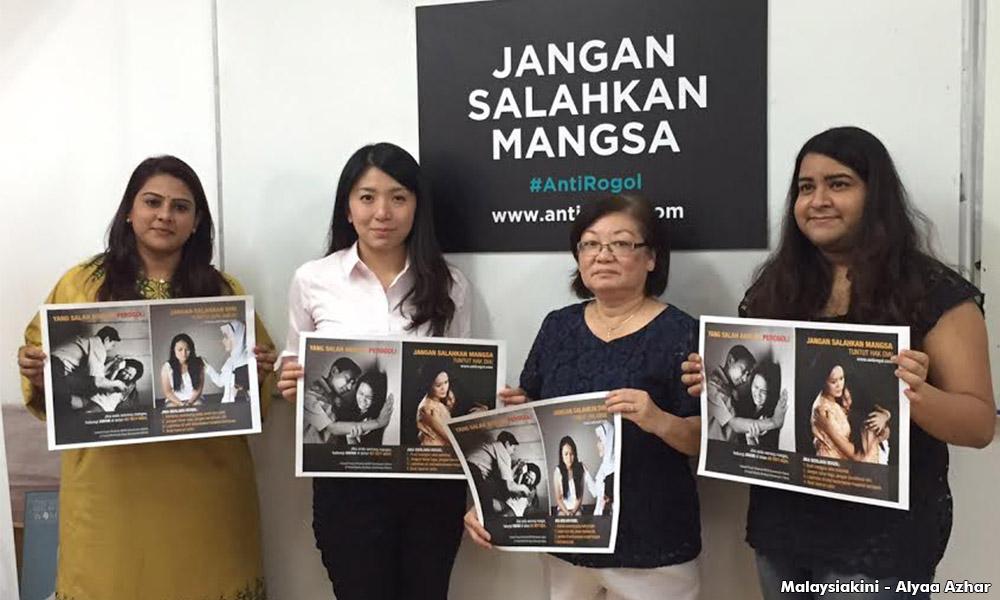
These figures prompted Yeo’s service centre, together with the All Women's Action Society (Awam), to start its second collaboration on anti-rape awareness, with the campaign this time named Jangan Salahkan Mangsa (Don't blame the victim).
“The social media is a good tool to talk about rape awareness. That’s why we started something again this year,” said Yeo, citing last year’s campaign video which garnered over 200,000 views on YouTube.
Taboo subject
This time, they decided to launch a new website, www.antirogol.com, because rape is still a taboo subject in the country.
The website aims to educate both the public and survivors with information on rape and what constitutes the offence, as well as information on the laws pertaining to it.
“So far, in Malaysia there's no website regarding rape. Rape survivors don't know where to get information from,” said Yeo.
Apart from basic information on rape, the website also teaches survivors the steps to be taken if rape takes place.
“First thing is - don’t wash. Many perpetrators could not be charged due to lack of evidence.
“Next, tell a person you trust about the rape and then go to the nearest government hospital. If you go to a hospital, you don’t need to lodge a police report because general hospitals have one-stop crisis centres,” she added.
Culture of victim-blaming
Meanwhile, explaining further on the campaign, Yeo said it is important to educate society not to blame rape victims.
“Whenever rape happens, society likes to ask ‘what did you wear, where did you go, were you drunk?'
“The victim-blaming culture is strong in our society,” she lamented.
Awam training adviser Betty Yeoh said victim-blaming culture should not be played down, especially since it was usually experienced by victims of family members and friends.
“The media, too, play an important role. Reports on rape tend to focus on the survivor rather than why the perpetrator had raped the victim,” she pointed out.
According to the Home Ministry, 28,741 rape cases were reported from 2005 to 2014 with 16 percent of the cases (4,514 cases) taken to court, from which 2.7 percent (765 cases) were found guilty.


