


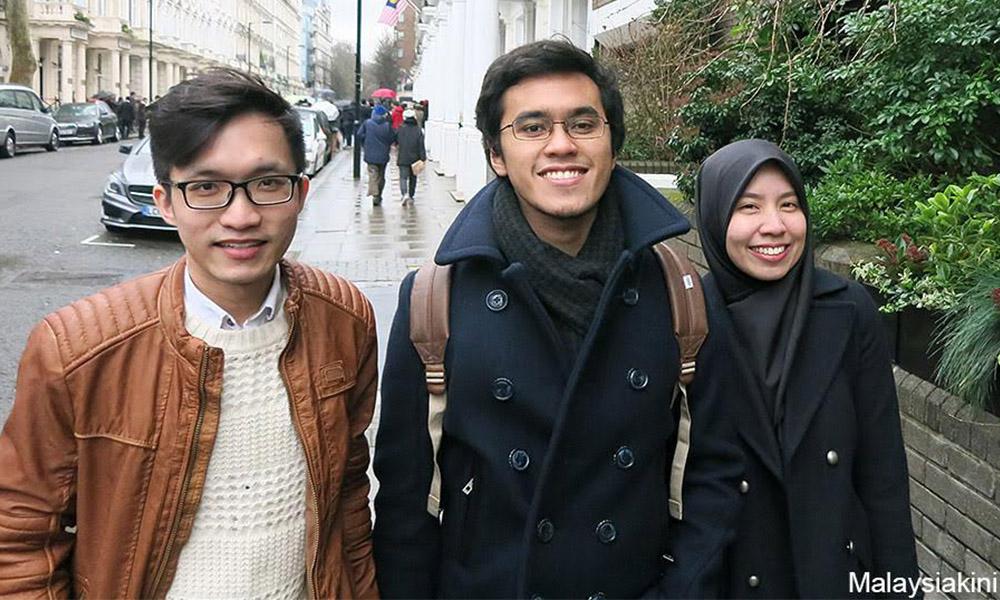

Bringing student activism to Malaysians abroad
MALAYSIANS KINI Mention studying in the UK and many Malaysians would likely think of punting on the River Cam, glitzy shopping districts, the usual tourist traps and a chance to spectate EPL football games from the stands.
Not so for a group of Malaysians who is trying to create political awareness through the Malaysian Progressives UK (MPUK).
Formed in mid-2015 by a multi-ethnic group of Malaysian undergrads, MPUK wants to provide a platform for 20,000-odd Malaysian students in the UK to engage in political discussions.
MALAYSIANS KINI Mention studying in the UK and many Malaysians would likely think of punting on the River Cam, glitzy shopping districts, the usual tourist traps and a chance to spectate EPL football games from the stands.
Not so for a group of Malaysians who is trying to create political awareness through the Malaysian Progressives UK (MPUK).
 Formed in mid-2015 by a multi-ethnic group of Malaysian undergrads, MPUK wants to provide a platform for 20,000-odd Malaysian students in the UK to engage in political discussions.
So far, they have posted YouTube videos of their interviews with visiting Malaysian cabinet ministers, wrote articles to news sites on current affairs and posted their video conversations with Malaysian personalities who can’t make it to the UK.
However, they are best known for organising several talks throughout the UK, involving Malaysian personalities on politik tanahair.
Breaking taboos
James Chai, co-founder of MPUK, believes that what sets the group apart from other Malaysian student groups in the UK is that MPUK provides a platform for healthy political discussions.
 “We needed an organisation that is willing to talk about politics. Many other Malaysian student organisations here tend to say they are apolitical or non-political. They want to avoid the word ‘politics’ as much as possible.
“We think that is silly because politics encompasses a lot of conversations that shape our society and we want to facilitate those conversations,” said Chai, a final-year law student at Queen Mary University.
For MPUK, politics doesn’t refer to just partisan politics. Political issues which they try to tackle have included education, religion and feminism, among others which are commonly discussed abroad, but can be taboo back home.
Chai opines that there is a general unwillingness to confront political issues among Malaysians, which could stem from fear.
“We want to make political discussions something intuitive and constructive. We want to help young Malaysians who are feeling a sense of hopelessness and detachment.
“Of course the biggest deterrent isn’t education, sports and gender equality. That is politics with a small ‘P’. Those are things that people are already talking about. The biggest taboo is actually partisan politics,” said Chai.
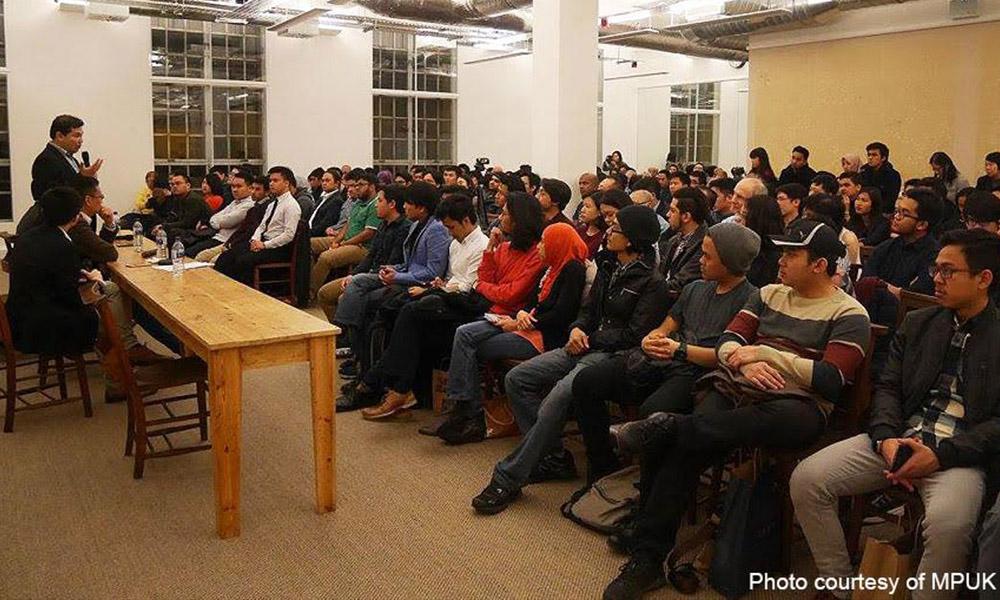 While political talks in Malaysia often draw an older audience, MPUK has been filling up venues with Malaysian students. This, said Chai, shows that there is definitely a market for what MPUK has to offer.
Thus far, their best received event was a roadshow spanning four cities featuring PKR’s Rafizi Ramli, Nik Nazmi Nik Ahmad and Wong Chen in February - a period which saw questionable deals involving Tabung Haji being exposed and the fact that the authorities had cleared the prime minister of any wrongdoing in the 1MDB scandal and the RM2.6 billion found in his personal bank accounts.
The London leg saw 200 chairs filled, leaving many more standing or sitting on the floor for several hours.
Meanwhile, talk involving UIA lecturer and columnist Syed Saddiq Abdul Rahman in London drew nearly 100 people despite the event being organised at the eleventh hour due to challenges in securing an affordable venue.
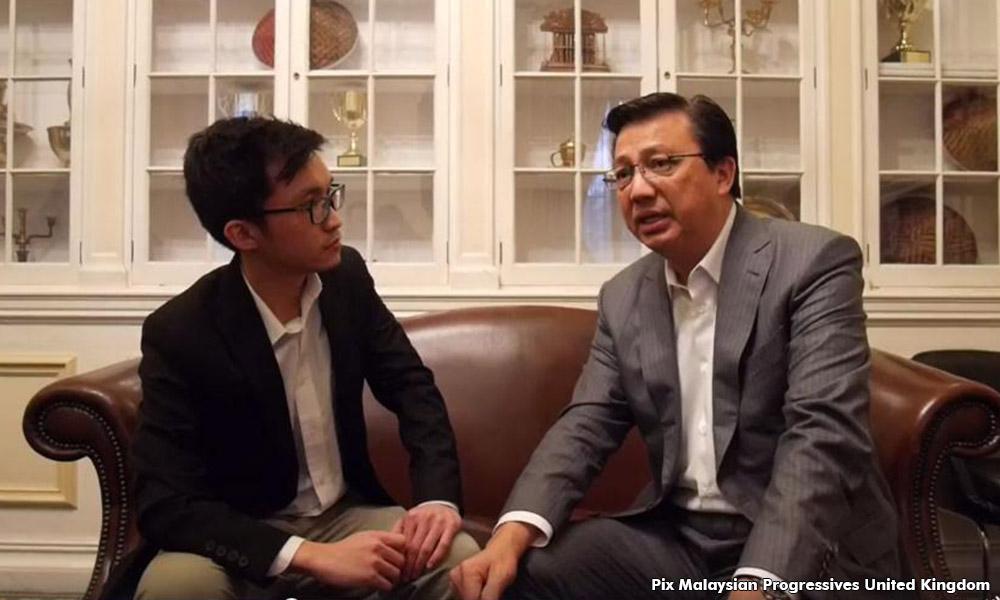 To MPUK, the response to their events have been very encouraging, noting that some participants had to travel from other cities to attend these talks.
Filling a void
Dalila Kahar, one of MPUK’s 20 committee members, believes that part of her organisation’s success is it serves as a bridge between Malaysian students and Malaysian affairs.
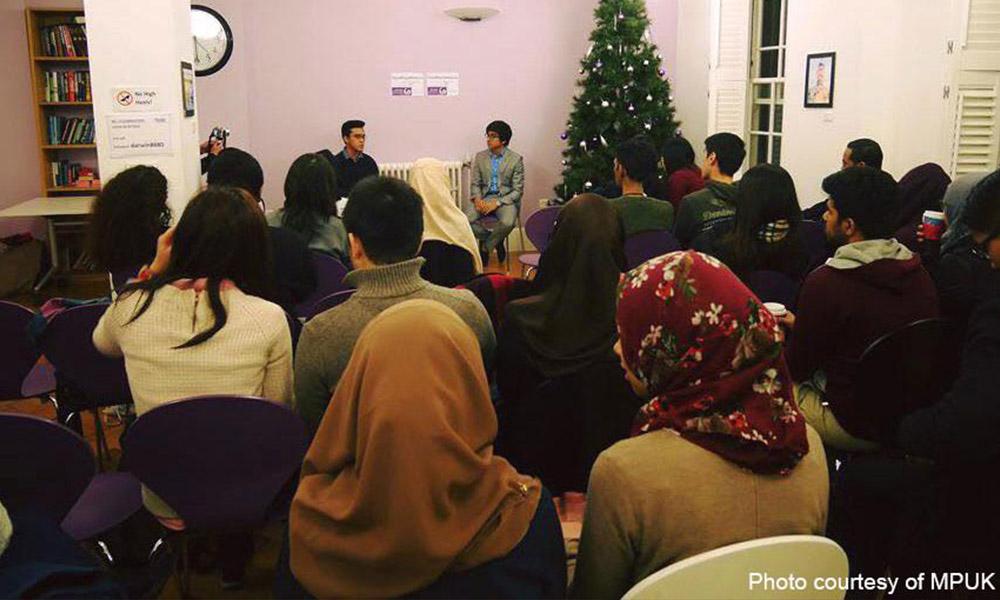 “Some people feel detached with what’s happening back home… So we provide this platform for Malaysians to connect back with Malaysia.
“There may be a lot of naysayers who do not like these discussions at all, but there are also students looking for answers and genuinely want to have healthy discussions.
“They are also reaching out to us asking how they can help,” said Dalila, who is pursuing an accounting degree at London School of Economics and Politics.
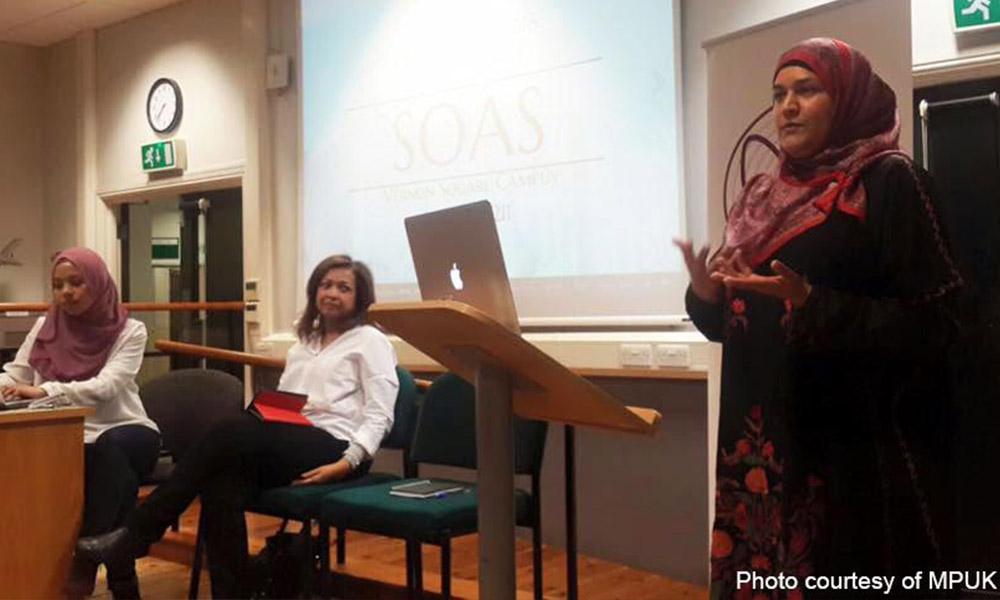
Dalila cited how a dialogue titled ‘Islam and Feminism: Conflicting or Compatible?’ was mooted by a fellow MPUK supporter, with the intention of having prominent Malaysian activist Marina Mahathir exchange opinions with British scholar Zara Faris.
Not only was the freedom afforded by the UK a conducive place for healthy discussions on prickly subjects, said Dalila, the country also hosts many experts which can be tapped.
This pursuit of fostering political awareness and conversations sets MPUK apart from other major Malaysian student groups in the UK, which tend to prioritise helping students spruce up their CVs before they enter the job market.
Fahrul Radzi, a MPUK committee member, said he had been part of these organisations before and despite the many bright minds among them, these groups were not designed for intellectual enrichment.
“Most Malaysian student bodies in the UK focusses on networking for their future careers and building soft-skills. Some are welfare bodies.
“For the past few years, there has been a vacuum. Malaysian students didn’t have a platform to talk about what’s happening back home at all,” said Fahrul, a final-year economics undergraduate at London School of Economics and Politics.
Chilling effects
Despite the relative freedom for Malaysian students, which are not bound by the University and University Colleges Act 1971 while abroad, it is not always smooth sailing for the MPUK.
Three days before the roadshow with PKR speakers kicked off, they were paid a three-hour visit by a person claiming to be a Malaysian official.
“We were asked about our activities, whether our parents were civil servants and what sort of scholarships we were on. There was no explicit attempt to dissuade us from holding the event.
“He got the details he wanted. But altogether, it was pretty suspicious that he met us three days before the event and how he got hold of our numbers. I could imagine someone else caving in,” said Chai.
For the Bristol leg of the talk, there were explicit attempts to dissuade Malaysians from attending, particularly by some politically-linked clubs for foreign students on Facebook.
“But I think it had the reverse effect,” chimed in Fahrul, who added that the Bristol event was well attended.
These incidents aside, there are still inherent fears among Malaysian students in the UK when it comes to engaging in apparently innocuous civil discussions.
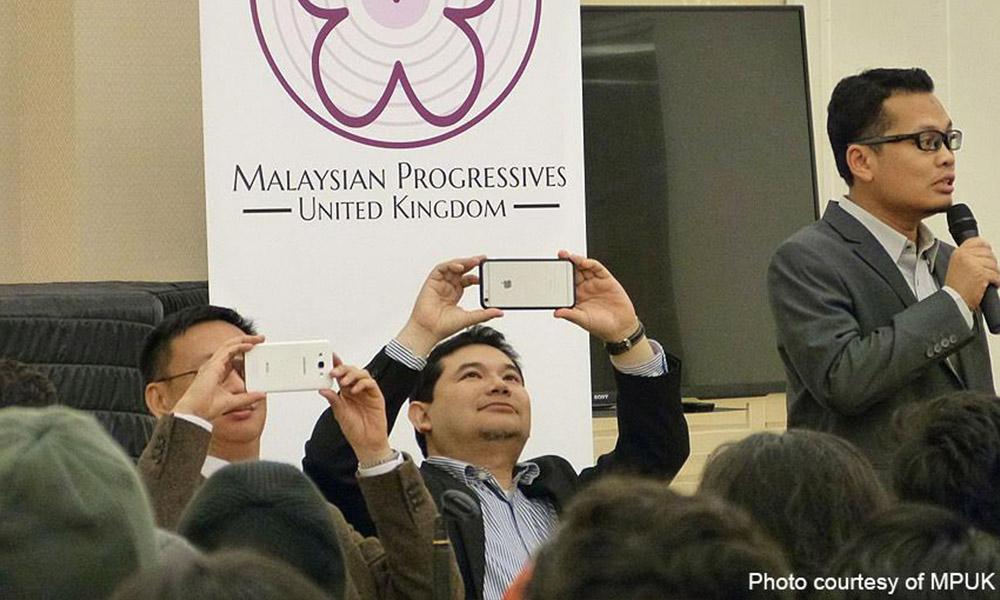
An example, according Fahrul, were attempts by some forum participants to shy away from cameras.
“The moment Wong Chen and Rafizi brought out their phones to photograph the crowd, a lot of students started shielding their faces with their hands.
“Our vision is to create an environment in the future where students no longer have to do that,” said Fahrul, adding that there were some students who ended up being identified on Facebook after the event.
Looking ahead, MPUK hopes the conversations they have help strike would inspire young Malaysians to take up more social causes when they eventually return home.
“We are targeting our audience in Malaysia as well. If we can have a platform for Malaysians back home and Malaysians around the world, they will have an opportunity to confront narratives that are unfamiliar to them.
“If we can be that particular agent to make it happen, it would be all worthwhile,” Chai said.
TEO TAO PEOH is a UK-based Malaysiakini reader. He recommends fellow readers to check out Oscar Wilde’s essay ‘The Soul of Man’.
MALAYSIANS KINI is a series on Malaysians you should know.
Previously featured
Ramli Ibrahim has good reason to dance for joy
A woman, a campervan and a 'Rolling School'
Malaysian movie mania - Are viewers back for good?
Branded as 'deviant', Muslim scholar remains defiant
For Thasleem, life has indeed come a full circle
Poster girl for diversity? No thanks, says novelist Zen Cho
M’sian int’l hackathon champ shows computer games good for you
Pianist bears no grudge over concert cancellation due to Bersih 2
Facing possible jail time, Lena's main worry is dad finding out
This Malaysian youth has helped 10,000 Syrian families and counting


Are you sure you want to delete this comment?
This action cannot be undone.