



'Life of crime for some Indian youths begins at an early age'
Purported gang insignia displayed in Tamil school toilets are tell-tale signs that Indian children are steering towards a life of violence from a young age.
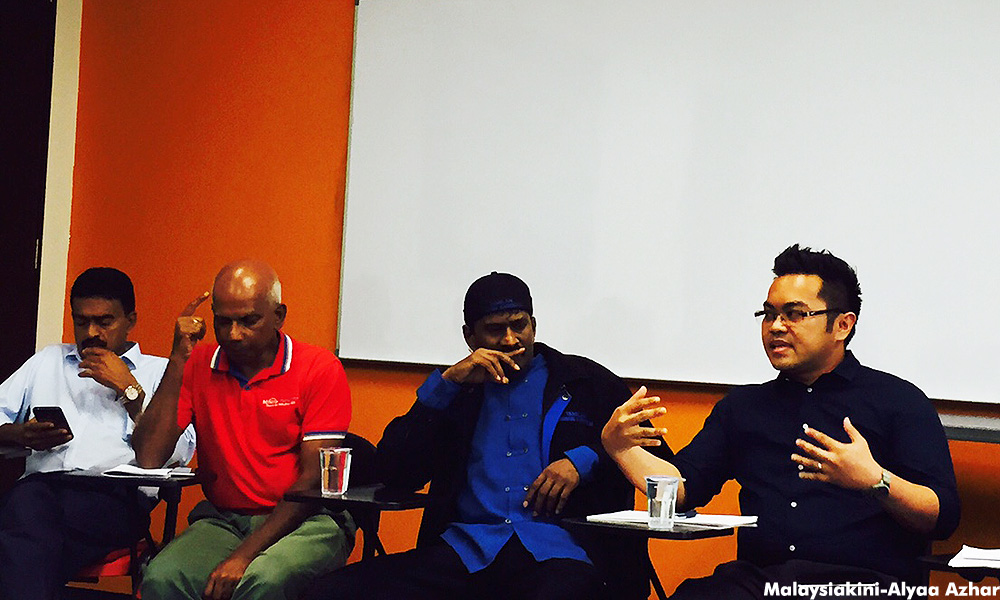
This was raised at a forum titled ‘Kabali – Myth or Reality’, by panelist S Pasupathi, director of MySkills Foundation.
“Just go to a Tamil school, go to the toilet and you will see gang symbols,” Pasupathi told the forum held at the Brickfields Asia College in Petaling Jaya yesterday.
Purported gang insignia displayed in Tamil school toilets are tell-tale signs that Indian children are steering towards a life of violence from a young age.
This was raised at a forum titled ‘Kabali – Myth or Reality’, by panelist S Pasupathi, director of MySkills Foundation.
** “If you go to a Tamil school, just go to the Vivekananda Tamil school, just across there Jalan Chandran, go to the toilet and see.
“If you don’t find 36, 18, 04 scorpion symbols there then (inaudible).
“They are exposed; the students are exposed, from Tamil schools,” Pasupathi told the forum held at the Brickfields Asia College in Petaling Jaya yesterday.
It is because of this that Pasupathi believes there is a need for civil society members to come together to help Indian youths “from as early as Standard One”.
The blockbuster film ‘Kabali’, which stars Tamil film superstar Rajinikanth, may have been exaggerated to a certain extent, he admitted.
But the movie, shot mostly in Malaysia and revolving around the lives of gangsters, is nothing short of a reflection of the Indian community today, Pasupathi said.
“You talk about violence in Kabali, but just look at the recent shooting in Setapak and how (an Indian) girl and boy were butchered at Solaris Dutamas,” he pointed out.
The Indian community has no one but itself to blame for the rise of gangs among their youth, he added.
 “The community must be blamed because we don't want to acknowledge that such an issue is happening. The majority of gangs in the country are made up of Indians.
“The problem is very serious. If you think everything is okay with the community, I think you are wrong,” Pasupathi (photo) said.
Fellow panellist A Muraly, a former gangster, shared his life story during the forum, and recalled how difficult it was for him to adapt to normal life after being jailed for six years.
Forum moderator Denison Jayasooria, secretary-general of Society for the Promotion of Human Rights (Proham), noted how only a few non-governmental organisations in social work were paying visits to individuals they had previously cared for.
“After-care is almost nil. Whether current NGOs are doing that – that's something worth looking into,” Denison said.
Speaking to reporters later, Muraly admitted that what was portrayed in ‘Kabali’ was “70 percent” true.
“More and more (Indian) youths are joining gangs. The (Indian) population is getting smaller but gangsters are increasing,” said the father of two.
However, Muraly said, it was not realistic for Rajinikanth’s character, Kabaleeswaran, to insist that he not get involved in drug smuggling and prostitution.
“How else are gangsters supposed to make money?
“Maybe there are two or three gangs that are like that but most of them are definitely not like that,” he said.
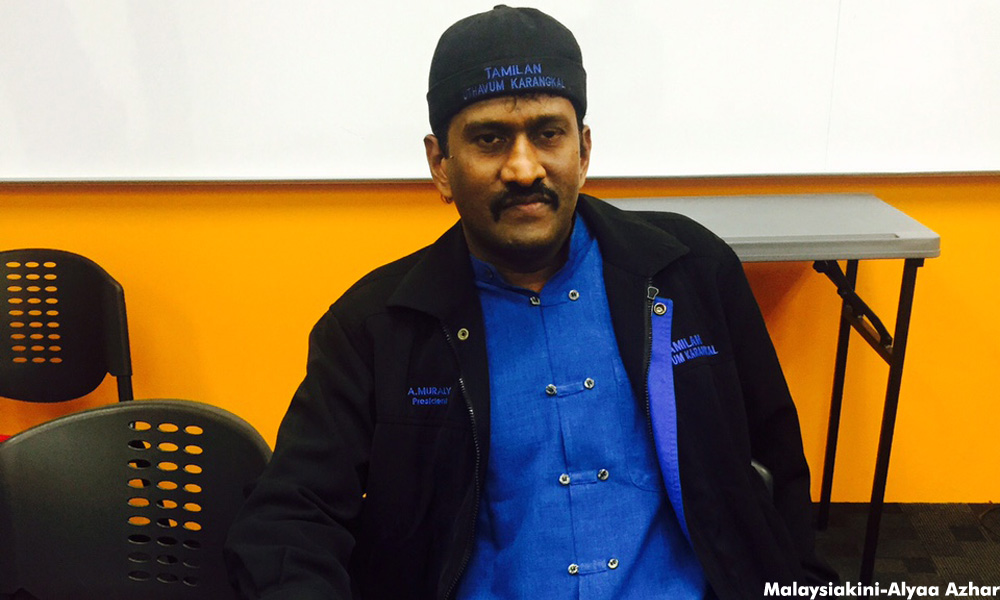 Muraly (photo), who is the founder of Tamilan Uthavum Karangkal (Tamilians Helping Hands) has a suggestion for the government to tackle the problem – since most Indian youths are known for their fearlessness, they should be encouraged to become police officers.
And they should be scouted as early as possible, he added.
“Once they have joined a gang, you can't control them,” said Muraly who was detained under the Emergency Ordinance at the age of 22 and released six years later.
Meanwhile, film analyst Aidil Johan praised the movie for raising awareness on the issue of inequality.
“We need this in Malaysia. But many actually already know about the issue. It is just that the awareness is now brought to an international level,” Aidil said.
The film, he added, provides space for people to have hope, citing the predicament of Kabaleeswaran, who, although imprisoned for 25 years on a false charge, also experienced some good fate.
“It gives inspiration to the Indian community, or the general Malaysian community who are disenfranchised, to have some hope,” Aidil said, adding that a movie, however, is ultimately just “a machine”.
“The film itself is exploiting the story of Malaysian Indians to make money. Filmmakers gather stories of real people and it becomes a spectacle," he added.
Indians make up about seven percent of the population in Malaysia.
** Editor's note: Amendments have been made to certain quotes in the article for the sake of clarity.


Report this comment
Are you sure you want to delete this comment?
This action cannot be undone.