




Mixed reactions to call against nabbing those who don't fast
Malay city folk are split over Youth and Sports Minister Khairy Jamaluddin's suggestion for religious departments to use their resources to help the poor instead of catching those who do not fast during Ramadan.
The women Malaysiakini spoke to were firm with their opinion that there was no need to use limited resources to catch Muslims who skip fasting as it is more important to help the poor and needy.
The men, on the other hand, stressed that enforcement by religious departments, when it comes to fasting, was necessary - but they agreed that the resources may also be used to assist the poor.
Accounts executive Linda Abdul Kasim said she believes there is an overwhelming number of poor people in the country.
"I agree that the resources should be used to help the poor because there are just so many of them."
And Islamic religious officers, observed Linda, were not looking for those in need of help...
Malay city folk are split over Youth and Sports Minister Khairy Jamaluddin's suggestion for religious departments to use their resources to help the poor instead of catching those who do not fast during Ramadan.
The women Malaysiakini spoke to were firm with their opinion that there was no need to use limited resources to catch Muslims who skip fasting as it is more important to help the poor and needy.
The men, on the other hand, stressed that enforcement by religious departments, when it comes to fasting, was necessary - but they agreed that the resources may also be used to assist the poor.
Accounts executive Linda Abdul Kasim said she believes there is an overwhelming number of poor people in the country.
"I agree that the resources should be used to help the poor because there are just so many of them."
And Islamic religious officers, observed Linda, were not looking for those in need of help.
 "If they just take a look here they can see how many needy people there are. With the increased prices of goods, surviving is hard, even for people like us," the 43-year-old added.
Linda's view was echoed by Wahida Othman (photo), 36, who said would be better to raise awareness of the importance of fasting instead of spending resources on errant Muslims.
Wahida said education on the importance of fasting during Ramadan should start at home.
"It's enough for people around us to advise us; as Muslims we can advise one another.
"There is no need for the resources to be used to catch people who don't fast. It is better to use the funds to help the poor, who need them more," she said.
 Although enforcement was still necessary, 24-year-old Sharifah Azura Mohamad Dawam (photo) said the resources used to bust those who skip fasting could be better used.
"The money should be used to help the poor. Our country has so many people who are in need of help.
"Resources should be used to help them instead of using them for things that are not important," said Sharifah Azura, a student.
'Moral policing not the only way to halt wrongdoing'
Khairy in a series of tweets yesterday said there were many ways to nahi munkar (forbid evil) and that moral policing was not the only way to do so.
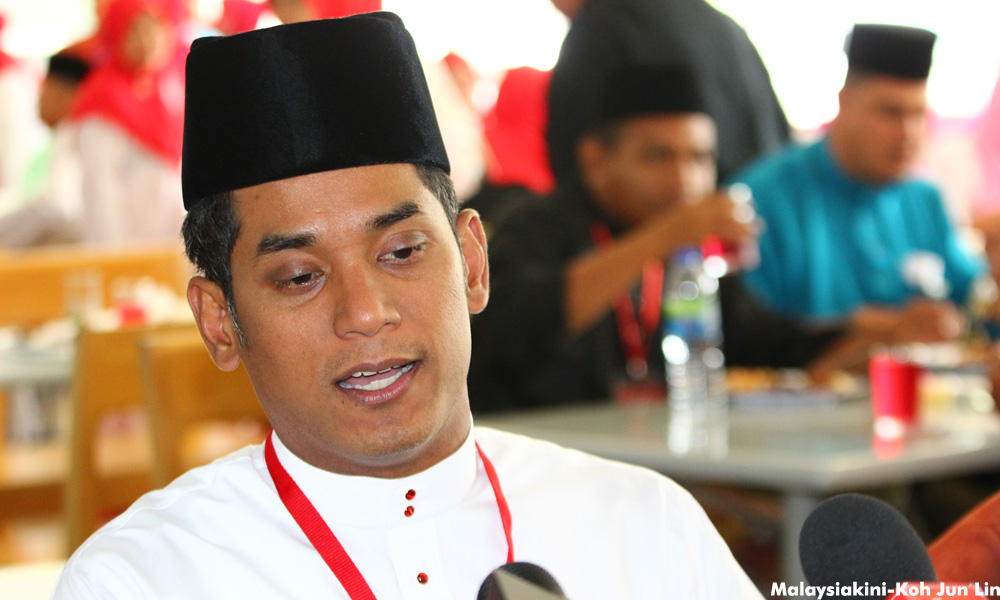 "Instead of religious departments spending money on enforcement people looking for people who skip fasting, use them to help asnaf (those eligible to receive tithe) and to do good," Khairy (photo) tweeted.
Muslims caught openly eating, drinking or smoking in the Federal Territories during Ramadan face a fine of not not more than RM1,000 or maximum six months' jail, or both, in line with the Federal Territories' Syariah Criminal Offences Act.
Apart from this Act, similar provisions also exist in other syariah law enactments in other states.
Another observation (more controversial): resources used to catch people not fasting should be used to help the poor and needy instead.
— Khairy Jamaluddin (@Khairykj) May 28, 2017
Instead of religious depts spending money on enforcement ppl looking for people ponteng puasa, use them to help asnaf and to do good.
— Khairy Jamaluddin (@Khairykj) May 28, 2017
Khairy's tweet on the matter received more than 4,000 likes and retweets.
Retiree Abdul Hamid Mohamad Sari, however, disagrees. The 68-year-old believes that enforcement is needed to "uphold Islam".
The resources, he said, should be maintained for enforcement purposes.
"I don't agree with Khairy's call because other funds may be used to help the poor.
"Why is he only raising the issue now? Resources (to catch people who don't fast) should not be questioned," Abdul Hamid stressed.
'Anything can happen if no repercussions for not fasting'
However, fellow retiree Abdul Razak Bahaman (photo) said resources can be managed to do both, as there must be enforcement to ensure Muslims fast during Ramadan.
 "The existing funds should be used for enforcement purposes, but if there are extra funds, then they can be used to help the poor," said the 66-year-old.
"Anything can happen if there is no enforcement. It would be bad for us if laws are not being followed," Abdul Razak said.
Tahfiz teacher Sadiq Maudud, 21, also thinks that the resources should be especially allocated to catch those who do not fast.
"But maybe they can also be used to help the poor," Sadiq said.
Military personnel Sani Salleh, 42, feels enforcement is necessary or "people will be lost".
"But in terms of the usage of the funds, that depends on the authorities. I think there is no problem to use the funds to help the asnaf," Sani said.


Are you sure you want to delete this comment?
This action cannot be undone.