


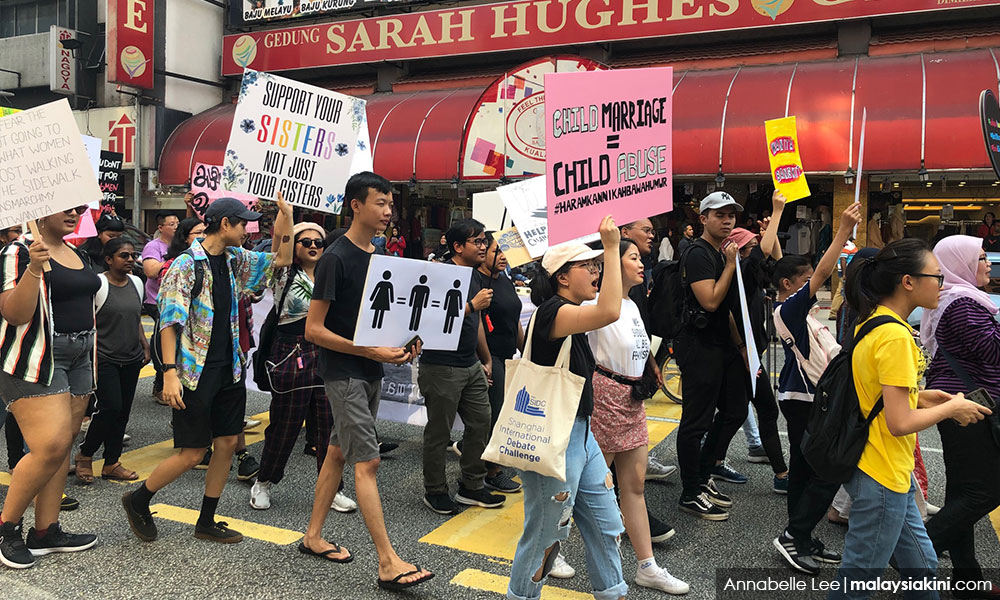

Despite backlash, participants want Women's March to stay the course
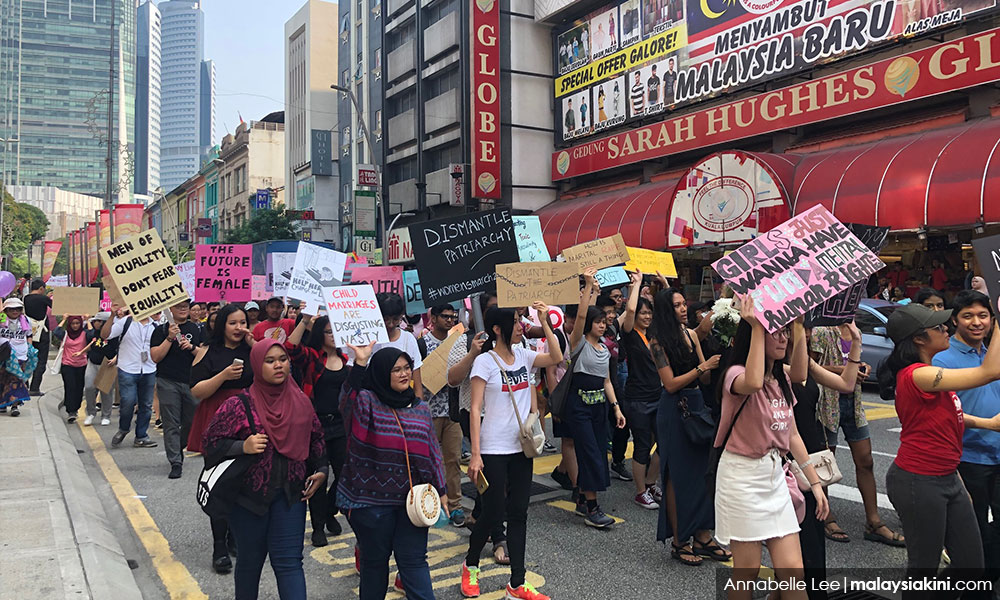
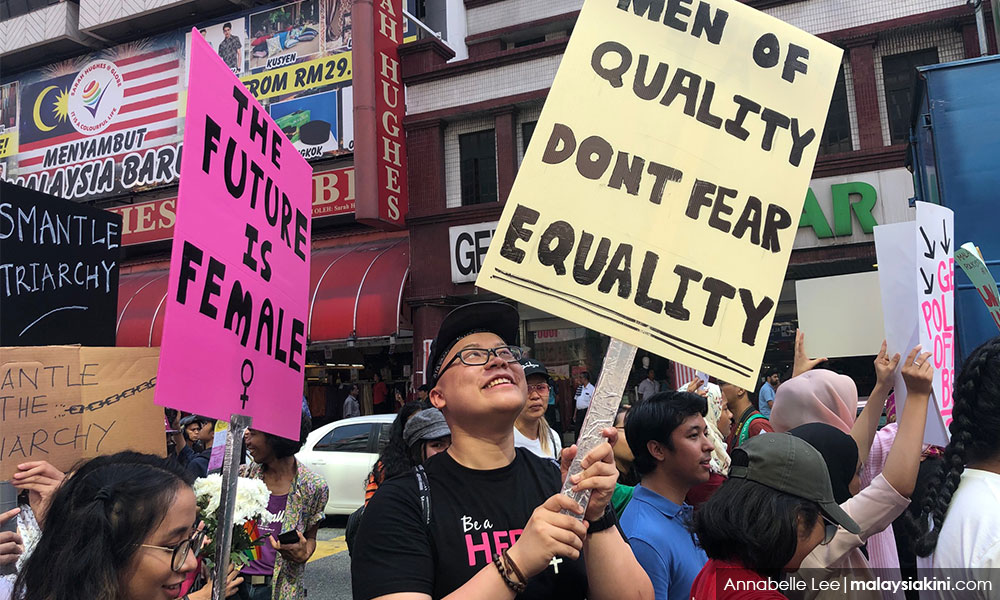
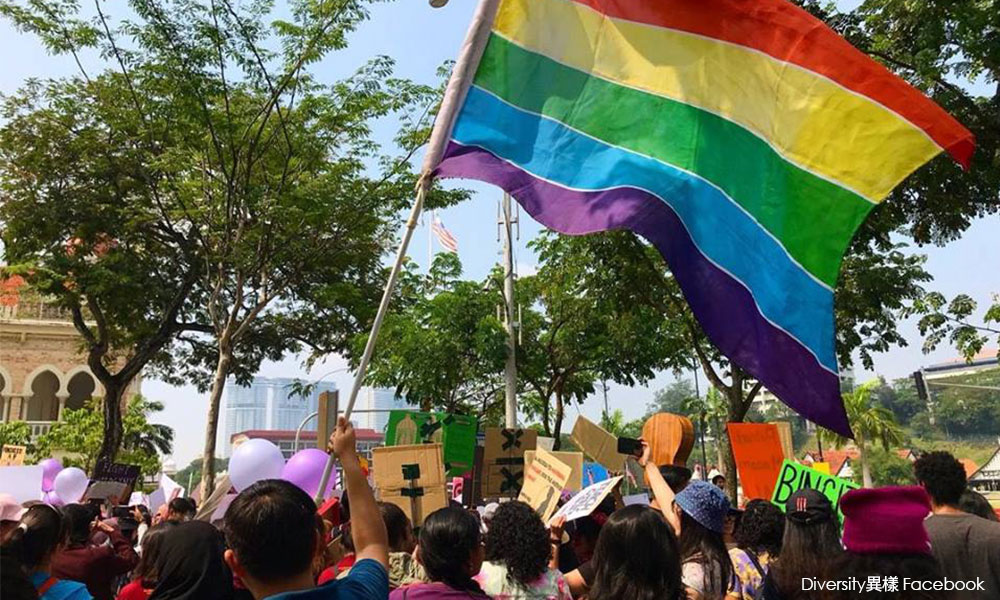
It has been exactly a week since the Women’s March in Kuala Lumpur, which was much-maligned for the presence of LGBT participants.
Despite critics saying those participants had “polluted” the march, several march-goers and organisers told Malaysiakini that it should continue to be a platform for all to speak up...
It has been exactly a week since the Women’s March in Kuala Lumpur, which was much-maligned for the presence of LGBT participants.
Despite critics saying those participants had “polluted” the march, several march-goers and organisers told Malaysiakini that it should continue to be a platform for all to speak up.
This is because feminism is about ending discrimination against women as well as against all marginalised groups, said lawyer and activist Fadiah Nadwa Fikri (photo below).
“Feminism has always been about ending oppressive structures that exclude women, the marginalised, the LGBTQ, transwomen and transmen. Everyone who has been pushed to the margins.
“[...] We will always humanise the people who are constantly demonised by society, so I think that will not change despite the attacks, harassment and intimidation (directed at the march),” she said when met at the Malam Pertempuran Sakti event in Petaling Jaya last night.
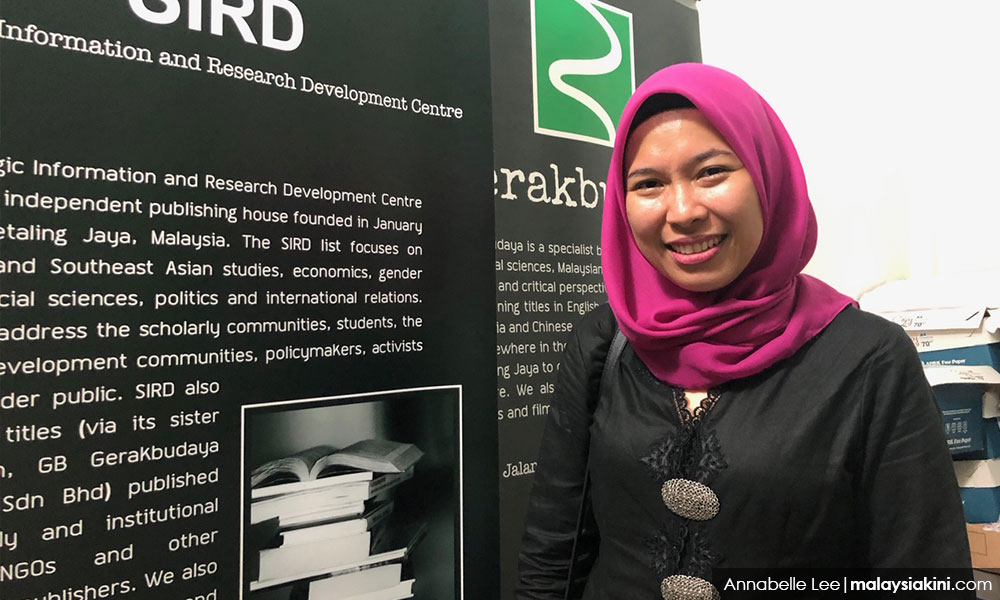
Fadiah’s NGO Malaysia Muda had organised the arts event for march participants and organisers to gather in solidarity in response to the backlash.
The march had sparked a backlash from all sides of the political divide, including many Pakatan Harapan ministers and politicians.
Fadiah rued how marginalised communities continued to face discrimination in the “New Malaysia” for the benefit of political mileage
“The powers-that-be are trying to please the majority [...] they do that because they want to retain power. They know that by turning the marginalised into a punching bag, this will work.
“It is our duty to dismantle that kind of politics, it is very destructive,” she said.
Beyond ‘socially sanctioned’ women’s issues
A march participant, who only wanted to be known as Suba (photo below), contended that “women’s issues” included addressing all forms of gender and sexuality-based oppression.
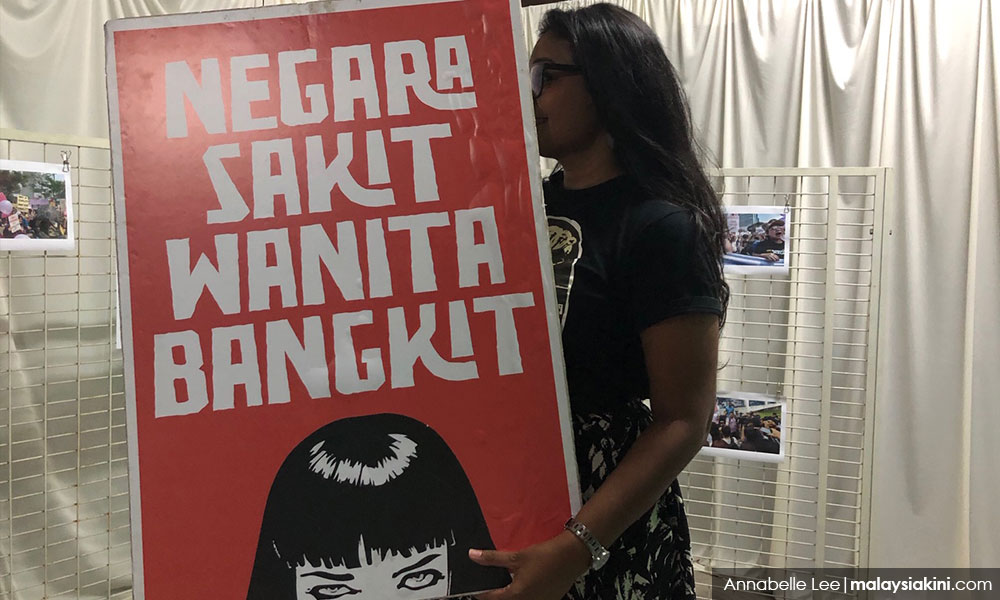
“Women’s issues are not only ‘socially sanctioned’ women’s issues like domestic violence and maternal and child health.
“Women’s issues are the everyday lived realities of women,” she told Malaysiakini.
Echoing these sentiments were university students and activists Azura Nasron and Ainina Sofia, who both believed that the march should highlight issues affecting women.
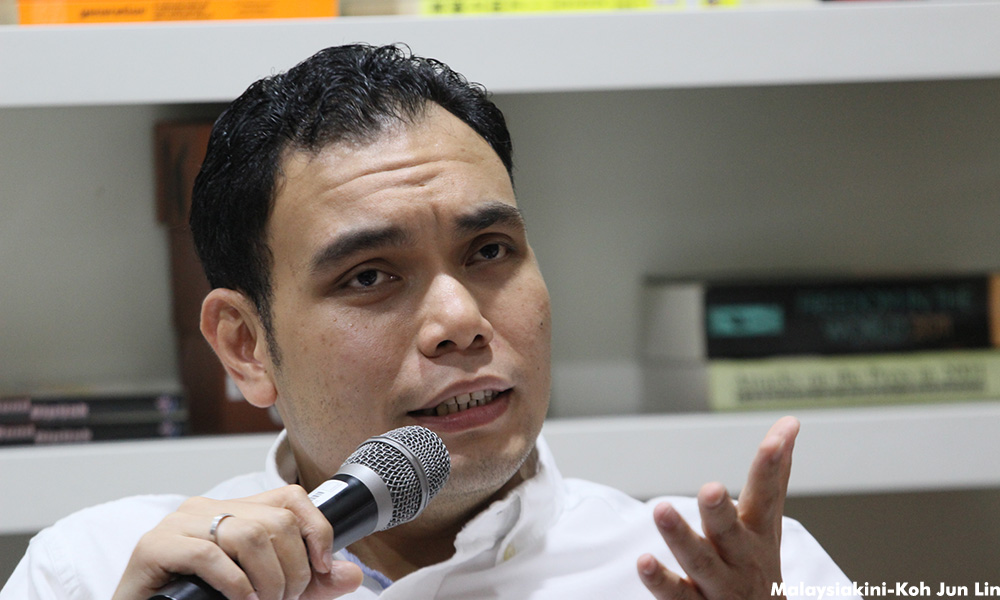
Azura (photo below), who leads Gabungan Pembebasan Akademik (GPA), dismissed critics as being misinformed about the point of the march.

“They (the critics) were not at the march from the start, and they don’t even understand what feminism and intersectionality is.
“They said we did not focus on ‘women’s issues’ [...] but there is no such thing as one issue being more important than the other; all issues are important and all issues have to be highlighted,” she said when met at the same event.
The concept of intersectionality contends that discrimination against a person’s gender, race and class often overlap.
Moving forward, Ainina, also a GPA member, believed that the march should continue to be inclusive but should also fine-tune its message delivery method.
“But as one of the organisers of the march, I wonder how far our message has reached the government and the wider public," she said.
Among those who spoke and performed at last night’s event were former student activist and ISA detainee Juliet Chin, late Tenaganita founder Irene Fernandez’s daughter Katrina Maliamauv and singer Takahara Suiko.


Are you sure you want to delete this comment?
This action cannot be undone.