




World Bank: M'sian economy resilient despite global slowdown
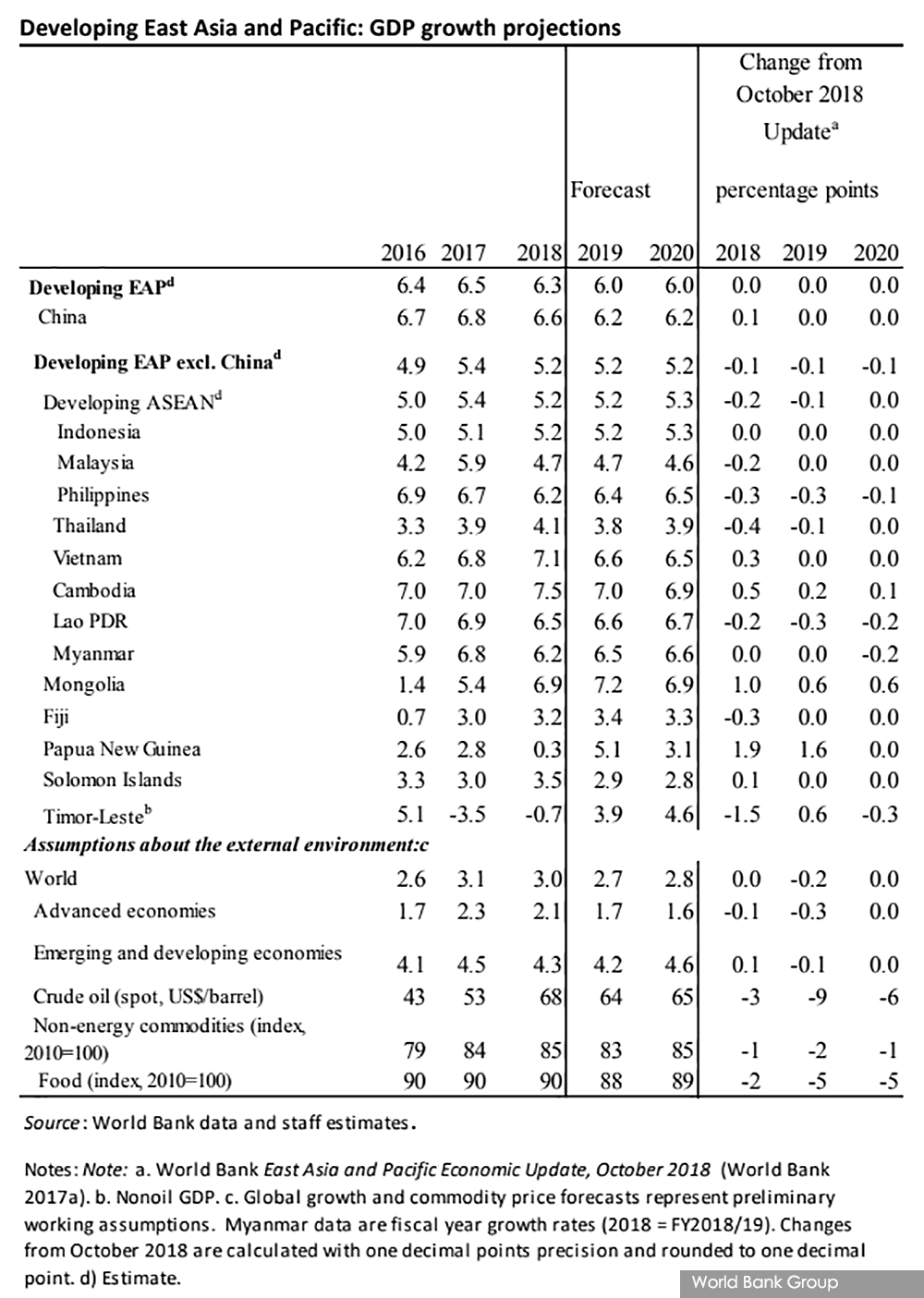
Malaysia's economy remains resilient with its 2019 gross domestic product growth forecast maintained at 4.7 percent, said the World Bank.
This despite global growth expected to slow down to 2.7 percent this year.
Malaysia's economy remains resilient with its 2019 gross domestic product growth forecast maintained at 4.7 percent, said the World Bank.
This despite global growth expected to slow down to 2.7 percent this year.
"Relative to other economies not just in East Asia but across the world, Malaysia's rate of growth is still very strong [...] growing at 4.7 percent is very commendable," said Richard Record, the World Bank's lead economist for Malaysia at a press conference in Kuala Lumpur today.
He added that Malaysia has a solid foundation, sound economic and social infrastructure and was well placed with diversified growth, including in commodities and manufacturing.
In its East Asia and Pacific Economic Update today, the World Bank said Malaysia's 2020 GDP was expected to expand by 4.6 percent.
It said the country was also expected to achieve a high-income nation status by 2024.
For this year, the bank said local growth would be primarily driven by private consumption, albeit at a more measured pace.
Meanwhile, household spending will be buoyed by a stable labour market, as well as measures such as the government's Cost of Living Aid (BSH) welfare programme.

The World Bank said it expects investments in Malaysia to increase slightly and be driven by the private sector, while public investments may be subdued in the near term.
Risks to Malaysia's growth include relatively high levels of government liabilities and an increasing reliance on oil-related income which could make the country less flexible in facing any macroeconomic shock.
It noted that the relatively high household debt was also a risk to financial stability and impeded the growth of household spending.
On the external front, global uncertainties, including over US and China's trade relations, posed near-term risks for the local economy.
The World Bank said to encourage more rapid economic growth, Malaysia must increase labour productivity.
It added that this, in turn, depended on improving human capital development by enhancing education, reducing childhood under-nutrition and strengthening social safety nets.
Related reports
World Bank: M'sian economy resilient despite global slowdown
World Bank to M'sia: Focus less on stock market, more on fundamentals
UBS remains positive on Malaysia's long-term prospects
UBS admits officer's appraisal of M'sia has errors



Report this comment
Are you sure you want to delete this comment?
This action cannot be undone.