


Harapan urged to use RTM, Bernama to fight extremist views
The Pakatan Harapan government has been urged to better utilise state-owned media to counter extremist views and to educate Malaysians on human rights.
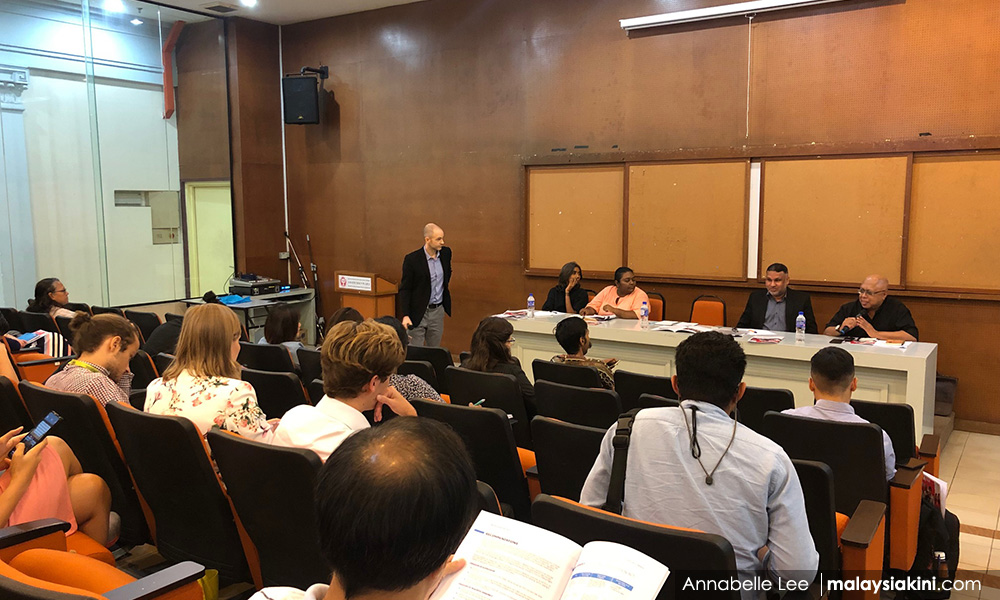
At a panel discussion today on Harapan’s progress on human rights reforms, media and communications professor Zaharom Nain remarked on the problematic manner with which issues pertaining to issues continue to be reported...
The Pakatan Harapan government has been urged to better utilise state-owned media to counter extremist views and to educate Malaysians on human rights.
At a panel discussion today on Harapan’s progress on human rights reforms, media and communications professor Zaharom Nain remarked on the problematic manner with which issues continue to be reported.
Zaharom pinpointed mainstream media outlets owned by political parties, but stopped short of naming them.
"What is disappointing is the inability or reluctance of official government media outlets such as RTM and Bernama to respond to this," he said.
"(The government needs) to come up with alternative narratives and alternative explanations, and aggressively and widely disseminate them.
"(The government should come up with a) progressive and inclusive narrative (that) is in line with its reform agenda," he said.
Hate speech, misinformation and extremism
Zaharom added that Putrajaya needs to be more proactive in employing this strategy against hate speech, misinformation, as well as religious extremism.
"For the narrative that is being provided by the extremists, they (the government) have to provide an alternative narrative that provides a true picture of religion, of Islam.
"RTM has had so many religious programmes. Bring the more progressive people onto those programmes. RTM has got this widespread reach to the Malay heartland.
"They (Harapan) must stop being on the backfoot, and stop being defensive. Introduce progressive things and don't just depend on the NGOs (to do this),” he said.
Human rights education
E Nalini, who heads the Malaysia programme of human rights NGO Article 19, similarly implored Putrajaya to use state media to educate Malaysians on human rights.
This would help stem the misunderstanding of international human rights standards and UN instruments, like the International Convention on the Elimination of All Forms of Racial Discrimination (Icerd) and the Rome Statute of the International Criminal Court.
Nalini pointed to those who were outraged over the government’s initial decision to ratify Icerd without fully understanding what the convention is about.
Read more: The Icerd outrage
"The government of the day has a lot of access. They are the ones who have access to the media, like TV and radio.
"The government has to come out to educate people through these media platforms (on) what its international commitments (are), and what human rights are," she said during the question-and-answer session.
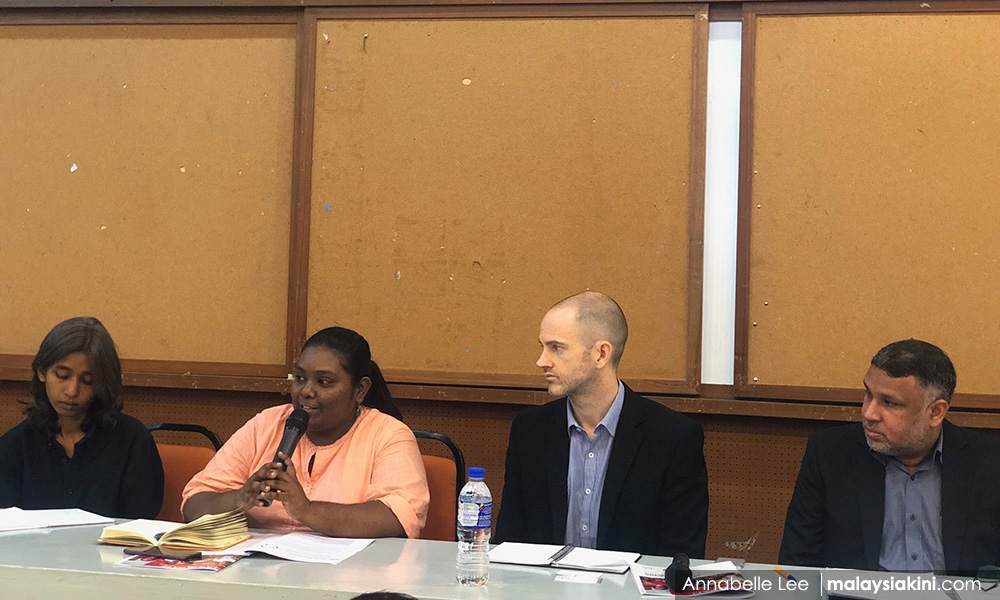
Nalini (second from left in photo) noted how discourse around human rights had thus far been dominated by conservative groups opposed to progressive reforms.
"That is particularly worrying for all of us here, because these groups are getting a lot of space in the media. They can come out (and say) anything... and they can just go away with it.
"But people who are critical of the government and saying good things are being investigated.
"These are the double standards (that we saw) in the previous government, and they are continuing now," she said.
Today’s panel was organised to launch a report card on Harapan’s progress in improving the freedom of expression, assembly and association in Malaysia.
Held at the Kuala Lumpur and Selangor Chinese Assembly Hall, it was jointly presented by Article 19 and South Africa-based human rights NGO Civicus.
Aside from Zaharom and Nalini, the panel comprised Civicus research officer Josef Roy Benedict and Justice for Sisters activist S Thilaga.


Are you sure you want to delete this comment?
This action cannot be undone.