


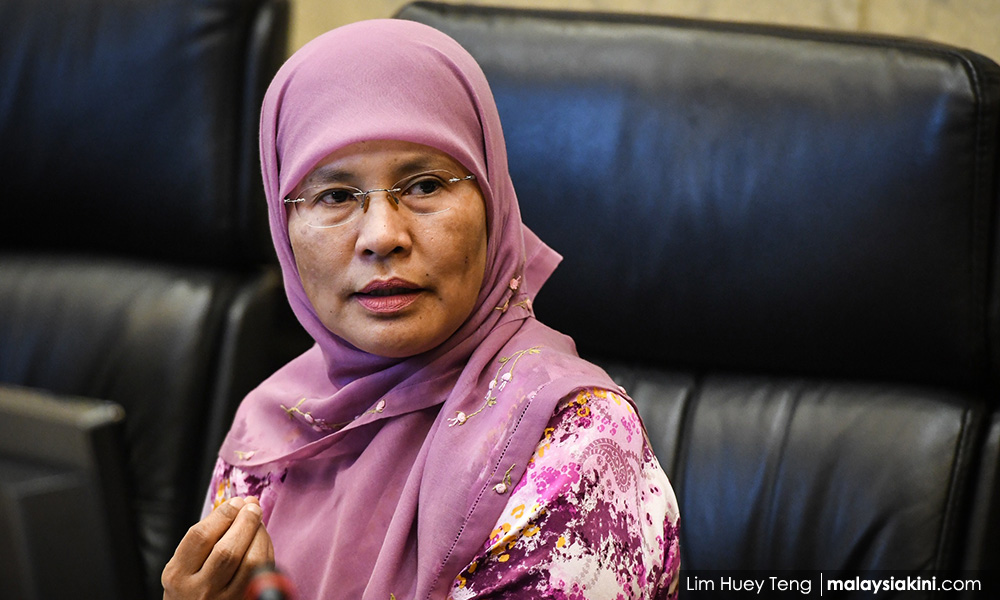

Known for dissenting judgments, Tengku Maimun explains her position
Newly minted Chief Justice Tengku Maimun Tuan Mat is known for her dissenting judgments, even when none of her colleagues on the same bench agrees with her.
Tengku Maimun was the sole dissenting judge when she sat on the Court of Appeal panel that upheld the late Karpal Singh's conviction under the Sedition Act in 2016...
Newly minted Chief Justice Tengku Maimun Tuan Mat is known for her dissenting judgments, even when none of her colleagues on the same bench agrees with her.
She was the sole dissenting judge when she sat on the Court of Appeal panel that upheld the late Karpal Singh's conviction under the Sedition Act in 2016.
Likewise, she was also the sole dissenting judge when the Court of Appeal quashed a mandamus order by the Ipoh High Court's to compel the police to locate Indira Gandhi's children in 2014.
In 2016, a five-member Federal Court bench took Tengku Maimun's position and overturned the Court of Appeal ruling.
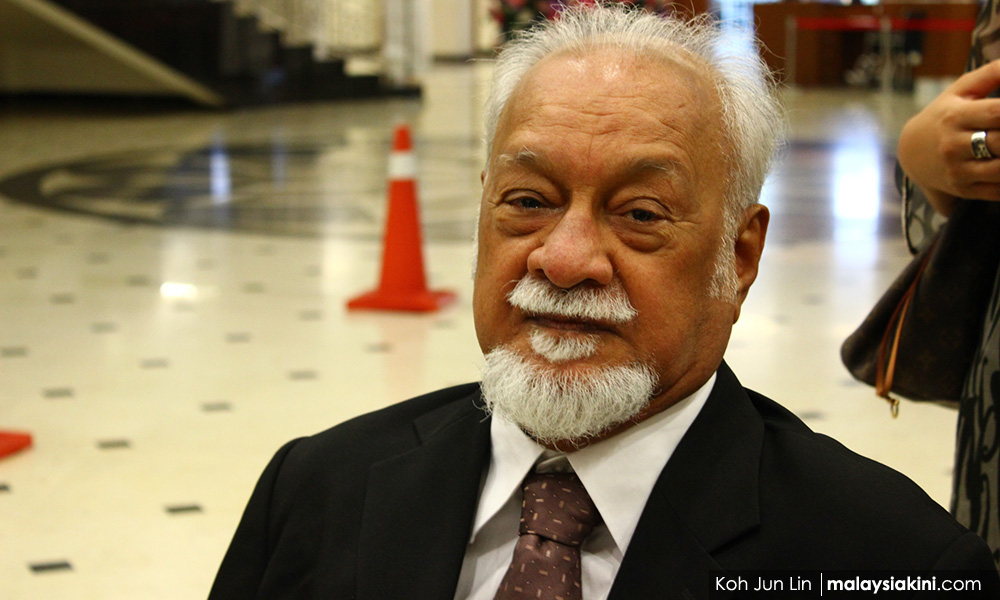
In March this year, a seven-member Federal Court bench unanimously took Tengku Maimun's position and acquitted Karpal (below).
Tengku Maimun, who was elevated to the Federal Court on Nov 26 last year and formally sworn in as chief justice today, said whether or not the upper courts validated her decisions were never a consideration when making those decisions.
"In all honesty, not only for me but also for many other judges, when we hear a case and make our decision, we are rarely concerned or worried about whether the judgment will be considered valid or not by the upper courts because we have done our duty.
"If by coincidence, our decision is validated, it means the upper courts agree with our understanding and position on the law, that is all.
"In conclusion, it does not mean that if a judge's decision is affirmed by the upper courts, the judge should be particularly overjoyed. It is just a normal process," she told the media at the Palace of Justice in Putrajaya today in her maiden press conference as chief justice.
'Fact-based independence'
Tengku Maimun also disagreed with suggestions that she was promoted due to her dissenting judgments.
She said one of the main criteria to become a top judge is independence and in particular, the ability to stick strictly to the facts and not be influenced by other factors.
"I don't think dissenting judgments are necessary criteria to be appointed as a judge or to be promoted, there are many criteria.
"Surely, independence is one of them - the ability to decide based solely on explanations and facts before you, without considering other factors. Integrity is important, as well as competence and having fair knowledge of the law," she added.

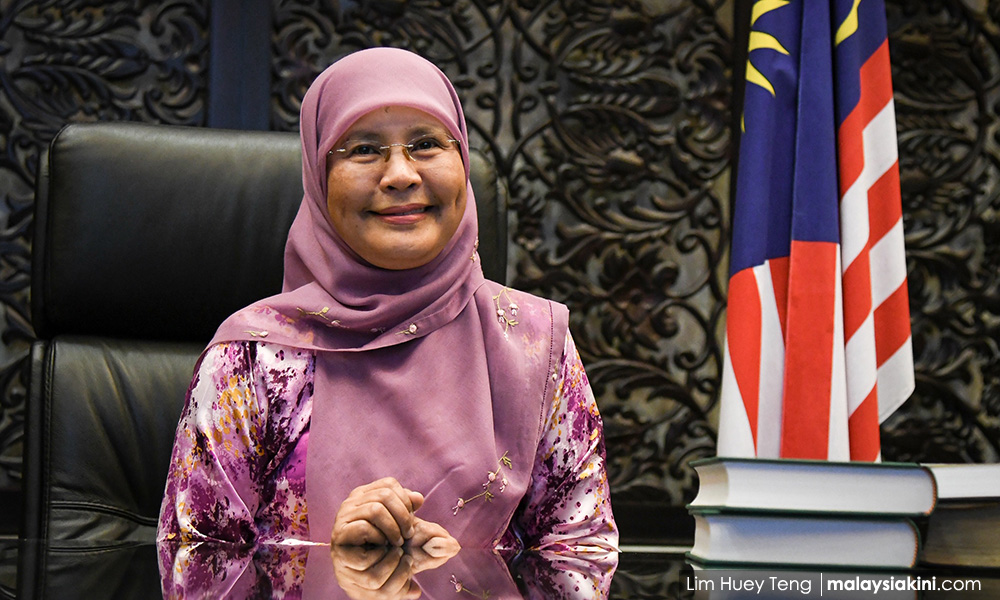
Tengku Maimun (above) said unanimous judgments are not bad and a judge should not be evaluated based on dissenting judgments.
"If by a coincidence a judge writes dissenting judgments, it does not make the judge better than other judges," she said.
Asked about her feelings on becoming the second youngest chief justice in history, Tengku Maimun, who will be 60 this year, replied: "Is it true that I am the second youngest?
"I think it is not really an issue."
Rising above seniors
Tengku Maimun said she believed her seniors bear no ill feeling towards her in her ascension to the top judiciary post over them.
"I believe even though I am junior (compared to them), my seniors do not have an uneasy feeling."
She added that this was something determined by Allah.
"If it is meant to be for us, then it will be for us."
A chief justice is allowed to occupy the position until 66 years old and six months.
Tengku Maimun reiterated her commitment to press on with reforms initiated by her predecessor Richard Malanjum (below).

However, she said any other reforms that she plans to undertake will only be announced after she consults with the other top judges, namely the Chief Judge of Malaya, Chief Judge of Sabah and Sarawak and Court of Appeal president.
"Firstly, I will need to settle down. It is too early for me to state my plans. Secondly, I would like to continue with what was set in motion by the former chief justice, Richard Malanjum.
"The four of us will make decisions based on collective leadership. So before I announce my plans, I will surely consult with the other three Yang Arif," she said.
As for the planned Royal Commission of Inquiry (RCI) on the judiciary, Tengku Maimun noted that the decision to set up the commission had been made by the government.
"What happens next, we have to wait... because it is the government's stance," she said.
Editor's Note: An earlier version stated that Tengku Maimun was the sole dissenting judge in the Court of Appeal's decision to reverse the nullification of Indira Gandhi's children's conversion by the Ipoh High Court. This has been corrected to state that Tengku Maimun was the sole dissenting judge when the Court of Appeal quashed the mandamus order compelling police to locate Indira's children. the error is regretted.




Report this comment
Are you sure you want to delete this comment?
This action cannot be undone.