




Human rights groups frustrated with Harapan's lack of progress
The international NGO Human Rights Watch has expressed frustration with the Pakatan Harapan government's slow progress on human right reform.
HRW Asia vice-president Phil Robertson said while tomorrow will mark the Harapan-led administration’s first-year anniversary, it has done little in its effort for reform...
The international NGO Human Rights Watch has expressed frustration with the Pakatan Harapan government's slow progress on human right reform.
HRW Asia vice-president Phil Robertson (above) said while tomorrow will mark the Harapan-led administration’s first-year anniversary, it has done little in its effort for reform.
"After a year, Harapan has not achieved its pledge to make Malaysia’s human rights record respectable to the world.
"It had done little to fulfil the promises. In fact, it had withdrawn its announcements on some of the reforms," he told a press conference in Petaling Jaya, which was jointly held with Amnesty International - Malaysia.
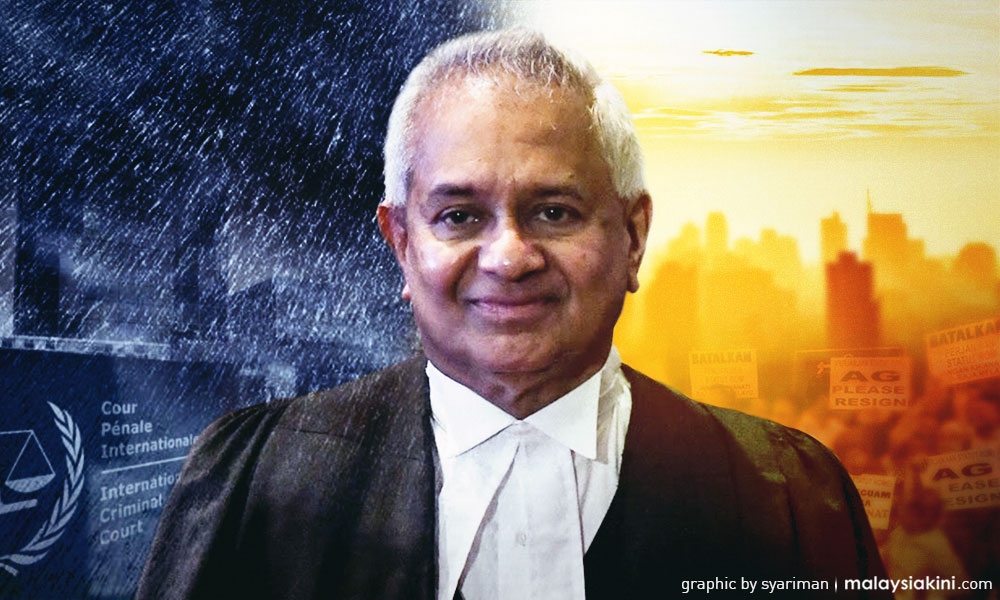
Last month, Prime Minister Dr Mahathir Mohamad had announced that Malaysia would withdraw from the Rome Statute of the International Criminal Court following a public backlash.
He cited the "political confusion" as the reason for the withdrawal.
This is not the first time the government has bowed to the pressure.
Last year, the government's plan to ratify the International Convention on the Elimination of All Forms of Racial Discrimination faltered after being pressured by right-wing groups, which culminated in an anti-Icerd mega-rally in December.

Robertson also outlined other reforms that did not materialise, such as the total abolition of the death penalty, repealing the National Security Council Act, and the slow progress in establishing the Independent Police Complaints and Misconduct Commission.
De facto law minister Liew Vui Keong had said that the mandatory death penalty for drug-related offences might be abolished, while judges could be given the discretion to impose the death penalty for certain crimes.
However, DAP's Kepayang assemblyperson Ko Chung Sen came to Liew's defence, saying that the government move to only abolish the mandatory death penalty is consistent with Harapan's manifesto.
Robertson further stressed that the delay in upholding human rights reform would only mean bad news for the people.
"The government should recognize that further delays in ending abusive systems and laws will only mean further harm for the Malaysian people.”

Amnesty International - Malaysia executive director DK Shamini (above) opined that the government has no clear roadmap for introducing human rights reform.
"We need to see a plan that is clearly articulated and in the spirit of promoting and protecting human rights in the country,” she said.
She also noted that the change in government has brought little impact on the protection of the rights of lesbian, gay, bisexual, and transgender people in Malaysia.


Are you sure you want to delete this comment?
This action cannot be undone.