



Solve climate, social issues instead, youths tell Penang gov't
Youth activists from Klimate Action Utara Malaysia (Kaum) want the Penang government to focus more on solving the ongoing environmental problems in the state instead of "splurging" on megaprojects.
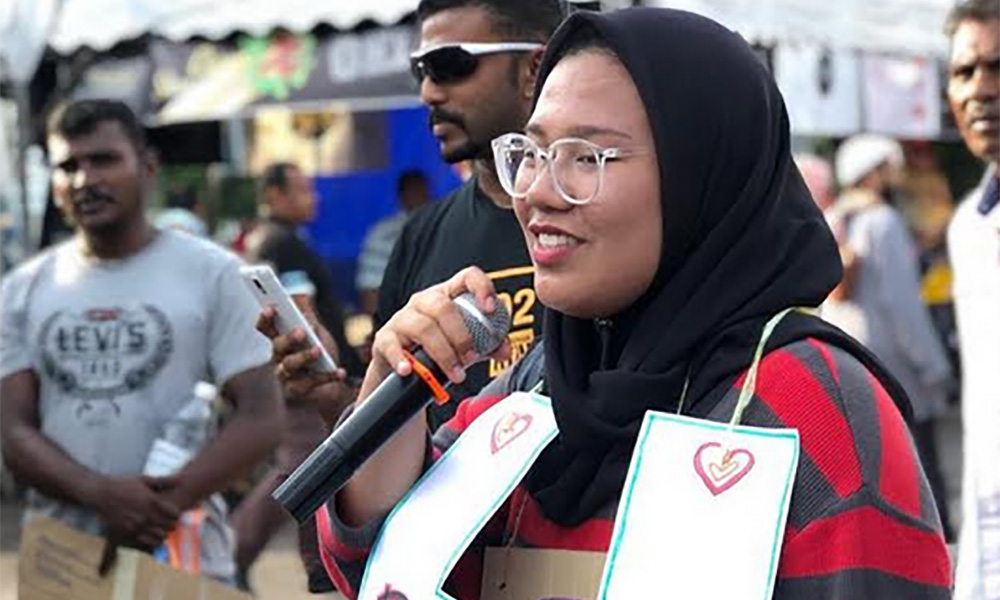
Kaum activist Nur Zulaikha Zainal Abidin (photo, above) said such ongoing problems included serious flash floods, poor drainage, unsustainable development, unaffordable housing and homelessness.
"They should focus more on these matters, instead of splurging a huge amount of money on megaprojects like the Penang Transport Master Plan (PTMP), Pan Island Link and Penang South Reclamation," Nur Zulaikha told Malaysiakini, echoing the concerns of many NGOs in Penang...
Youth activists from Klimate Action Utara Malaysia (Kaum) want the Penang government to focus more on solving the ongoing environmental problems in the state instead of "splurging" on megaprojects.
Kaum activist Nur Zulaikha Zainal Abidin (photo, above) said such ongoing problems included serious flash floods, poor drainage, unsustainable development, unaffordable housing and homelessness.
"They should focus more on these matters, instead of splurging a huge amount of money on megaprojects like the Penang Transport Master Plan (PTMP), Pan Island Link and Penang South Reclamation," Nur Zulaikha told Malaysiakini, echoing the concerns of many NGOs in Penang.
"These projects are not just going to cause the destruction of our biodiversity, we also need to consider the fate of our fishing community, who are going to be greatly affected by these projects."
Kaum is one of the 45 NGOs that have signed a petition to urge Prime Minister Dr Mahathir Mohamad to halt the reclamation project on the island's southern posts.
The petition, mooted by Penang Forum's Khoo Salma Nasution on May 10, has now received 25,000 signatures.
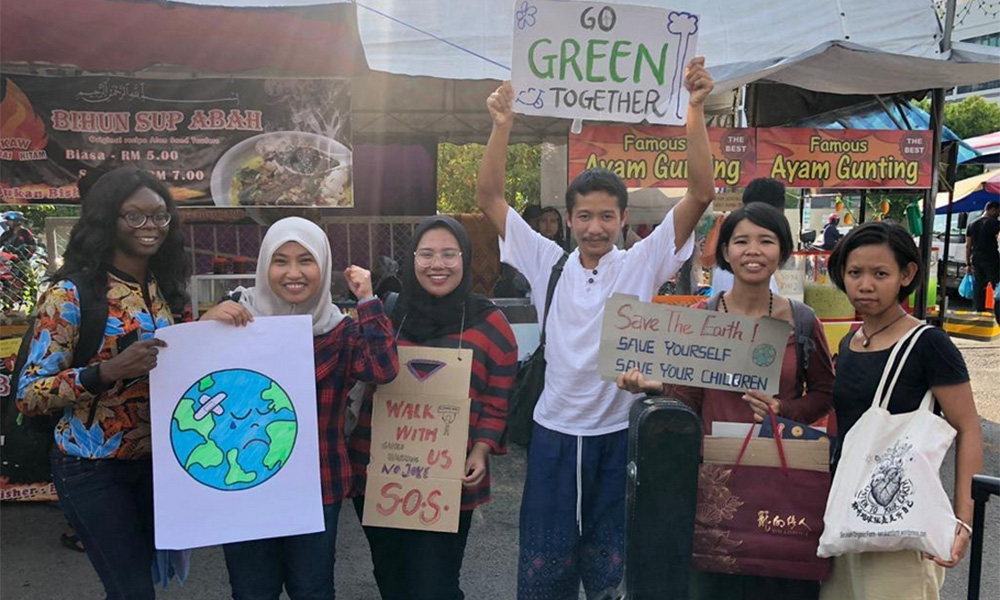
The NGOs are rejecting the project, which includes the creation and development of three artificial islands over an area of 1,821ha, which they claim would destroy the lives of thousands of fisherfolk.
However, Chief Minister Chow Kon Yeow said the development of the three islands would fund the state's PTMP and help develop the state further, in line with his Penang 2030 vision.
'Awareness of climate problems still very low'
Youths across the state have now lent their voices to the campaign, and Nur Zulaikha urged more of her peers to join the anti-climate change movement as the "climate crisis" is a very real problem in Malaysia.
She expressed sadness that the awareness among Malaysians on climate problems is still very low.
"The mindset and behaviour shift needs to be changed from the top till the bottom," said Nur Zulaikha, who has led protests on issues of climate change.
"This is why it’s important for the government, and especially the Energy, Science, Technology, Environment and Climate Change Ministry under the supervision of Yeo Bee Yin, to push for the passing and implementation of the Climate Change Act.
"From the ministry to the federal and state governments, we need to re-assess and reduce the approval of mega projects that will contribute to localised climate change."
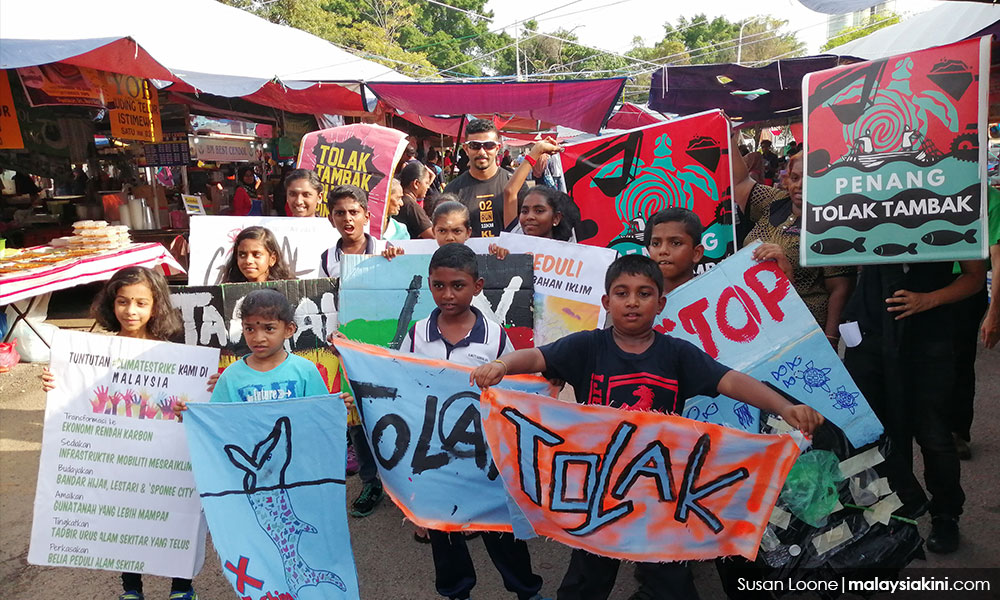
Nur Zulaikha said the anti-plastics and anti-climate change protest organised by Kaum that took place in Penang on May 24 with other NGOs, including Penang Forum and Consumers Association of Penang, showed how serious the youth wanted a change in the system.
She said youths were no longer tolerating anything that would put their future at risk.
Kaum, she added, has been working closely together with Klimate Action in Kuala Lumpur and Persatuan Aktivis Sahabat Alam in Ipoh that held their anti-climate change protests on May 25.
She said Kaum wants to encourage more NGOs and youths to work together in addressing issues related to the climate crisis.
"We have a voice now, and we wanted to make it bigger! We need more involvement from Malaysian youths to participate in our future events and they can contact us if they need help in organising a climate strike in the future.
"We need to keep doing this as it gets people talking, we need to talk more about it, let everybody talk about it," she added.
Nur Zulaikha said social media is such a powerful platform today and it should be used to raise awareness of a good cause.
There is no excuse for inaction, she added, as information and news about climate change are just at the tips of one's fingers.
She cited world-renowned primatologist and conservationist Jane Goodall's statement, "Only if we understand, we can care. Only if we care, we can help. Only if we help, we shall be saved."
Kaum and other NGOs have collectively issued several #climatestrike demands, including transforming to a low carbon economy; rolling out climate-friendly mobility infrastructure; establishing a green, revitalised, ‘sponge city’; practising sustainable land use and development; upgrading transparent environmental governance and enforcement; and empowering environmentally-concerned youth.


Are you sure you want to delete this comment?
This action cannot be undone.